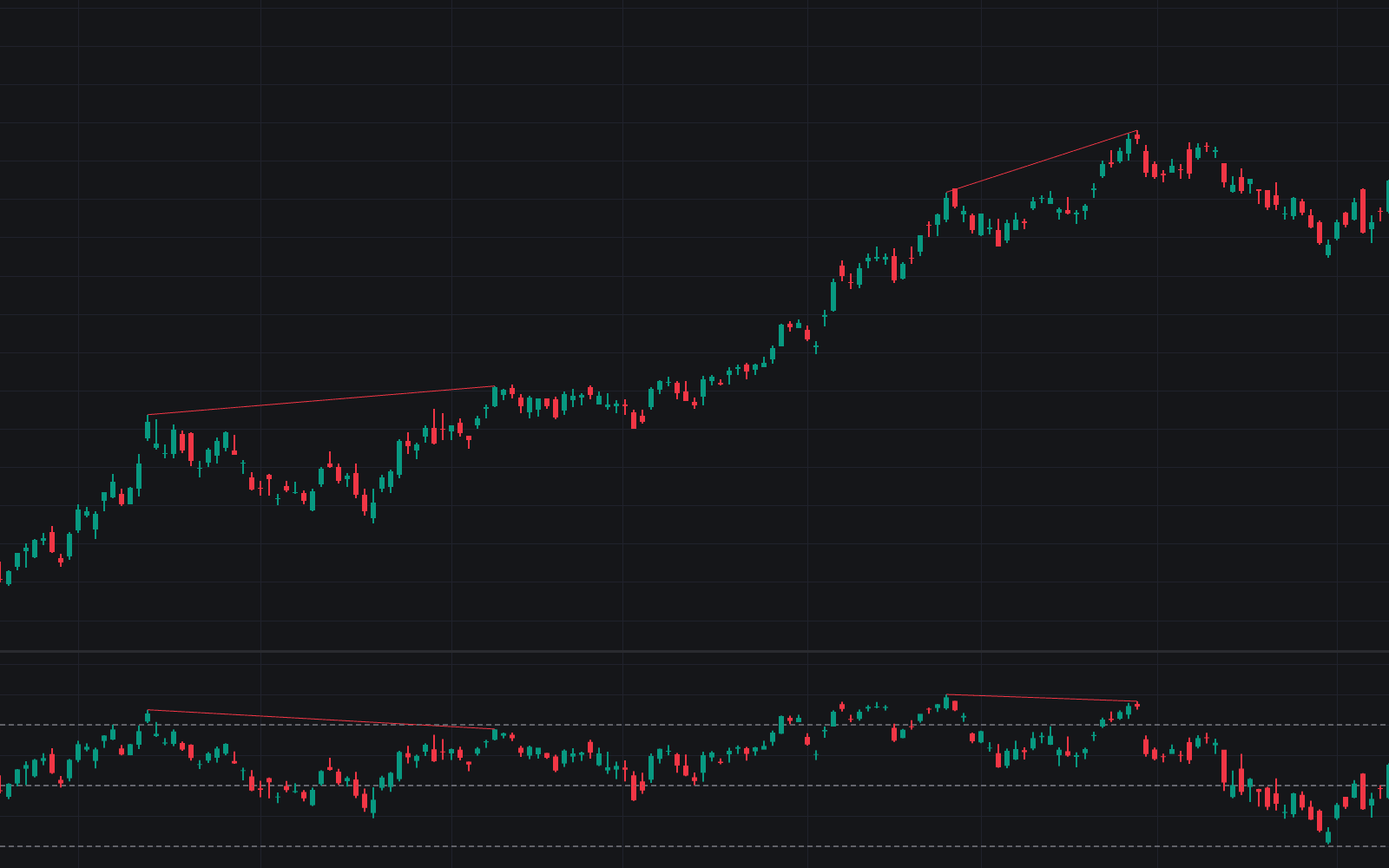
Adaptive Bounds RSI

Feb 18, 2026

Static chart image
Signals
Oscillators
Cycle
Works on the following platforms:
tradingviewSymbolTradingView
For free use on the TradingView platform
ninjatraderNinjaTrader
For free use on the NinjaTrader platform
metatrader4MetaTrader 4/5
For free use on the MetaTrader 4/5 platform
thinkorswimThinkorswim
For free use on the Thinkorswim platform

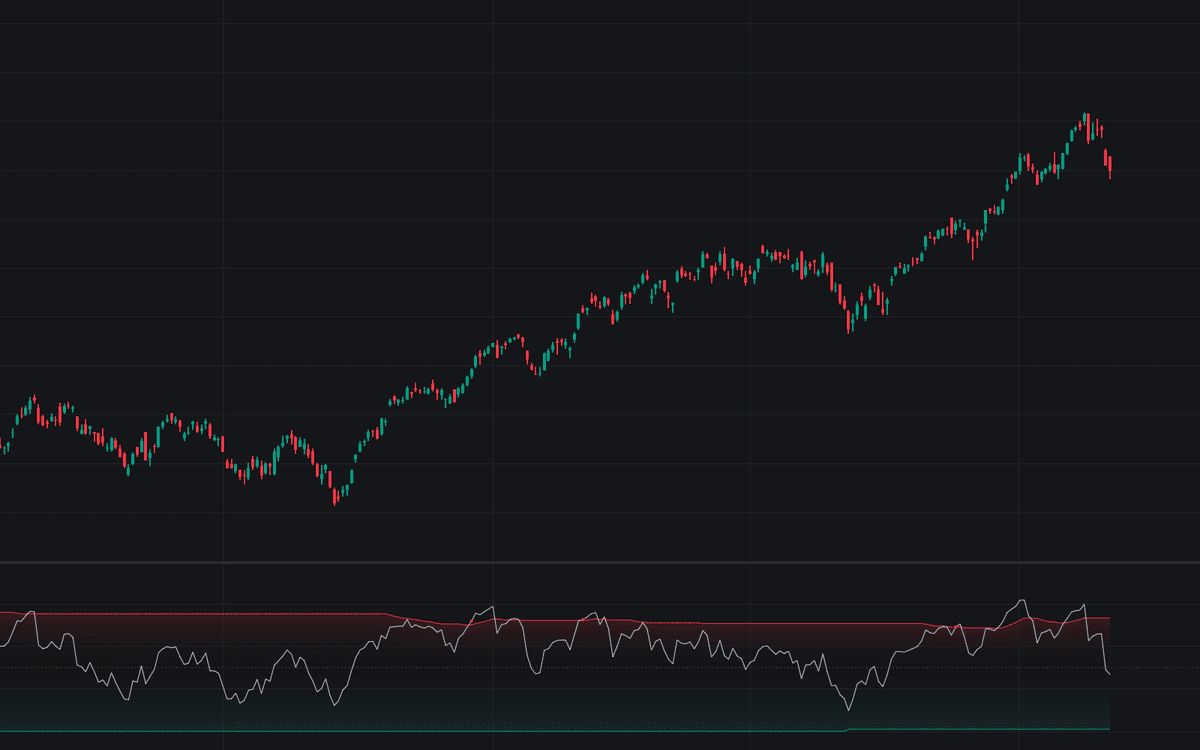
The Adaptive Bounds RSI is a dynamic trading indicator that enhances the classic Relative Strength Index (RSI) by replacing static 70/30 thresholds with adaptive, data-driven overbought and oversold levels. Using an online 1D K-Means clustering algorithm, this tool continuously learns from recent RSI values and adjusts its upper and lower bounds in real time. The result is a smarter, regime-aware oscillator that adapts to changing volatility, trends, and momentum—making it suitable for both mean reversion and trend-following trading strategies.

How to Trade the Adaptive Bounds RSI Indicator?

Traditional RSI trading strategies often struggle in strong trends because fixed overbought and oversold levels fail to reflect evolving market conditions. The Adaptive Bounds RSI solves this by dynamically clustering RSI values into five regimes, allowing traders to identify true extremes instead of reacting to arbitrary levels.

Because the bounds expand and contract with price behavior, the indicator becomes more selective during trends and more sensitive during consolidations. This makes it a powerful tool for swing traders, scalpers, and position traders alike.

Regime Classification for Smarter Market Context

At the core of this trading indicator are five internal K-Means centroids. These clusters divide RSI behavior into clearly defined market regimes:

  • Extreme Premium (Upper Bound): Signals statistically elevated bullish momentum and potential exhaustion.
  • Bullish Regime: RSI values between the midline and the upper adaptive bound, confirming upside momentum.
  • Neutral Regime: Centered around the 50-level midline, indicating balance between buyers and sellers.
  • Bearish Regime: RSI values between the midline and the lower adaptive bound, confirming downside pressure.
  • Deep Discount (Lower Bound): Signals statistically depressed RSI levels and potential reversal zones.

This regime-based framework transforms the RSI from a simple oscillator into a structured market condition classifier. Instead of asking “Is RSI above 70?”, traders ask, “Which volatility-adjusted regime is price currently in?”

Trading Overbought and Oversold Conditions with Adaptive Bounds

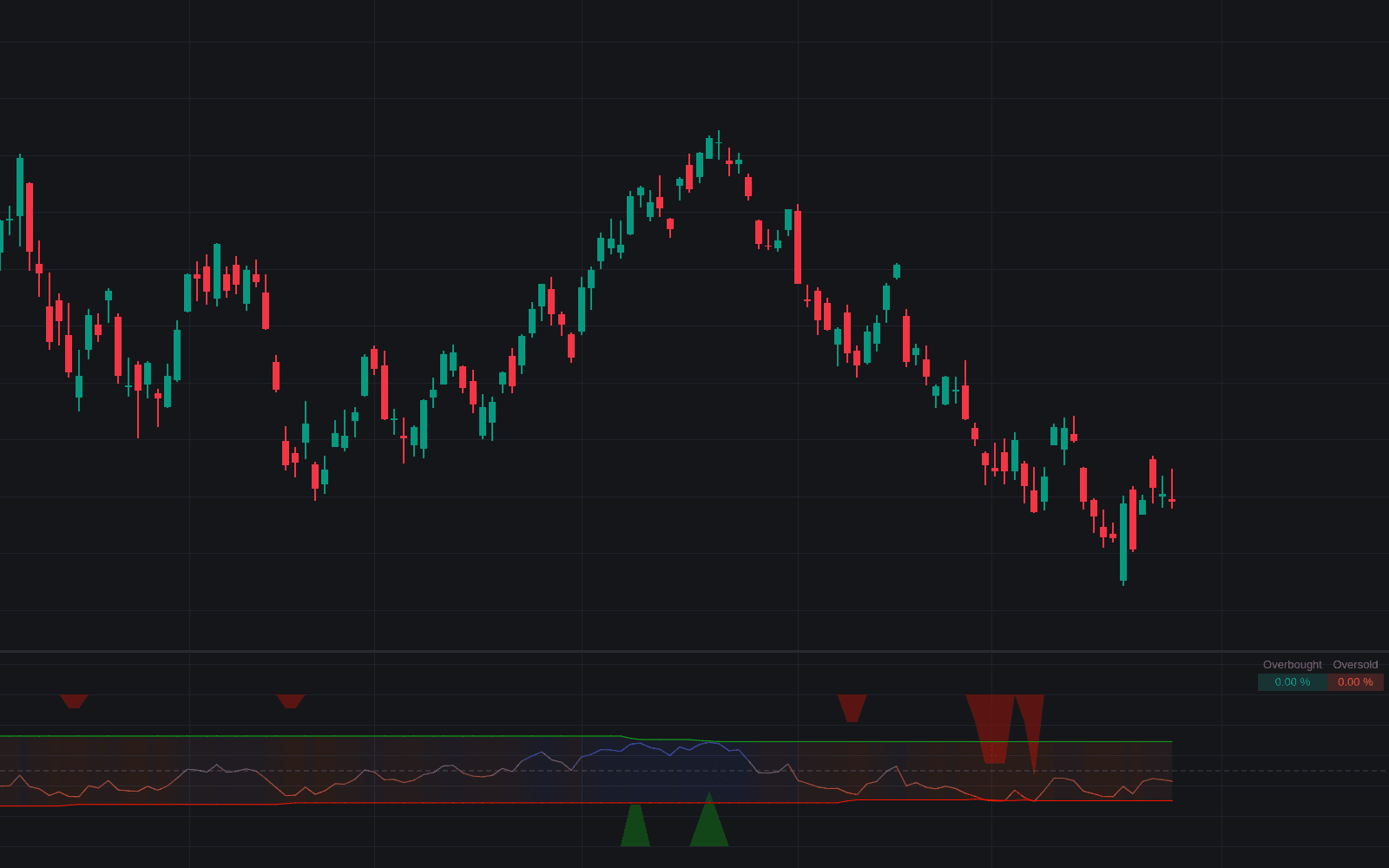
The indicator plots circular markers directly on the RSI line when statistically significant extremes occur:

  • A Bullish Marker appears when RSI crosses below the adaptive lower bound (Deep Discount zone).
  • A Bearish Marker appears when RSI crosses above the adaptive upper bound (Extreme Premium zone).

Unlike traditional RSI signals that may fire repeatedly in trending markets, this system includes a built-in reset mechanism. New signals are only generated after RSI crosses back through the 50-level midline. This ensures that:

  • The market has structurally reset.
  • Signals are less clustered.
  • False reversals are reduced.

This makes the Adaptive Bounds RSI particularly useful for disciplined mean reversion trading strategies.

Why Adaptive RSI Levels Outperform Static 70/30 Thresholds

Static RSI levels assume market behavior is constant—but volatility, trend strength, and momentum are constantly shifting. In strong uptrends, RSI may live above 60–65 for extended periods. In strong downtrends, it may stay suppressed below 40.

The Adaptive Bounds RSI addresses this by:

  • Expanding upper bounds during persistent bullish momentum.
  • Compressing lower bounds during bearish pressure.
  • Contracting both bounds during low-volatility consolidations.

As a result, traders avoid premature counter-trend trades and gain better timing during true exhaustion events.

Indicator Logic: Online 1D K-Means Clustering Explained Simply

The core innovation behind this trading indicator is its Online 1D K-Means algorithm.

Unlike traditional clustering models that require a full dataset, this algorithm updates in real time:

  1. A new RSI value is calculated.
  2. The algorithm finds which of the five centroids is closest to that value.
  3. That centroid shifts toward the new RSI reading.
  4. The amount of movement is determined by the Learning Rate.

Because this process happens bar-by-bar, the adaptive boundaries “breathe” with the market.

For example:

  • In a persistent uptrend, the upper bound gradually migrates higher.
  • In a volatile environment, clusters widen.
  • In a range-bound market, clusters compress around equilibrium.

This creates a self-adjusting oscillator suitable for multiple asset classes including stocks, forex, crypto, and futures.

Indicator Settings

The Adaptive Bounds RSI provides customizable parameters to suit different trading styles and timeframes.

Oscillator Settings

  • RSI Length: Defines the lookback period for the underlying Relative Strength Index calculation. Shorter lengths increase sensitivity, while longer lengths smooth the oscillator.

K-Means Settings

  • Learning Rate (K-Means): Controls how quickly the adaptive bounds respond to new RSI data.
    • Higher values → Faster adaptation, more responsive bounds.
    • Lower values → Slower adaptation, smoother and more stable clusters.

Traders using short-term trading strategies may prefer a higher learning rate, while swing or position traders may opt for slower adaptation.

Visual Settings

  • Lower Bound Color: Sets the color of the adaptive lower boundary and bullish markers.
  • Upper Bound Color: Sets the color of the adaptive upper boundary and bearish markers.
  • Auto RSI Color: Automatically matches RSI color to the chart theme.
  • RSI Color: Manual color override when Auto RSI Color is disabled.

These customization options allow seamless integration into any chart layout.

Alerts for Automated Trading and Notifications

The Adaptive Bounds RSI includes built-in alerts to support automated trading systems and discretionary traders:

  • Regime Flip: Triggers when the RSI transitions from Neutral into a Bullish or Bearish regime.
  • Lower Bound Cross: Alerts when RSI enters the Deep Discount zone.
  • Upper Bound Cross: Alerts when RSI enters the Extreme Premium zone.

These alert conditions can be used for:

  • Strategy automation
  • Entry timing
  • Risk management
  • Portfolio monitoring

Frequently Asked Questions (FAQ)

What makes Adaptive Bounds RSI different from regular RSI?

Traditional RSI uses fixed 70/30 thresholds. Adaptive Bounds RSI uses machine learning-inspired clustering to dynamically adjust overbought and oversold levels based on current market behavior.

Is this indicator better for trend trading or mean reversion?

It works for both. The regime classification helps confirm trends, while the adaptive extreme zones help identify statistically meaningful reversal opportunities.

How do I access Adaptive Bounds RSI?

You can get access on the LuxAlgo Library for charting platforms like TradingView, MetaTrader (MT4/MT5), and NinjaTrader for free.

Can I use this indicator for crypto, forex, and stocks?

Yes. Because the bounds adapt to volatility and momentum, the Adaptive Bounds RSI is suitable for all liquid markets and multiple timeframes.

Trading & investing are risky and many will lose money in connection with trading and investing activities. All content on this site is not intended to, and should not be, construed as financial advice. Decisions to buy, sell, hold or trade in securities, commodities and other investments involve risk and are best made based on the advice of qualified financial professionals. Past performance does not guarantee future results.

Hypothetical or Simulated performance results have certain limitations. Unlike an actual performance record, simulated results do not represent actual trading. Also, since the trades have not been executed, the results may have under-or-over compensated for the impact, if any, of certain market factors, including, but not limited to, lack of liquidity. Simulated trading programs in general are designed with the benefit of hindsight, and are based on historical information. No representation is being made that any account will or is likely to achieve profit or losses similar to those shown.

Testimonials appearing on this website may not be representative of other clients or customers and is not a guarantee of future performance or success.

As a provider of technical analysis tools and strategies, we do not have access to the personal trading accounts or brokerage statements of our customers. As a result, we have no reason to believe our customers perform better or worse than traders as a whole based on any content, tool, or platform feature we provide.

Charts used on this site are by TradingView in which the majority of our technical indicators are built on. TradingView® is a registered trademark of TradingView, Inc. www.TradingView.comTradingView® has no affiliation with the owner, developer, or provider of the Services described herein.

Market data is provided by CBOE, CME Group, BarChart, CoinAPI. CBOE BZX real-time US equities data is licensed from CBOE and provided through BarChart. Real-time futures data is licensed from CME Group and provided through BarChart. Select cryptocurrency data, including major coins, is provided through CoinAPI. All data is provided “as is” and should be verified independently for trading purposes.

This does not represent our full Disclaimer. Please read our full disclaimer.

© 2026 LuxAlgo Global, LLC.