Bollinger Bands Breakout Oscillator
 By LuxAlgoJun 20, 2022
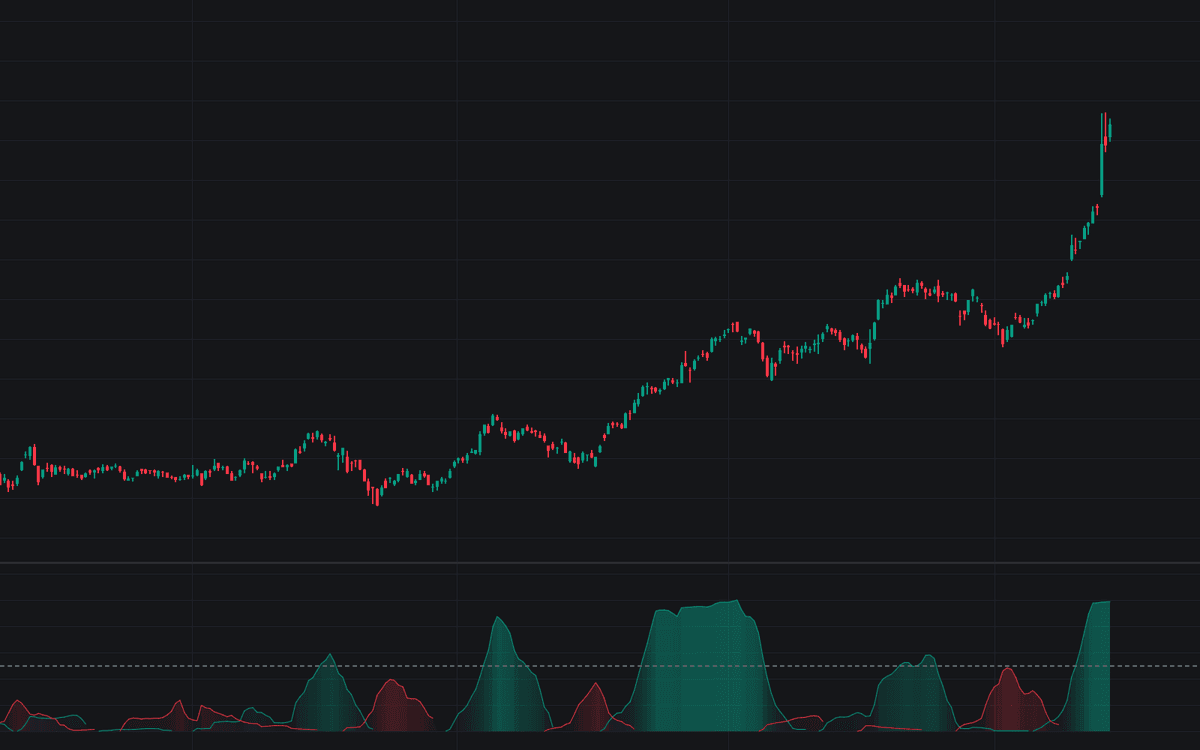

The Bollinger Bands Breakout Oscillator puts a number on something traders usually eyeball: how significant a push beyond the Bollinger Bands extremities really is. Whenever price trades outside a band, the oscillator sums the distance between price and that extremity, normalizes it by the total absolute distance over the lookback window, and plots the result as opposing bullish and bearish areas. The outcome is a clean read of breakout conviction for traders who want trends confirmed by pressure at the bands rather than by price alone.
How to Trade the Bollinger Bands Breakout Oscillator?
- Green dominant: bullish breakout pressure outweighs bearish, evidence of an uptrend in force.
- Red dominant: bearish breakouts prevail, pointing to a downtrend.
- Area amplitude: larger areas correspond to more significant breakouts and, potentially, stronger trends; shrinking areas show conviction draining away.
Because both series measure movement outside the extremities, the multiplier is the sensitivity dial: raising it widens the underlying bands so escapes become rarer but more meaningful, while lowering it makes the oscillator register far more events.
Bollinger Bands Breakout Oscillator Settings
- Length: the period of the underlying Bollinger Bands. Shorter values make the oscillator react faster to recent movement.
- Mult: the band-width multiplier controlling breakout sensitivity.
- Src: the price source fed into the calculation.
Frequently Asked Questions
Free indicator
Get free access to this indicator on the platforms below.

The Library is free. Quant makes it yours.
Pull any concept or indicator into Quant: rebuild it, retune it, or turn it into a backtested strategy of your own.