FVG Channel
 By LuxAlgoOct 2, 2024
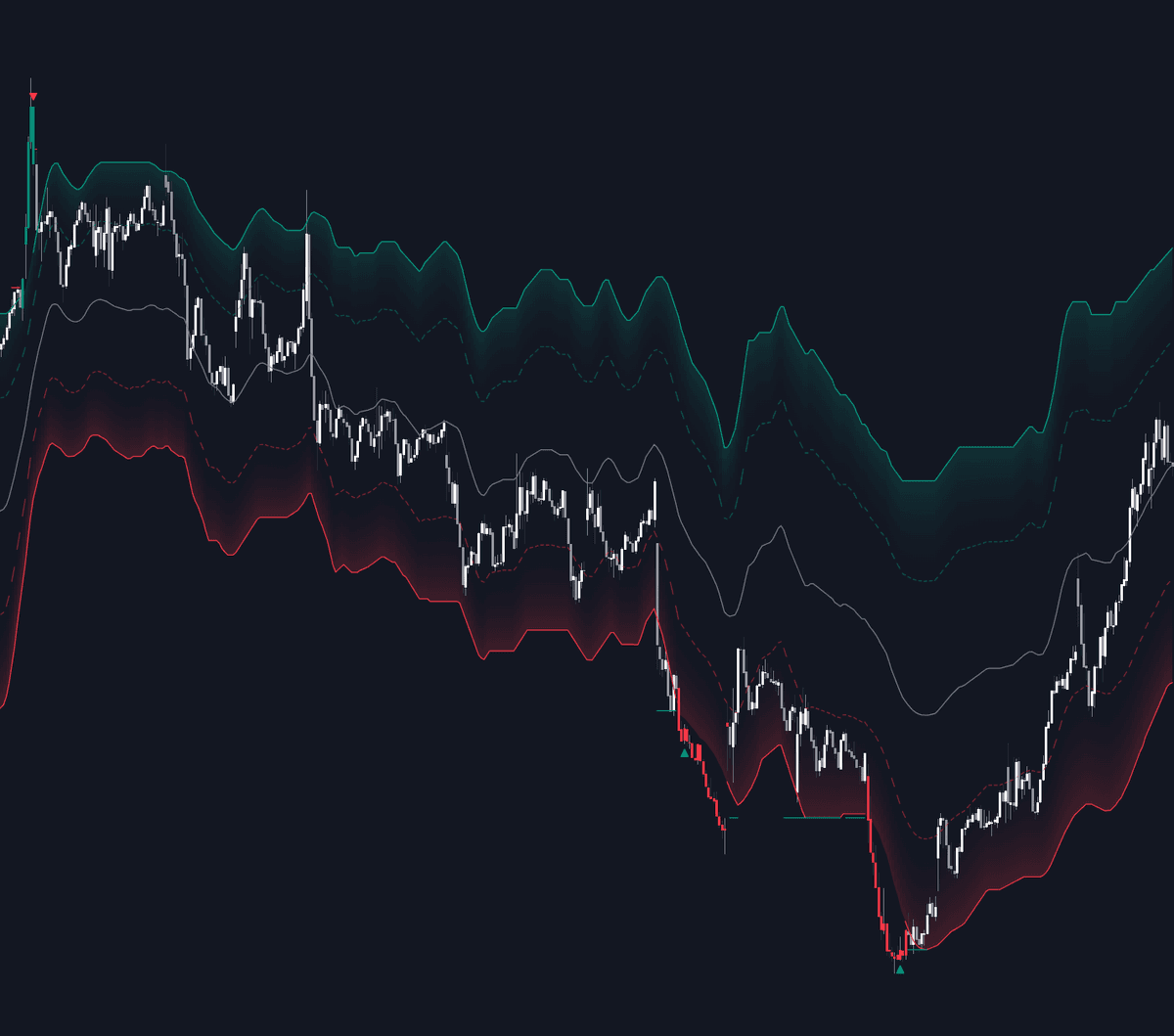

The FVG Channel builds a price channel out of unmitigated fair value gaps: recent bullish gaps are averaged into the upper bands, bearish gaps into the lower bands, over a user-defined lookback. Five lines are plotted in total: two outer extremes and three inner bands at Fibonacci ratios (0.786, 0.5, and 0.236) of the outers, giving a graded map of where imbalances cluster.
How to Trade the FVG Channel?
- Price holding above the inner upper band: the 0.786 band defines an uptrend and acts as dynamic support on retracements.
- Price losing the inner upper band without recovering: a warning of uncertainty that can resolve into consolidation or reversal; the same logic mirrors for downtrends at the lower bands.
- Breakout Levels: when every gap in one direction has been mitigated except one, the survivor is a "last stand" level, support or resistance whose decisive break reflects strong momentum.
- Reversal signals: printed when all gaps on one side are mitigated and an engulfing candle forms in the opposite direction; candle colors also change once a side is fully cleared.
Under the hood the channel is computed in two steps: mitigation levels of the tracked gaps (bottoms for bullish, tops for bearish) are averaged per side, then a simple moving average smooths the result. The reversal signals are best weighed alongside other tools rather than taken in isolation.
FVG Channel Settings
- Unmitigated FVG Lookback: the maximum number of unmitigated gap levels included in the calculation. Higher values build a steadier, longer-horizon channel.
- Smoothing Length: the intensity of smoothing applied to the channel. Set it to 1 to inspect the raw first-step averages.
Frequently Asked Questions
Free indicator
Get free access to this indicator on the platforms below.

The Library is free. Quant makes it yours.
Pull any concept or indicator into Quant: rebuild it, retune it, or turn it into a backtested strategy of your own.