FVG + Liquidity Sweep + CISD
 By LuxAlgoJun 3, 2026
FVG + Liquidity Sweep + CISD is an indicator on Vela, our next-generation charting platform, written in Pine Script®.
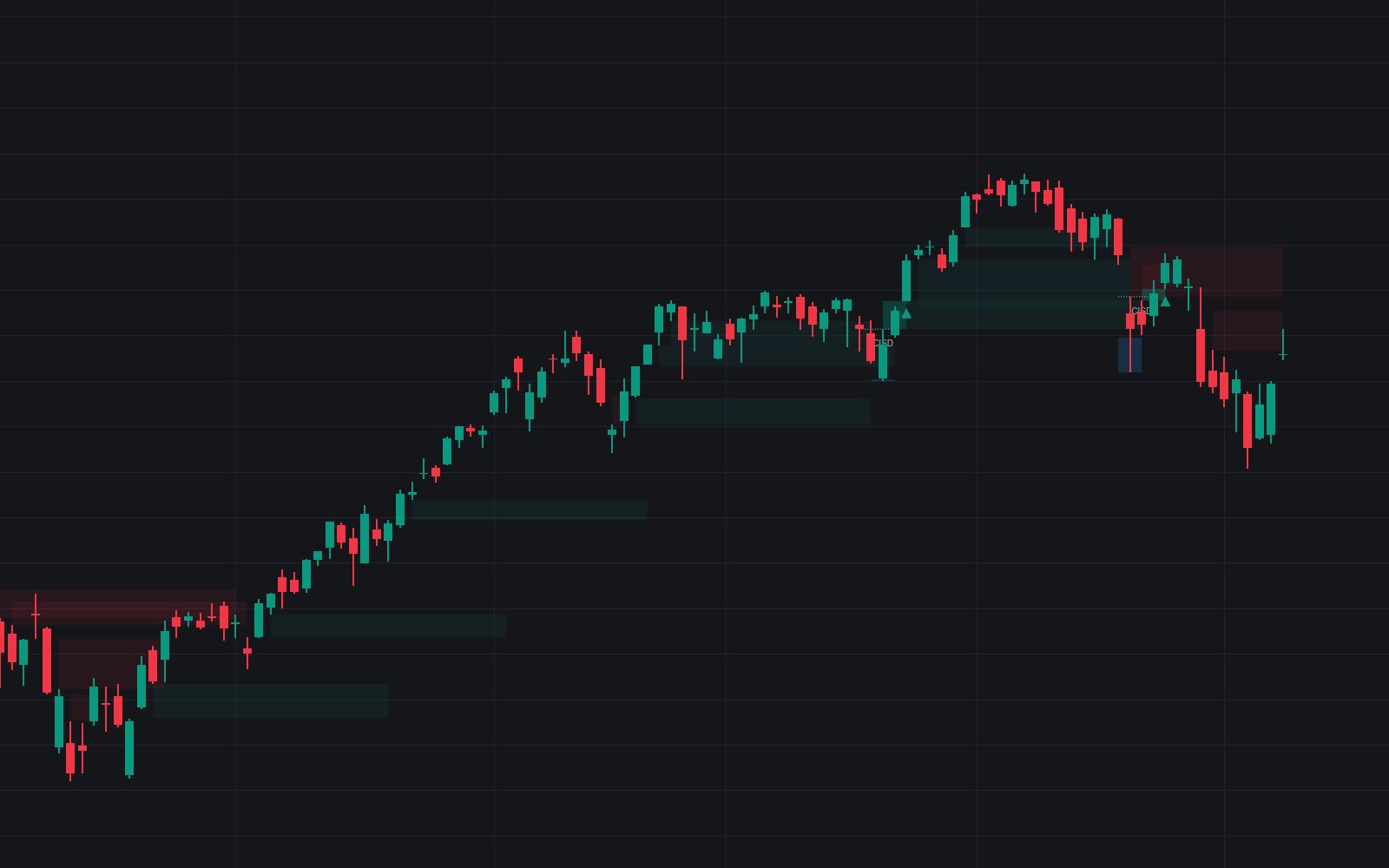

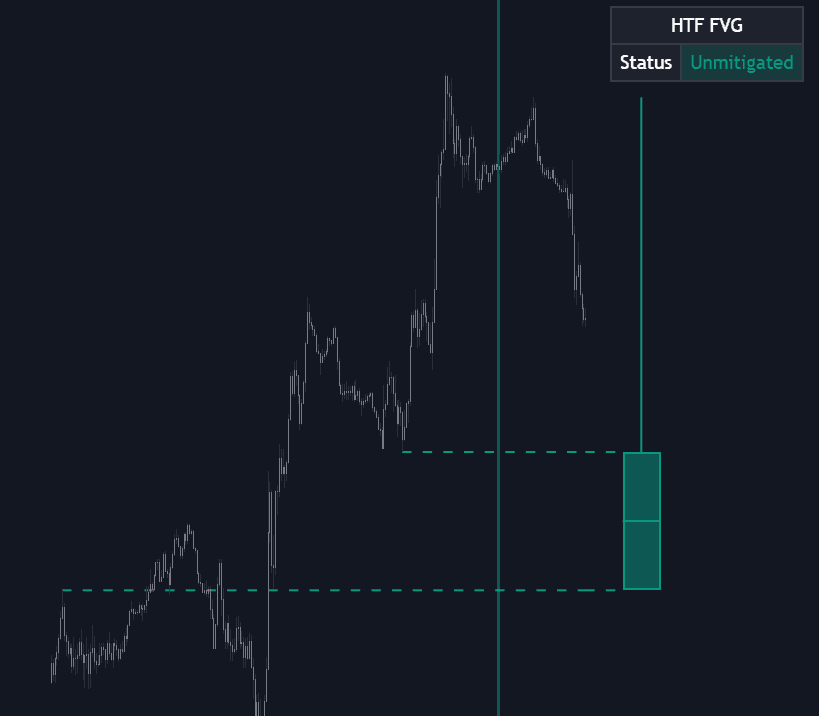
FVG + Liquidity Sweep + CISD automates the PAC Method, a multi-step reversal model that anchors every setup to higher timeframe Fair Value Gaps (FVGs) and demands lower timeframe confirmation before printing a signal. Gap data from a user-selected higher timeframe is drawn on the execution chart and filtered by an ATR-based volatility threshold, so only gaps representing significant displacement appear.
How to Trade the FVG + Liquidity Sweep + CISD?
- Bullish setup (triangle-up): price enters a bullish HTF gap (green box), sweeps a recent low to collect sellside liquidity, moves back above the sweep candle's high, and a local bullish FVG forms in the new direction.
- Bearish setup (triangle-down): inside a bearish HTF gap (red box), price sweeps a recent high for buyside liquidity, closes below the sweep candle's low, and a local bearish FVG confirms the turn.
- Sweep boxes: buyside and sellside sweeps are marked inside the HTF zones, so every step of the sequence is visible as it completes.
The hinge of the model is the change in state of delivery: instead of waiting for a distant swing to break, as a market structure shift requires, it keys off the immediate reversal of the candle that swept liquidity, keeping entries close to the turn itself.
FVG + Liquidity Sweep + CISD Settings
- HTF FVG Timeframe: the timeframe used to detect anchor gaps (for example, a 15-minute or 1-hour anchor over a 1-to-5-minute execution chart).
- FVG Volatility Threshold: the ATR multiplier setting the minimum size of a valid HTF gap.
- Max FVG Extension (Bars): how far an unmitigated gap projects forward before it stops being drawn.
- Liquidity Lookback: the number of bars defining the local highs and lows eligible for sweeps.
Frequently Asked Questions
Free to use
Run it on Vela. Go further with a paid plan.
- Up to 500 strategy alerts, with webhook automation
- Up to 10× the chart history of Free
- Orderflow lookback up to full history
- More Quant usage to customize it, plus extra usage when you need it
- Futures data alongside crypto, stocks, forex and commodities
Also works on

Related indicators
All 39 Fair Value Gap indicators
Run it on Vela. Make it yours with Quant.
Open this indicator free on Vela, our next-generation charting platform. Then ask Quant, our coding agent built into Vela, to retune it or turn it into a backtested strategy of your own.