Rising & Falling Window Signals
 By LuxAlgoAug 20, 2024
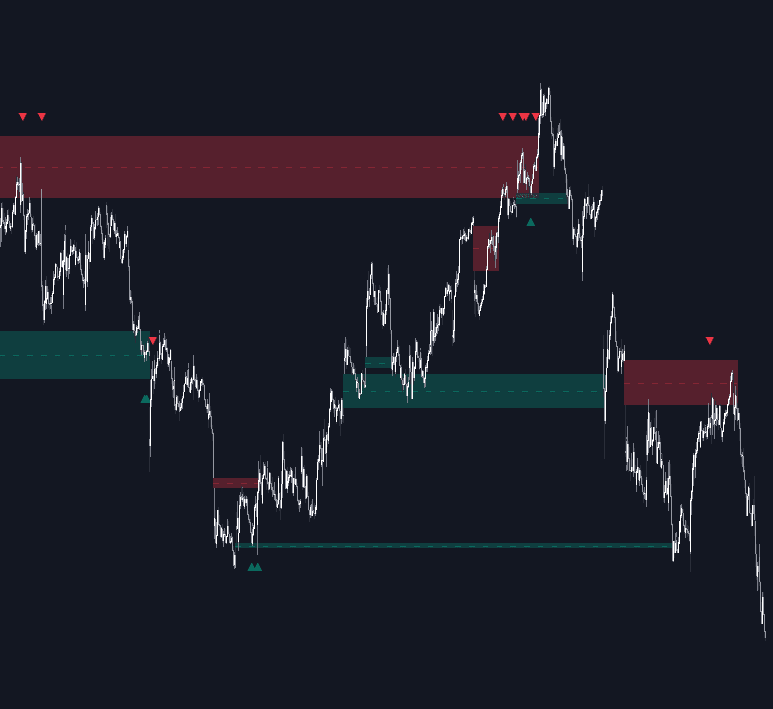
Rising & Falling Window Signals detects the window formations from Steve Nison's candlestick work (a common gap left when the wicks of two successive candles fail to overlap) and converts each one into a managed support-and-resistance zone. A Rising Window carries bullish momentum, a Falling Window bearish momentum, and once formed, the gap becomes a level where returning price tends to react.
How to Trade the Rising & Falling Window Signals?
- Rising Window retest: price returning into a bullish window often finds support, strongest at the zone's opposite extreme.
- Falling Window retest: the bearish mirror: expect resistance, again anchored by the far extreme.
- Wide windows: on broader zones the midpoint carries the most weight, so keep midlines visible when gaps run large.
- Zone break: once price trades cleanly through a window (the gap fill completing), the zone stops offering support or resistance.
Three signal types track how price tests a zone. Regular fires when price pushes beyond an unmitigated zone's boundary; Engulfing triggers on an engulfing candle whose wicks contact the zone; Wick fires when a candle closes beyond the zone while its wick probes inside. Each captures a different flavor of acceptance or rejection.
Rising & Falling Window Signals Settings
- Maximum Live Zone Length: lifetime cap on a zone's extension when it goes unmitigated.
- Minimum Inactive Zone Length: hides short-lived zones that never earned relevance.
- Extend Historical Zones on Touch: re-extends an old unmitigated zone to the current bar when price revisits it.
- Minimum Width / Maximum Width: ATR-multiplier filters that discard windows too narrow or too wide to trade.
- Show Midlines: toggles zone midpoints.
- Show Zone Tests / Test Type / Signal Size: enable test signals, pick the detection method, and size the labels.
Frequently Asked Questions
Free on Vela
Run it on Vela. Go further with a paid plan.
- Up to 500 strategy alerts, with webhook automation
- Up to 10× the chart history of Free
- Orderflow lookback up to full history
- Up to 100,000 monthly credits for Quant to customize it
- Futures data alongside crypto, stocks, forex and commodities
Also on other platforms
Get free access to this indicator elsewhere.

The Library is free. Quant makes it yours.
Pull any concept or indicator into Quant: rebuild it, retune it, or turn it into a backtested strategy of your own.