All indicators

Seasonality Widget

By LuxAlgoMay 14, 2024

Static chart image

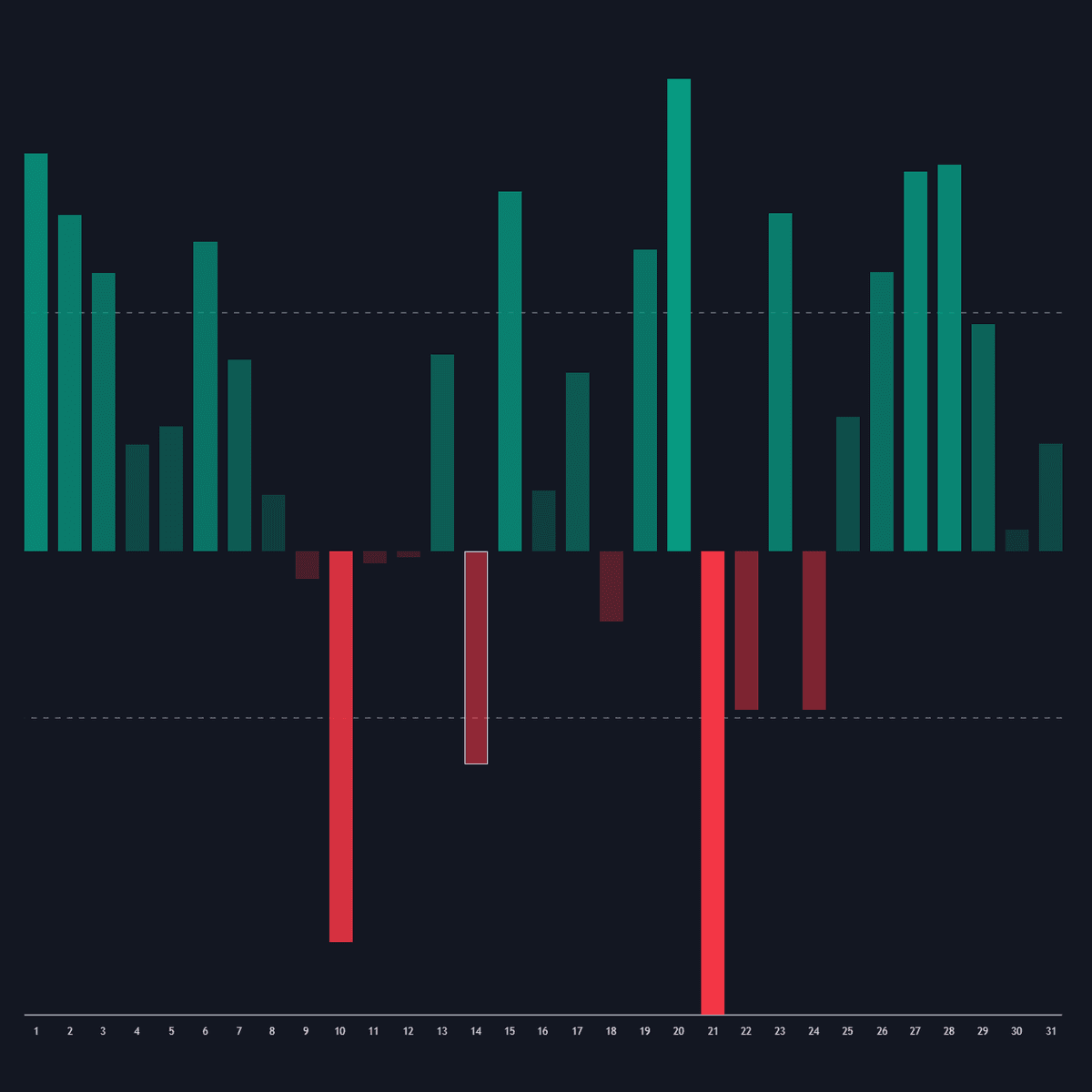
The Seasonality Widget tool provides traders with a user-friendly method to visualize and analyze seasonal trends from a variety of data sources. This comprehensive tool is designed to help traders recognize and take advantage of recurring patterns within different time frames, enabling more informed trading decisions.

Users have the flexibility to select different levels of granularity, as well as various statistics to better express and understand seasonal trends. By using this tool, traders can gain valuable insights into how certain assets behave over time, and this insight can be strategically applied to trading strategies for improved outcomes.

How to Use the Seasonality Widget for Trading Insights?

indicator image

Seasonality is a powerful concept that helps traders identify and analyze recurring trends that occur at regular intervals. With the Seasonality Widget, users can select these intervals using the granularity setting, determining how data is grouped. Options include:

  • Hour
  • Day Of Week
  • Day Of Month
  • Month
  • Day Of Year

Understanding and targeting these intervals can significantly impact trading strategies, as it allows the trader to predict potential price movements based on historical averages.

indicator image

In the seasonal chart example above, the BTCUSD seasonal price change is highlighted for every hour of the day, which showcases the average price change calculated for each specific hour. This type of analysis can give traders an edge, estimating expected price movement during specific time slots on any given day.

Moreover, the tool allows users to select a starting point for data collection, using the "From Date" parameter. This ensures that only data after a specific date is included in the Seasonality Widget’s calculations.

Choose the Right Data to Analyze

indicator image

The Seasonality Widget enables the analysis of different types of data, including:

  • Price Change

    • Calculated as the closing price minus the previous closing price.
  • Price Change (%)

    • Calculated as the closing price minus the previous closing price, divided by the previous closing price, and multiplied by 100.
  • Price Change (Sign)

    • This reflects the sign of the price change, indicating negative or positive changes, normalized within a range of 0 to 100. A value above 50 indicates a higher frequency of positive changes.
  • Range

    • The difference between the high and low prices.
  • Price - SMA

    • The price minus its simple moving average (SMA). Traders can define the SMA period.
  • Volume

    • Represents the total amount of contracts traded, indicating periods of high or low market liquidity.
  • Volume - SMA

    • Volume minus its simple moving average, allowing the SMA period to be adjusted by the user.

Optimize and Filter Your Data

Beyond merely selecting starting thresholds with "From Date," users can further refine their analyses by excluding certain data periods, effectively removing outliers. This is facilitated by the "Filter Granularity" setting, which specifies the period type to exclude. The specific timing for exclusion can be specified via the "Numerical Filter Input" setting, and it supports multiple, comma-separated values.

indicator image

For instance, by setting "Year" in the filter granularity and entering "2008" in the "Numerical Filter Input," users can easily exclude data from that year.

Understanding Key Statistics Supported by Seasonality Widget

Different analytical statistics can be applied to grouped data to gain varied insights:

  • Mean
  • Median
  • Max
  • Min
  • Max-Min Average

indicator image

Opting for the median can often provide a more robust measure against outliers, offering a more genuine representation of central data tendencies. Maximum and minimum values, while not indicative of general trends, do provide crucial information on the peak and trough values during specified periods.

Seasonality Widget Configuration Settings

Fine-tune your use of the Seasonality Widget with various settings:

  • Granularity: Choose the period for grouping data.
  • From Data: Establish the starting point for data collection.

Data Settings

  • Analyze: Decide the specific data for the seasonality widget's processing.
  • SMA Length: Set the simple moving average period used for "Price - SMA" and "Volume - SMA."
  • Statistic: Select the statistic for application on grouped data.

Filter Settings

  • Filter Granularity: Specify the period type to exclude in processing.
  • Numerical Filter Input: Determine the exact time to exclude, which can vary based on selected filter granularity. Supports multiple numerical inputs, must be comma-separated.

FAQ

How can I access the Seasonality Widget? You can get access on the LuxAlgo Library for charting platforms like TradingView, MetaTrader (MT4/MT5), and NinjaTrader for free.

What is the benefit of using different granularities in the Seasonality Widget? Using different granularities allows traders to analyze trends at varying intervals, giving a more nuanced understanding of market behavior.

Can I exclude multiple periods when analyzing data with the Seasonality Widget? Yes, using the "Numerical Filter Input" setting, multiple periods can be excluded through comma-separated values.

This highly optimized and detailed description offers traders a fundamental grasp of the Seasonality Widget, providing them with the knowledge to utilize it for superior trading strategies, while also ensuring it ranks well in search engine results for related trading terms.

Free indicator

Get free access to this indicator on the platforms below.

TradingView
NinjaTrader
MetaTrader 4/5

The Library is free. Quant makes it yours.

Pull any concept or indicator into Quant: rebuild it, retune it, or turn it into a backtested strategy of your own.