Signal Moving Average
 By LuxAlgoSep 12, 2022
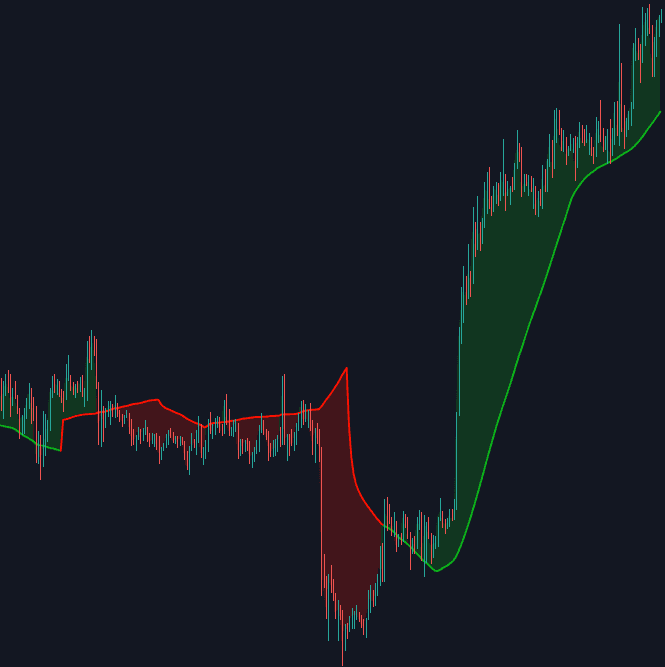

The Signal Moving Average exists for one job: being the slower half of crossover systems. In a trending market it behaves like a standard moving average of the same period; in a ranging market it deliberately diverges away from price. That single behavior attacks the crossover trader's worst enemy (the cluster of meaningless crosses that congestion produces), because a line standing apart from the chop simply cannot be crossed as often.
How to Trade the Signal Moving Average?
- Green fill between price and line: price is above the signal line. The shaded area gives the bullish/bearish read at a glance.
- Price crossing the line: with range-born crosses suppressed, a cross that does occur carries more weight than the same event on a plain average.
- Line color: the signal line only recolors once a clear trend emerges, so a neutral line is itself information: the market is ranging.
- Pair it with a faster average: run it as the signal leg beneath a quicker moving average to refine entries.
Set against a simple moving average of the same period, the design's cumulative count of price/line intersections grows far more slowly through choppy stretches, exactly the crossings that rack up transaction costs without ever producing a trend.
Signal Moving Average Settings
- Length: the moving average period.
- Src: the source series the average is computed on.
Frequently Asked Questions
Free indicator
Get free access to this indicator on the platforms below.

The Library is free. Quant makes it yours.
Pull any concept or indicator into Quant: rebuild it, retune it, or turn it into a backtested strategy of your own.