Triangular Momentum Oscillator & Real Time Divergences
 By LuxAlgoNov 3, 2020
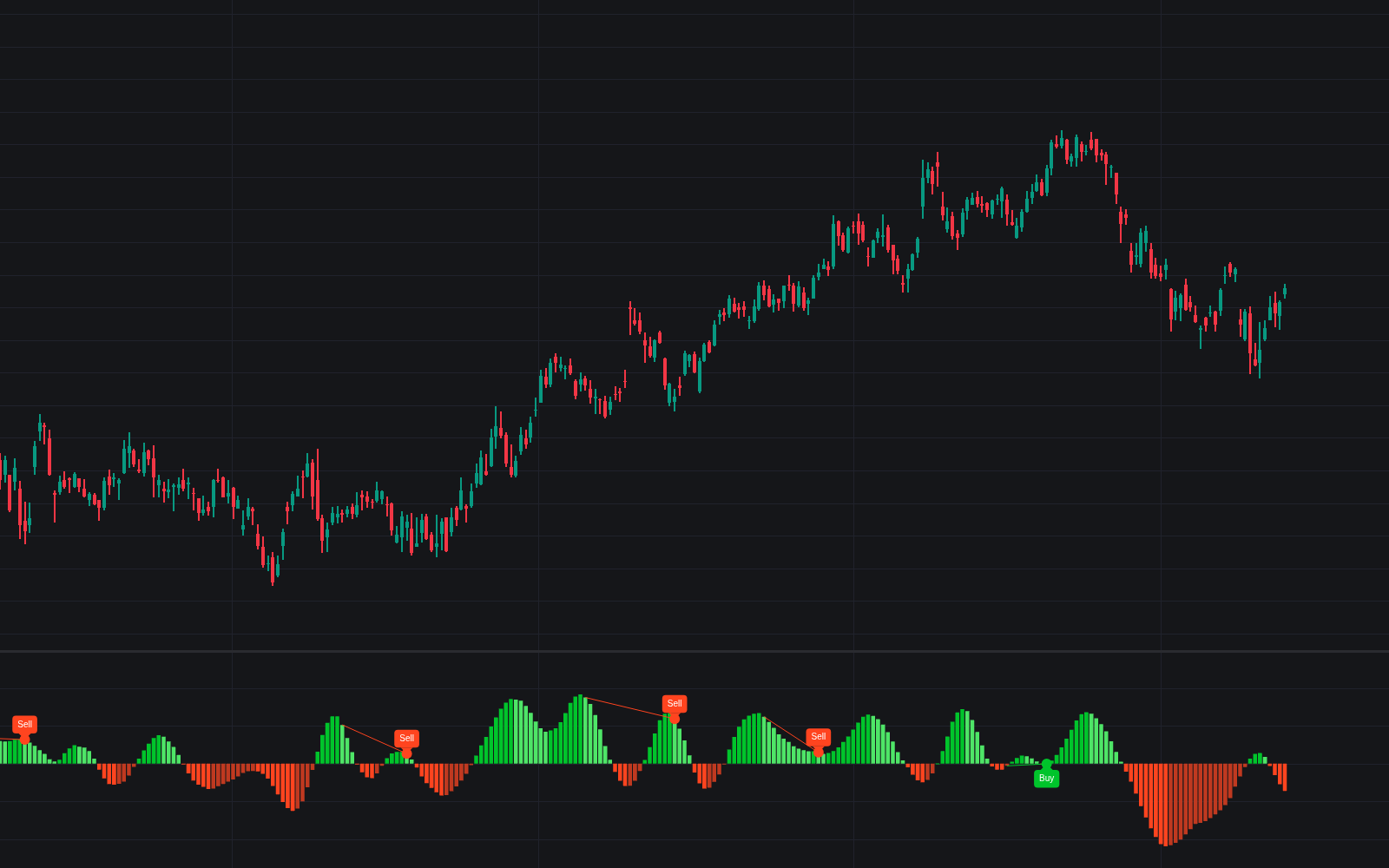

Triangular Momentum Oscillator & Real Time Divergences exploits the smooth properties of a triangular moving average to do what noisier oscillators cannot: confirm divergences as they form. Because the output is smooth, a top or bottom registers the instant its first difference crosses zero (no waiting on pivot confirmation), and the indicator draws connecting lines whenever price and momentum disagree.
How to Trade the Triangular Momentum Oscillator & Real Time Divergences?
- Divergence lines: consecutive oscillator tops or bottoms moving against price flag potential reversals while the setup is still forming.
- Oscillator direction: a rising value reads as an uptrend, a declining one as a downtrend, a trend gauge that works even when no divergence is present.
- Correlation coloring: with the correlation option enabled, red segments mark negative price/oscillator correlation, the spots where the two move in opposition and reversals tend to brew.
Longer settings filter out short-term variation and surface longer-term shifts. The trade-off is honest: the smoothness that makes divergences legible also introduces some lag, so treat signals as context for a decision rather than precision triggers.
Triangular Momentum Oscillator & Real Time Divergences Settings
- Length: the oscillator period; higher values produce a smoother output.
- Src: the input source for the calculation.
- Show Lines (enabled by default): draws the lines connecting consecutive tops and bottoms when a divergence is detected.
- Color Based On Price/Oscillator Correlation: recolors the oscillator by its correlation with price, with red indicating negative correlation.
Frequently Asked Questions
Free indicator
Get free access to this indicator on the platforms below.

The Library is free. Quant makes it yours.
Pull any concept or indicator into Quant: rebuild it, retune it, or turn it into a backtested strategy of your own.