Volume Footprint
 By LuxAlgoJan 24, 2022
Volume Footprint is an indicator on Vela, our next-generation charting platform, written in Pine Script®.
.png&w=1200&q=75)
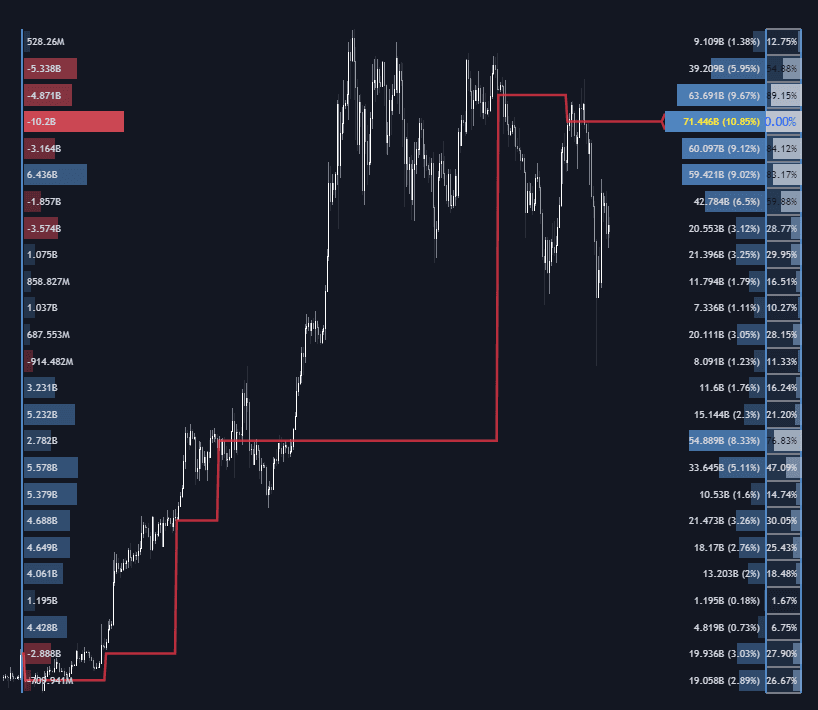
Volume Footprint estimates a per-candle footprint from tick data. Each bar is divided into equidistant price intervals (sized by an average true range or a width you define), and the volume transacted in every interval is stacked alongside the candle. The result behaves like an intrabar volume profile, exposing the price levels where activity concentrated inside each individual bar.
How to Trade the Volume Footprint?
- Heavy intervals: the levels where the most contracts changed hands, the bar's areas of market interest and the anchor points for reading it.
- Gradient display: darker cells carry relatively more volume, adding depth of activity at a glance.
- Trend coloring: boxes tinted by the candle's bullish or bearish direction keep sentiment context attached to the distribution.
- As Percentage: reads each interval as a share of the candle's total volume, making footprints directly comparable across bars.
Footprints are computed as new bars form, and changing the settings resets previously calculated ones, behavior that makes the tool most at home on lower timeframes, where fresh bars arrive steadily and intrabar detail matters most.
Volume Footprint Settings
- Interval Size Method (default Atr): how interval width is derived, either an average true range (Atr) or a user-specified width (Manual).
- Value beside Interval Size Method (unlabeled, default 14): the ATR period or the custom width, depending on the method; this drives how many intervals each candle contains.
- As Percentage (default off): displays accumulated interval volume as a percentage of candle volume.
- Display Type: how the footprint is drawn, as trend-colored boxes, a volume gradient, or uniform boxes with directional side lines.
- Trend Color: the bullish and bearish colors applied to the display.
Frequently Asked Questions
Free to use
Run it on Vela. Go further with a paid plan.
- Up to 500 strategy alerts, with webhook automation
- Up to 10× the chart history of Free
- Orderflow lookback up to full history
- More Quant usage to customize it, plus extra usage when you need it
- Futures data alongside crypto, stocks, forex and commodities
Also works on

Related indicators
.png&w=3840&q=75)
.png&w=3840&q=75)
Run it on Vela. Make it yours with Quant.
Open this indicator free on Vela, our next-generation charting platform. Then ask Quant, our coding agent built into Vela, to retune it or turn it into a backtested strategy of your own.