Volume Surprise

Oct 22, 2025

Static chart image
Volume Based
Forecasting
Time Based
Correlation
Cycle
Liquidity
Works on the following platforms:
tradingviewSymbolTradingView
For free use on the TradingView platform
ninjatraderNinjaTrader
For free use on the NinjaTrader platform
metatrader4MetaTrader 4
For free use on the MetaTrader 4 platform
metatrader5MetaTrader 5
For free use on the MetaTrader 5 platform
thinkorswimThinkorswim
For free use on the Thinkorswim platform

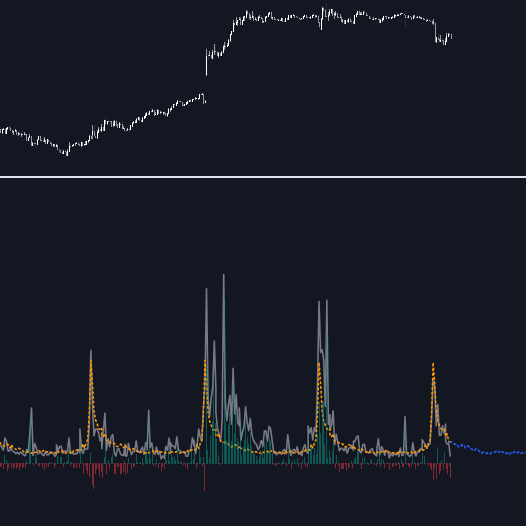
The Volume Surprise trading indicator helps traders instantly identify unusual trading activity by comparing actual volume with its expected level at any given time. It visually displays both real and estimated volume directly on the chart, making it easy to detect spikes or drops in participation. This powerful volume-based trading tool also projects expected volume for upcoming bars, allowing traders to forecast future market activity with enhanced precision.

By analyzing how current volume diverges from what’s statistically expected, the Volume Surprise indicator helps confirm trend strength, detect potential reversals, and spot anomalies caused by events such as earnings announcements, news releases, or macroeconomic reports.

How to Trade with the Volume Surprise Trading Indicator

indicator image

A “Volume Surprise” occurs when actual trading volume is significantly higher or lower than the expected value for that specific time. These deviations often signal that market participants are reacting unusually, providing early clues of trend acceleration or fading momentum.

A built-in histogram displays the difference between actual and expected volume, helping traders visually measure deviations and even use the histogram itself as a standalone volume momentum indicator.

indicator image

Traders can also use the tool to assess how impactful certain market events are. For example, if an important announcement generates lower-than-expected volume, it might indicate muted trader interest or that the market is underestimating the news. Conversely, a surge in volume beyond expectations often accompanies strong breakouts or panic-driven moves.

indicator image

As shown above, significant deviations between actual and expected volume can highlight anomalies or imbalances that may lead to market corrections or short-term reversals.

Detecting Rare or Exceptional Trading Activity

The expected volume is calculated as the average (or median) of past volumes at a specific time. Users can customize how this expected value is computed by grouping volume across user-defined time periods such as hours, days, or months.

To emphasize extremely high or low volume events, traders can switch the calculation mode to Percentiles. By setting a percentile close to 100, you focus on unusually high-volume bars (e.g., 95th percentile), while setting it near 0 highlights exceptionally low-volume conditions.

indicator image

In this example, the 95th percentile highlights only periods where the trading volume exceeds 95% of all historical volumes recorded at that specific time, isolating the most impactful and rare market activity.

Technical Details and Configuration

Choosing the Right Periods

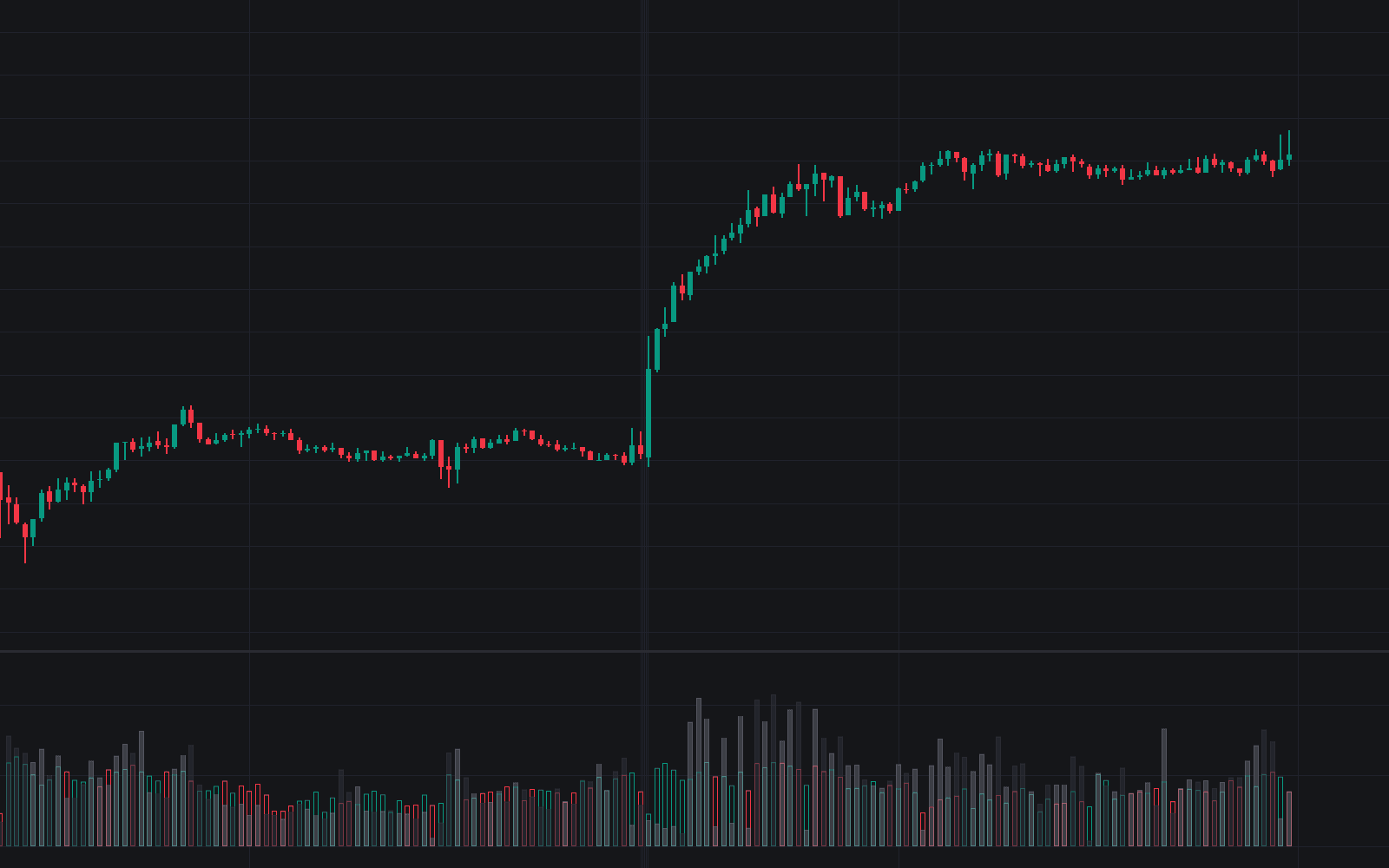
The accuracy of expected volume depends on how volume is grouped. For example, when grouping by hour, the indicator compares today’s 7 PM volume to historical 7 PM volumes to calculate an accurate expected value.

You can also combine multiple time periods (e.g., hours and weekdays) to refine the grouping and improve precision. However, enabling too many periods can dilute the sample size, reducing reliability. For simplicity, an Auto Selection mode automatically picks optimal periods based on your current chart timeframe.

Group Length and Historical Data Depth

indicator image

The Length setting controls how many past observations are included in each group. Increasing this value extends the historical window, making expected volumes more stable and uncovering recurring seasonal or intraday patterns in trading activity.

Recommended Assets and Markets

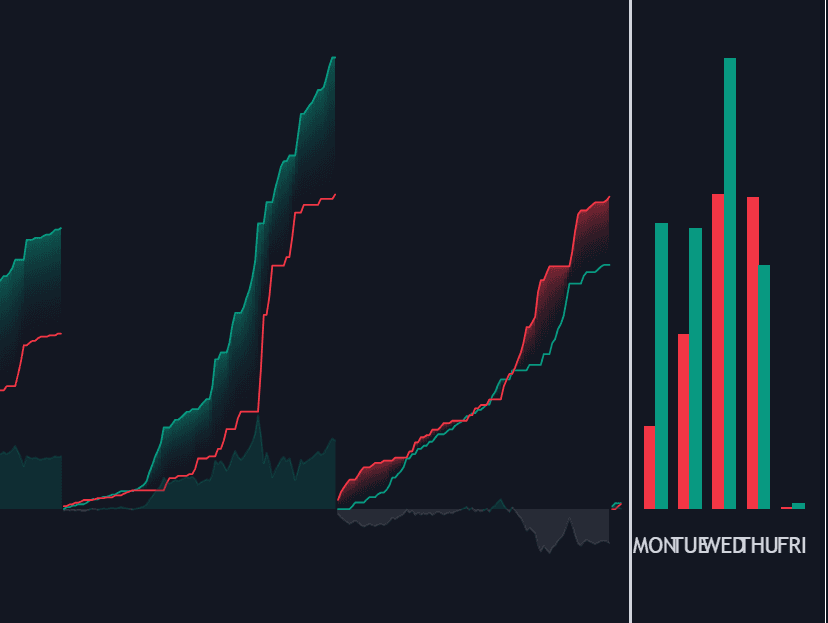
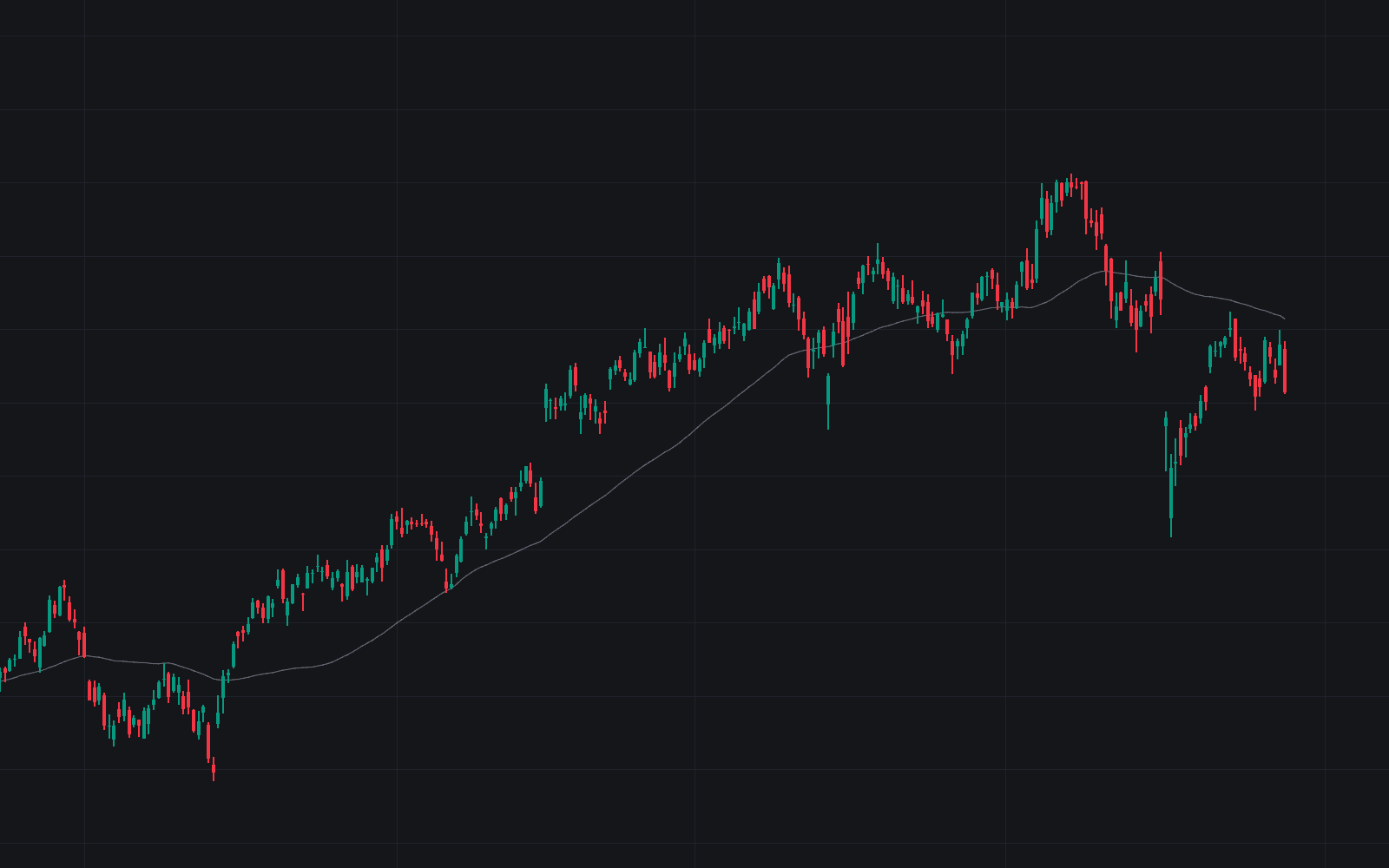
This indicator performs best on assets with strong cyclical trading patterns such as stocks, futures, and forex pairs, which typically show predictable activity spikes during specific sessions or calendar periods.

indicator image

In contrast, cryptocurrencies—which trade 24/7—tend to show weaker periodicity, reducing the accuracy of volume forecasts and expected value comparisons. While still useful, crypto traders should interpret the indicator’s output more cautiously.

Settings Overview

General

  • Length: Maximum number of historical samples used per time group.
  • Smooth: Simple moving average period applied to smooth out the expected value.

Periods

  • Auto Selection: Automatically chooses optimal period combinations based on timeframe.
  • Manual Periods: When disabled, users can manually select:
    • Minutes
    • Hours
    • Days (Day of Week, Day of Month, Day of Year)
    • Months
    • Quarters

Summary

  • Method: Defines how expected value is calculated — options include Mean (default) or Percentile.
  • Percentile: Used when the method is set to Percentile (e.g., 95 for high-volume detection).

Forecast

  • Forecast Window: Number of future bars to project expected volume for.
  • Style: Adjusts how the forecast is visually represented on the chart.

FAQ

What is the Volume Surprise indicator?
It’s a trading indicator that compares actual and expected volume to reveal when trading activity is unusually high or low, signaling potential opportunities.

How can I use it in my trading strategy?
Use it to confirm breakouts, detect fading moves, or anticipate reactions to economic events. High surprises often precede trend continuations, while low surprises can suggest weakening interest.

Which assets work best with this indicator?
Assets with regular trading cycles—such as stocks, futures, and forex pairs—yield the most reliable expected volume estimates.

How can I access the Volume Surprise indicator?
You can get access on the LuxAlgo Library for charting platforms like TradingView, MetaTrader (MT4/MT5), and NinjaTrader for free.

Trading & investing are risky and many will lose money in connection with trading and investing activities. All content on this site is not intended to, and should not be, construed as financial advice. Decisions to buy, sell, hold or trade in securities, commodities and other investments involve risk and are best made based on the advice of qualified financial professionals. Past performance does not guarantee future results.

Hypothetical or Simulated performance results have certain limitations. Unlike an actual performance record, simulated results do not represent actual trading. Also, since the trades have not been executed, the results may have under-or-over compensated for the impact, if any, of certain market factors, including, but not limited to, lack of liquidity. Simulated trading programs in general are designed with the benefit of hindsight, and are based on historical information. No representation is being made that any account will or is likely to achieve profit or losses similar to those shown.

Testimonials appearing on this website may not be representative of other clients or customers and is not a guarantee of future performance or success.

As a provider of technical analysis tools and strategies, we do not have access to the personal trading accounts or brokerage statements of our customers. As a result, we have no reason to believe our customers perform better or worse than traders as a whole based on any content, tool, or platform feature we provide.

Charts used on this site are by TradingView in which the majority of our technical indicators are built on. TradingView® is a registered trademark of TradingView, Inc. www.TradingView.comTradingView® has no affiliation with the owner, developer, or provider of the Services described herein.

Market data is provided by CBOE, CME Group, BarChart, CoinAPI. CBOE BZX real-time US equities data is licensed from CBOE and provided through BarChart. Real-time futures data is licensed from CME Group and provided through BarChart. Select cryptocurrency data, including major coins, is provided through CoinAPI. All data is provided “as is” and should be verified independently for trading purposes.

This does not represent our full Disclaimer. Please read our full disclaimer.

© 2025 LuxAlgo Global, LLC.