ultraultimate
Backtester (PAC)
 By LuxAlgoNov 21, 2023
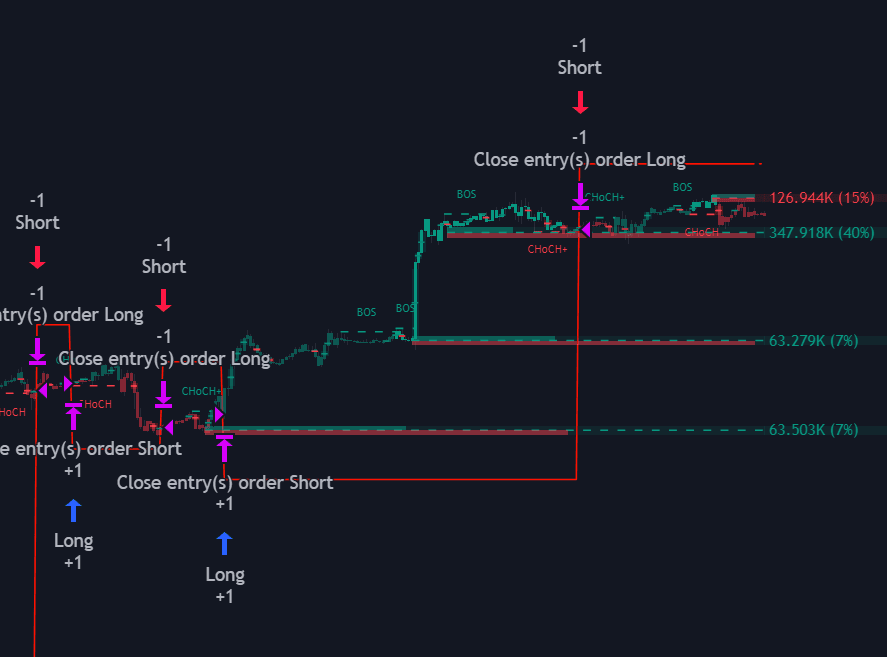
The Backtester (PAC) is the strategy-script companion to LuxAlgo's Price Action Concepts™, built to give discretionary price action a data-driven backbone. Concepts that are usually judged by eye (a structure shift, a mitigated order block, a filled imbalance) become strategy conditions that open, manage, and close positions, so a Smart Money-style playbook can be evaluated statistically before it is traded live.
What's Inside the Backtester (PAC)?
- Step & Match algorithm: each condition carries a Step number; conditions sharing a step must all be true together (matching), while different step numbers form an ordered sequence evaluated one stage at a time, opening a market order when the final step completes. The two modes combine, so one stage of a sequence can itself require several matching conditions.
- Market structure conditions: structure events such as CHoCH and BOS act as entries, anchoring strategies to trend change and continuation the way the toolkit labels them.
- Order block conditions: price entering, being within, or mitigating a bullish or bearish order block can trigger entries or exits, reflecting how these zones concentrate liquidity.
- Imbalance conditions: price entering, being within, or mitigating an imbalance (such as a fair value gap) serves as a condition, capturing the tendency of price to rebalance inefficiencies.
- External sources: moving averages, bands, trailing stops, oscillators, or any other indicator output can join the condition set for entries and exits, blending price action with classic technical tools.
- Custom exits and TP/SL: exit conditions built from toolkit features (for example, exiting longs when price mitigates a bearish order block) alongside point-based take-profit and stop-loss distances.
- Session-aware strategies: documented examples restrict entries to a trading session, such as order block mitigations occurring during the New York session.
- Complete alert system: every action the strategy takes sends a notification, and the Alert Messages section lets each action carry a custom message, with defaults used otherwise.
How to Trade with the Backtester (PAC)?
- Write the playbook as steps: a documented example goes long on a bullish CHoCH and price mitigating a bearish FVG (one matching pair), while sequences handle "structure first, zone second" logic through ascending step numbers.
- Let structure open and zones close: using CHoCH entries with order block mitigation exits keeps the whole trade lifecycle inside price action logic, one of the documented configurations.
- Blend in external tools deliberately: a documented example exits positions when an external oscillator reads overbought or oversold, a template for combining structured entry-to-exit logic from two methodologies.
- Read the statistics with discipline: closed-trade counts, equity behavior, and drawdown statistics matter more than a flattering net profit from a handful of trades.
- Calibrate Strategy Properties before judging anything: the published preview uses a 10,000 balance, 10% equity order sizing, commission approximating a realistic spread, and slippage, and the authors strongly recommend matching these to your own account and instrument, since defaults like 1-contract sizing exist only to run on most instruments.
Key Settings & Modes
- Step dropdown on each condition row, the heart of the Step & Match algorithm.
- Entry condition groups for market structures, order blocks, imbalances, and external sources, on both long and short sides.
- Exit conditions from toolkit features or external sources, plus point-based Take Profit and Stop Loss distances.
- Alert Messages: per-action custom message fields, with default messages when left empty.
- Strategy Properties: balance, order size, commission, and slippage. Adjust to your account and market before interpreting results.