


Explore the top prop trading firms for algorithmic trading in 2025, comparing fees, profit splits, and platform features to find your ideal match.
Looking for the best prop trading firms for algorithmic trading in 2026? Here's a quick guide to help you choose the right firm based on your trading needs, technology preferences, and profit-sharing goals. If you're new to the space, this overview of what a proprietary trading firm does can help you compare models and rules more confidently.
How to Pass Prop Firm Challenges in 2026 (Using Ready-to-Use Strategies With a Higher Probability of Success)

Passing a prop firm challenge in 2026 isn’t just about finding a firm with a good profit split—it’s about showing consistent performance while staying within strict rules like daily loss limits, maximum drawdown, minimum trading days, and (often) restricted behavior around news events or high-risk trading styles. Many traders fail challenges not because their ideas are bad, but because their execution isn’t structured enough to survive the evaluation rules over time.
That’s why the fastest shortcut is to start from strategies that are already designed around real prop firm constraints. If you want to avoid wasting evaluation fees and time, you can visit the LuxAlgo prop firm strategies page to quickly access ready-to-use strategies built specifically for prop firm challenge requirements.
What makes these prop firm strategies different? They are structured to behave like real-world evaluation systems demand. In other words, they:
- Have proven to work in the past by demonstrating performance on historical market conditions.
- Would have passed historical challenges under comparable rule structures when applied correctly.
- Have a higher probability of passing current challenges because they’re built and selected with prop firm-style constraints in mind (drawdown behavior, consistency, and rule compliance).
More detail about the LuxAlgo prop firm strategies page: the prop firm hub makes it easy to compare firms (CFD and futures), review key rules, and then immediately explore strategies associated with each firm’s challenge environment. Instead of hunting for setups manually, you can move from “firm selection” to “strategy selection” in a few clicks—so you can focus on execution, risk controls, and consistency rather than reinventing the wheel.
How users can access strategies quickly: visit the LuxAlgo Prop Firms page, choose your market type (CFDs or Futures), filter the firms and rules that match your needs, and then review strategy suggestions that align with the firm’s evaluation structure. This is one of the simplest ways to go from “I want to pass a challenge” to “I have a strategy blueprint that fits the rules.”
How users can receive high discounts: LuxAlgo also provides exclusive prop firm discounts directly inside the prop firms hub—often among the highest available for many firms and programs. These discounts can reduce your evaluation cost significantly (and in some cases dramatically), which means you can allocate more budget toward testing, resets, or multiple challenge attempts while you refine your execution process.
Suggested Strategies
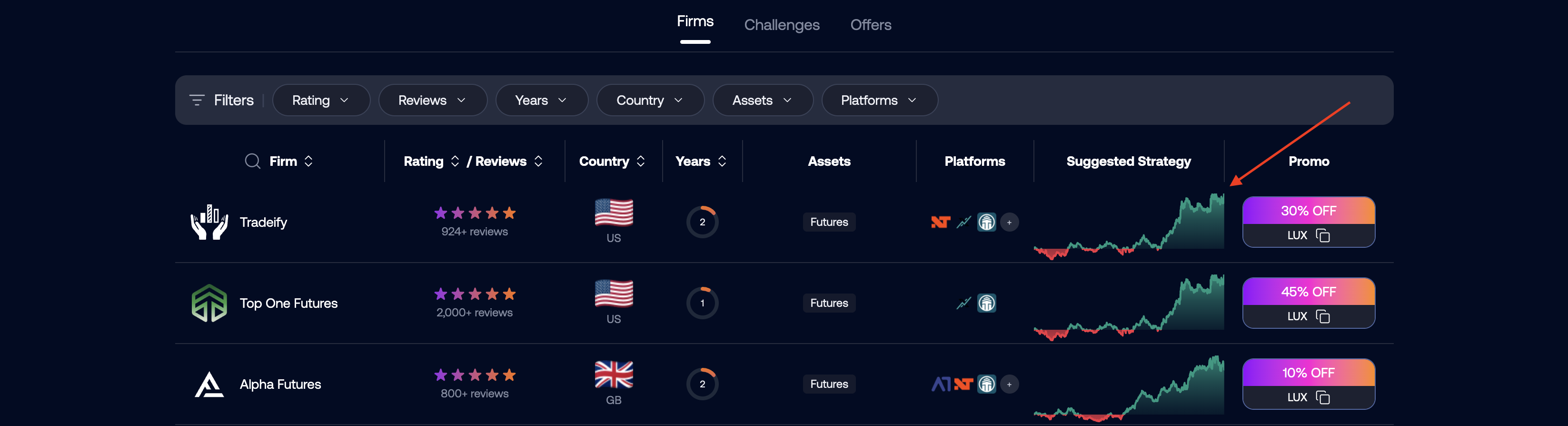
Once you’ve chosen a firm and identified its key constraints (profit target, drawdown type, daily loss limits, time limits, and trading restrictions), your next move is selecting a strategy that fits those rules. The LuxAlgo prop firm hub helps you do this quickly by surfacing strategy options that historically performed well and would have been more likely to survive evaluation-style conditions—giving you a stronger foundation to pass your next challenge with confidence.
Key Highlights:
- DNA Funded: Low evaluation fees (often starting around $49), profit split options up to 90%, and supports TradingView workflows alongside automation-friendly platforms.
- Top Tier Trader: Strong platform flexibility with TradingView and TradeLocker, competitive profit splits (commonly marketed up to ~90%), but pricing varies by program and account size.
- BrightFunded prop firm for algorithmic trading (rules, discounts & strategies) (official site): Offers profit split scaling that can reach 100% (based on program rules), fast payouts, and supports cTrader and DXtrade for automation.
- ThinkCapital: Affordable challenges (often starting around the ~$39–$59 range for smaller accounts), beginner-friendly structure, and supports MT5 and TradingView integrations depending on region and program.
- Topstep: Futures-focused, subscription-based pricing, and strong education/coaching ecosystem.
Quick Comparison Table:
| Firm | Profit Split | Starting Fee | Automation Platforms | Best For |
|---|---|---|---|---|
| DNA Funded | Up to 90% | $49 | TradingView, TradeLocker | Budget-conscious traders |
| Top Tier Trader | Up to 90% | $99 | TradingView, TradeLocker | Platform flexibility |
| BrightFunded prop firm rules & strategy hub (official site) | Up to 100% | $55 | cTrader, DXtrade | High-profit traders |
| ThinkCapital | Up to 80% | $39 | MT5, TradingView | Beginners |
| Topstep | Futures-focused | $49/month | TradingView, Tradovate | Futures traders |
Choose based on your trading goals, preferred platforms, and profit-sharing priorities. Read on for details about each firm's features, pricing, and rules.
Top 6 Prop Trading Firms of 2026: Tools, Education & Payouts Guide — Everything You Need to Know
1. DNA Funded
DNA Funded is a go-to option for algorithmic traders, supported by DNA Markets, an ASIC-regulated broker known for its institutional-grade infrastructure [4]. With access to a broad set of instruments and virtual trading funds that can scale significantly depending on program selection, traders are provided with substantial resources to work with [11, 13].
Platform and Automation Features
DNA Funded operates using the TradeLocker platform, which is designed for algorithmic trading [3]. TradeLocker integrates smoothly with TradingView, enabling traders to build alerts and automation workflows using TradingView tools like Multi Chart Widget and other indicators from the LuxAlgo Library. For those running automated trading systems, DNA Funded allows Expert Advisors (EAs) on funded accounts in many cases, but traders should confirm the exact bot policy per program and ensure they comply with any source-code ownership or disclosure requirements [11, 13]. If you're newer to automation on MT platforms, MetaQuotes' overview of Expert Advisors is a helpful baseline.
Pricing Options for Challenges
Traders can choose from three challenge types, each with its own pricing and structure:
| Challenge Type | Account Size | Cost Range | Key Features |
|---|---|---|---|
| 1 Phase | $5K – $200K | $59 – $1,209 | Single evaluation phase |
| 2 Phase | $5K – $200K | $49 – $1,079 | Two-step evaluation process |
| Rapid | $10K – $100K | $99 – $549 | Shorter evaluation period |
Additionally, DNA Funded offers optional add-ons that can improve trading conditions, such as boosting the profit split (often up to 90%) and shortening payout timelines, with add-ons typically increasing the evaluation fee [4].
Execution and Performance Insights
Traders receive TradeLocker login credentials to test spreads, slippage, and execution speed before committing to a challenge [3]. (If you want a quick refresher on what slippage is and why it matters for automated systems, that definition is worth revisiting.) The platform commonly offers maximum leverage around 1 : 30 for many evaluations, with higher leverage sometimes available on specific program types [3]. Forex trading commissions are often listed as straightforward (for example, $5 per round-turn trade in some configurations) [2], but always validate current pricing inside the firm’s dashboard before paying for an evaluation.
Key Rules for Algorithmic Traders
DNA Funded enforces several restrictions that algorithmic traders should keep in mind. High-frequency trading (HFT), latency arbitrage, news scalping, and reverse hedging between accounts are commonly restricted [5]. A daily profit cap may also apply across challenge types, meaning algorithms can only generate up to a set percentage of the payout target in a single day [4]. Traders are typically expected to maintain consistent account access patterns and comply with geographic and security rules noted in the FAQs [5]. Up next, we will take a closer look at another top choice for automated trading.
2. Top Tier Trader

Launched in 2021, Top Tier Trader has become a popular option for algorithmic traders who want platform flexibility. With a profit-sharing model often marketed up to 90%, the firm has gained attention among traders focused on automation and TradeLocker workflows [1][6].
Platform Features and Automation Capabilities
Top Tier Trader operates on TradeLocker, with automation-friendly features such as automatic stop-loss adjustments, position scaling, and tools for managing complex exits. If you want structured exit logic that pairs with automation, it can help to prototype the idea in a rules engine first (for example, reviewing how exit conditions work in a backtesting context like PAC Backtester exit rules), then translating the intent into your execution workflow.
TradingView Integration and Market Analysis
The integration with TradingView takes things to the next level. Known for charting and indicator depth, TradingView allows algorithmic traders to conduct in-depth market analysis. Combined with TradeLocker, it can support alert-driven execution workflows, provided your approach stays within program rules [7]. For a clean reference on how TradingView webhooks work (and what the alert payload actually does), TradingView’s help page on configuring webhook alerts is a solid starting point.
Evaluation Process and Trader Support
Top Tier Trader’s evaluation process is commonly positioned as automation-friendly, with program structures that may reduce time pressure (depending on account type). As always, confirm the exact objectives and drawdown methodology, because drawdown definitions (static vs trailing, balance vs equity) often determine whether an automated strategy is viable.
3. BrightFunded prop firm for algorithmic trading (rules, discounts & strategies) — Official Site

BrightFunded has reported significant payouts and is widely discussed for fast withdrawal processing in its marketing and third-party coverage [11].
Dual Platform Setup for Automation
BrightFunded provides access to both cTrader and DXtrade, platforms designed to enhance automated trading with advanced algorithmic features [8]. This dual-platform approach is useful if you want to separate discretionary execution from automation experiments (for example, deploying different systems on different platforms while keeping risk rules consistent).
"cTrader stands out as an advanced and highly reliable trading platform, perfectly aligned with our mission to provide traders with a professional trading experience." [11]
With cTrader’s algorithmic tooling (including C# automation), traders can automate strategies and customize indicators across devices [11].
DXtrade: A Customization Powerhouse
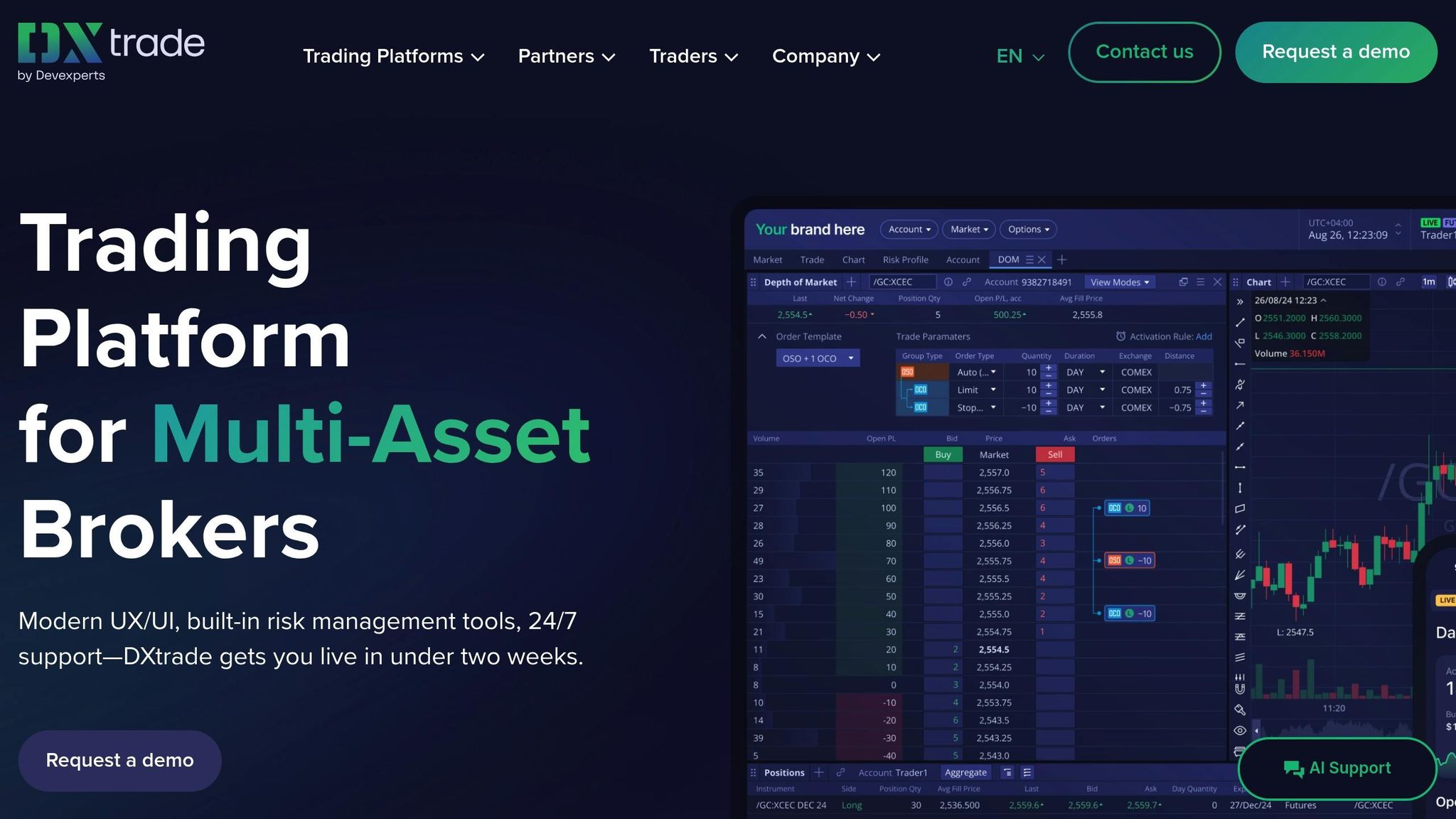
For traders seeking greater personalization, DXtrade delivers with its modular architecture, allowing extensive customization of interfaces and workspaces [8]. This flexibility is particularly useful for those pairing systematic execution with structured risk controls, including Risk Management Tool workflows and position-sizing playbooks like adjusting position size without sacrificing profit potential.
Transparent and Competitive Pricing
BrightFunded offers challenge fees ranging from $55 to $975, depending on account size. In many programs, traders can receive a refund of the challenge fee after successfully completing evaluation phases (terms vary by program) [9].
| Account Size | Challenge Fee |
|---|---|
| $5,000 | $55 |
| $25,000 | $195 |
| $100,000 | $495 |
| $200,000 | $975 |
Growth Opportunities and Trading Environment
BrightFunded’s scaling rules are designed to support account growth over time, provided the trader remains profitable and compliant with risk limits [10]. The platform also offers access to a broad set of instruments (including crypto pairs in many program configurations) [11].
To further reward its traders, BrightFunded runs the Trade2Earn loyalty program, which provides tokens based on trading volume. These tokens can be redeemed for free evaluations or improved profit splits. Combined with weekly payouts and responsive customer support, BrightFunded creates an ecosystem designed for success in automated trading [10].
4. ThinkCapital

ThinkCapital is a global prop trading firm supported by a broker, offering algorithmic traders a foundation to automate their strategies with broker-backed infrastructure [15].
Platform Features for Automated Trading
ThinkCapital provides two key platforms. International traders often use MetaTrader 5 (MT5), while some U.S. users can access ThinkTrader, which integrates with TradingView. This combination enables analysis plus alert-driven execution workflows [2][14]. If you’re building systematic signals for TradingView, LuxAlgo’s toolkits (such as Price Action Concepts and Signals & Overlays) can be used to standardize chart logic across markets.
Advanced API Connectivity
Through ThinkMarkets, ThinkCapital provides advanced API solutions, connecting traders to institutional-grade technology and a liquidity network. This setup allows traders to integrate sophisticated automated strategies more efficiently [15].
Flexible Challenge Pricing Options
| Account Size | Lightning (1-Phase) | Dual Step (2-Phase) | Nexus (3-Phase) |
|---|---|---|---|
| $5,000 | $59 | $59 | $39 |
| $25,000 | $199 | $199 | $139 |
| $100,000 | $499 | $499 | $349 |
| $200,000 | $949 | $949 | $649 |
Algorithmic Trading Perks
Traders at ThinkCapital can enhance their strategies with several add-ons. These may include Expert Advisors, higher profit split options, payout scheduling, and (in some account types) permission for news trading [2]. Because news rules are a common failure point for automation, always cross-check the firm’s written policy before letting a bot trade around high-impact events.
Commission and Execution Details
ThinkCapital offers different commission structures based on platform. MT5 users may pay a per-lot commission on certain markets (such as Forex/metals), while other asset classes can be commission-free depending on the instrument. ThinkTrader users commonly see commission-free structures across many products [13]. Always validate the current fee schedule inside the trading environment you’ll actually use.
Positive Reputation Among Traders
ThinkCapital is commonly reviewed across third-party rating sites, with traders highlighting rule clarity, payout processing, and support responsiveness [12].
5. Topstep
Topstep rounds out our review as a prop trading firm with a clear focus on futures and systematic trading. Founded in 2012 [22], Topstep stands out by primarily funding futures trading and building its evaluation model around that market structure [17].
Platform Integration and TradingView Compatibility

Topstep integrates TradingView through Tradovate and supports multiple trading platforms, including its proprietary TS Trader and NinjaTrader [21]. For TradingView users, you generally purchase a Tradovate Trading Combine and activate the TradingView add-on [18][19]. If your TradingView workflow relies on alert automation, it’s also worth reviewing LuxAlgo’s guide on setting up TradingView alerts so your alert logic stays consistent across tools.
Technology Infrastructure and Platform Features
Topstep’s tech stack supports systematic workflows, offering dedicated data feeds and customizable TradingView charts [21]. Its proprietary platform, TopstepX, includes TradingView charting, The Tilt Indicator, a trade copier, live streaming, and commission-free trading [23]. Note that TopstepX may limit external bot connections depending on current platform policy, so automation traders should confirm supported integrations before paying for a Combine [17][20].
Subscription-Based Pricing Model
| Account Size | Monthly Fee |
|---|---|
| $50,000 | $49 |
| $100,000 | $99 |
| $150,000 | $149 |
Topstep also charges an Activation Fee in its standard path (and offers alternative pricing paths depending on how you purchase the Combine). Always verify the latest fee structure directly in Topstep’s pricing documentation [17].
Strong Community Reputation
Topstep is widely reviewed across third-party sites, with traders often highlighting platform stability, coaching programs, and customer support [21][22].
Educational Support and Resources
Topstep offers educational content through TopstepTV and Discord, plus commission-free trading during simulations, helping traders refine their strategies [21].
Pros and Cons Comparison
DNA Funded is ideal for budget-conscious traders, offering strong profit split options and low entry pricing. However, evaluation details (including profit caps, prohibited strategy types, and payout timelines) can be strict for certain automation styles.
Top Tier Trader shines with platform flexibility, including TradingView and TradeLocker. Because evaluation conditions vary by account type, it’s best to confirm the drawdown method and bot permissions before committing.
BrightFunded prop firm rules & strategy hub (official site) offers profit split scaling that can reach 100% under certain conditions, but program rules can cap funding size or scaling depending on the path chosen.
ThinkCapital provides multiple evaluation formats and broker-supported infrastructure, though traders should verify current profit split tiers and platform availability by region.
Topstep specializes in futures and delivers strong coaching, but its subscription model and futures-only focus may deter those wanting broader market exposure.
| Firm | Advantages | Disadvantages | Best For |
|---|---|---|---|
| DNA Funded | High split options, low entry fee, flexible paths | Restrictions on certain automation styles | Budget-focused traders |
| Top Tier Trader | Platform flexibility (TradingView, TradeLocker) | Program variation requires careful rule checks | Platform flexibility seekers |
| BrightFunded prop firm rules & strategy hub (official site) | Profit split can scale to 100% | Scaling/funding rules vary by program path | High-profit systematic traders |
| ThinkCapital | Multiple challenge formats, broker backing | Regional platform differences | Traders who want broker-backed structure |
| Topstep | Futures focus, coaching ecosystem | Subscription costs, futures-only | Futures algorithmic traders |
Conclusion
Selecting the right prop firm for algorithmic trading boils down to matching your strategy with a firm's strengths. DNA Funded offers an affordable entry point, BrightFunded prop firm rules & strategy hub (official site) caters to traders who want platform choice, Top Tier Trader emphasizes TradeLocker flexibility, Topstep focuses on futures, and ThinkCapital targets traders who want broker-supported infrastructure. Ensure your strategy aligns with firm rules to avoid issues during evaluation [26].
Boosting Your Strategy with Advanced Tools
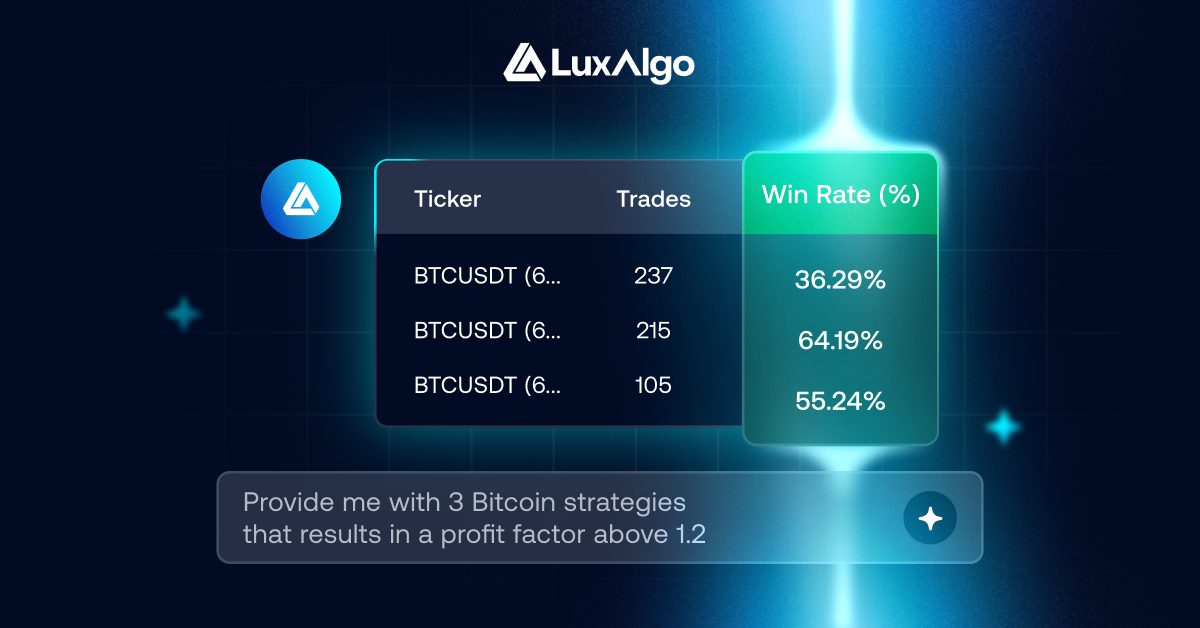
Take LuxAlgo for example. LuxAlgo provides tools on TradingView for automated price action analysis, trading signals, and reversal detection, plus education and documentation to help you apply those concepts consistently. If you want to pressure-test ideas before risking capital, the AI Backtesting Assistant helps you generate, test, and iterate strategies, while AI Strategy Alerts webhooks can help you route strategy alerts into your workflow. For traders who want to combine signal confluence across toolkits, you can also explore Price Action Concepts, Signals & Overlays, and Oscillator Matrix to understand how each toolkit is intended to be used. LuxAlgo’s Premium plan is $39.99/month, and the Ultimate plan is $59.99/month with AI Backtesting access.
Here’s a real-world example: Damion Powell used LuxAlgo indicators for top-down analysis on daily and weekly charts, identifying key support and resistance and netting over $200 on USD/JPY trades [25].
"The algorithm gave me more conviction to the trade and what I believed I saw, I am able to quickly analyze multiple time frames for the correct setup." – Chris Bardo [25]
With TradingView webhook alerts and a disciplined risk framework (including circuit-breaker style protections), passing prop firm evaluations and refining your trading edge can be far more systematic. If you want a practical automation reference for routing TradingView alerts into execution tools, see PickMyTrade’s TradingView automation guide.
FAQs
What should I look for when selecting a prop firm for algorithmic trading in 2026?
Start by examining a firm’s risk-management policies, such as maximum drawdown limits and profit targets. Confirm support for automated trading tools—APIs, expert advisors, or custom scripts. Understand pricing, payout terms, and any limits on strategy types. Finally, look at reputation and educational resources.
How do profit split models impact earnings for algorithmic traders?
Profit splits define how you and a firm share profits. A 50/50 split is common, but some firms offer 70/30, 80/20, or even 100 % splits. Higher splits often have stricter rules or higher fees. Balance the split with costs, rules, and your strategy.
What key features should a prop firm offer to support algorithmic trading?
Look for reliable automated-trading support, advanced charting and backtesting, solid order execution, strong risk-management tools, and integration with popular platforms like TradingView. Customization and real-time performance tracking are essential.
References
LuxAlgo Resources
- Traditional Proprietary Trading: An Insider’s Guide
- Algorithmic Trading (Topic Hub)
- LuxAlgo Prop Firms (Compare Firms, Discounts & Strategies)
- BrightFunded (LuxAlgo Prop Firm Page: Rules, Discounts & Strategies)
- LuxAlgo Library
- Multi Chart Widget
- Automated Trading vs Manual Trading: Pros and Cons
- PAC Backtester: Exit Rules
- Risk Management Tool
- Adjusting Position Size: Managing Risk Without Sacrificing Profit Potential
- Price Action Concepts
- Signals & Overlays
- Price Action Concepts Toolkit Introduction
- Signals & Overlays Toolkit Introduction
- Oscillator Matrix Toolkit Introduction
- TradingView Tutorial: How To Setup Alerts
- AI Strategy Alerts: Webhooks
- Prop Firm Cover Image (Section Cover)
- Prop Firm Cover Image Two (Suggested Strategies)
External Resources
- DNA Funded
- DNA Funded FAQs
- Top Tier Trader
- BrightFunded (Official Site)
- BrightFunded Trading Platforms
- ThinkCapital
- Topstep
- Topstep Pricing
- TradingView
- TradingView: How to Configure Webhook Alerts
- TradeLocker
- cTrader Platform Overview
- DXtrade
- Tradovate
- NinjaTrader
- Investopedia: Proprietary Trading
- Investopedia: Drawdown
- Investopedia: Slippage
- MetaTrader 5: Automated Trading (Expert Advisors)
- CME Group: Introduction to Futures
- TradersPost: Prop-Firm Trading Guide
- PickMyTrade: TradingView Automation Guide