Dynamic Order Blocks
 By LuxAlgoMar 26, 2024
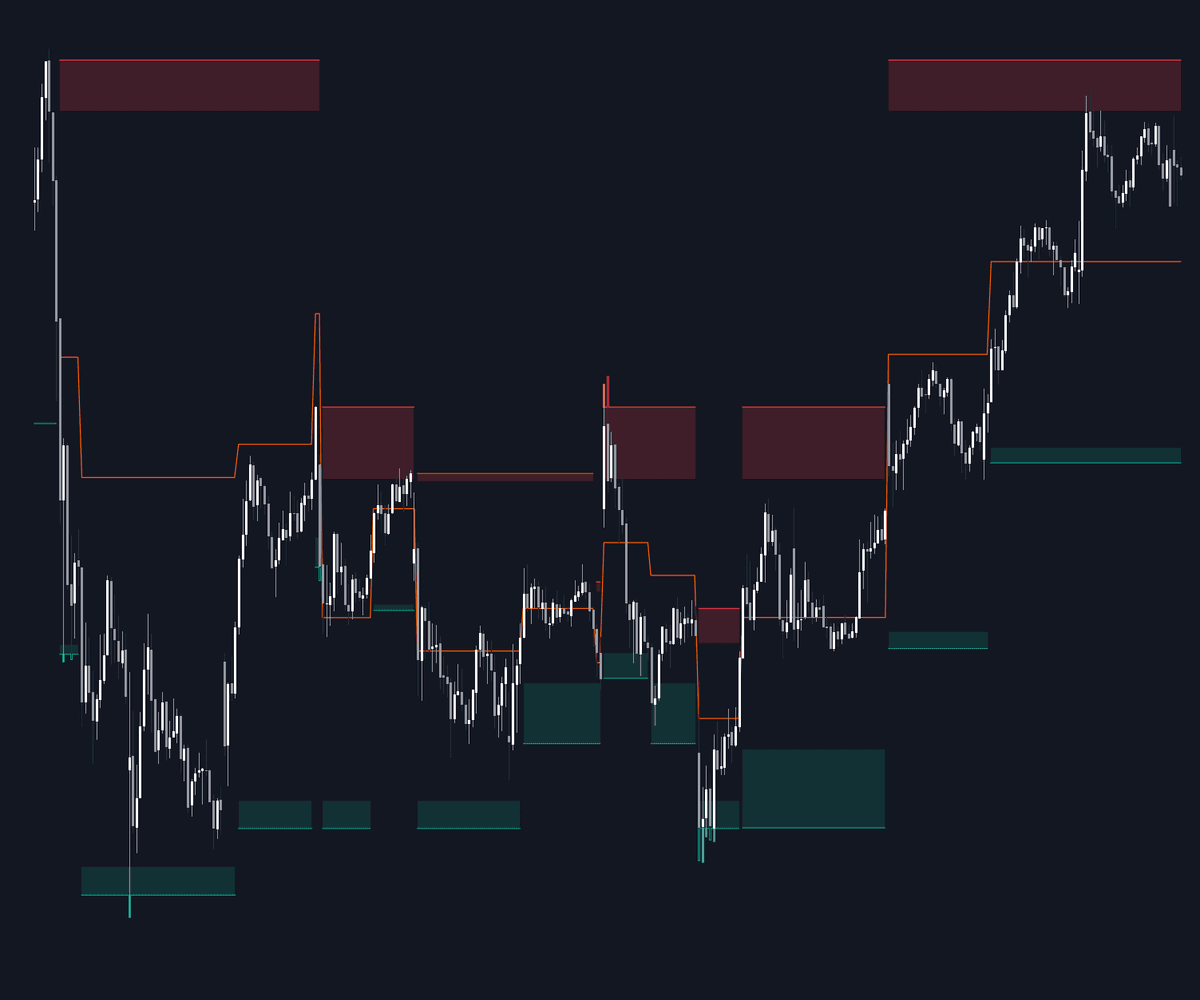
Dynamic Order Blocks trims the chart down to the two order blocks that matter right now: the most recent unmitigated bullish block, its bearish counterpart, and the average level running between them. Instead of papering history across the screen, it maintains a live, minimal map of where significant participation last stepped in — and refreshes the moment either block is mitigated.
How to Trade the Dynamic Order Blocks?
- Return to the bullish block: a candidate support zone for reversal or continuation entries; the bearish block plays the same role overhead.
- Break above the bearish block's extremity: a mitigation event that leans the read toward an uptrend; breaking below the bullish block suggests the opposite.
- Average level: an adaptable support/resistance line — shifts in its direction offer additional confirmation of the prevailing trend.
- Bordered rectangles: mark sweeps of mitigation levels, the breakout failures that can precede reversal opportunities.
Raising the Swing Lookback shifts the whole tool toward longer-term blocks, which suits strategic planning; keeping it short tracks the freshest zones. It slots naturally into the wider Smart Money Concepts collection as the minimalist entry in the order block lineup.
Dynamic Order Blocks Settings
- Swing Lookback: the swing detection length used to construct blocks — higher values produce longer-term zones that update less often.
- Use Candle Body: defines the block area from the candle body alone instead of the full range, tightening zones at the cost of ignoring wicks.
Frequently Asked Questions
When would I pick this over the Order Block Detector?
The Order Block Detector maintains a running set of zones for fuller historical context. Dynamic Order Blocks deliberately shows only the latest unmitigated pair, which keeps charts clean and the focus on levels that are still live.
What does the average level tell me?
It is the midpoint between the displayed bullish and bearish blocks, acting as an adaptive support/resistance reference. Watching its direction change hands is a quick secondary check on trend.
How can I start using Dynamic Order Blocks?
Access is free from this page on the LuxAlgo Library, and you can send it to LuxAlgo's AI (Quant) right from the page to study it further.
Free indicator
Get free access to this indicator on the platforms below.

The Library is free. Quant makes it yours.
Pull any concept or indicator into Quant: rebuild it, retune it, or turn it into a backtested strategy of your own.