
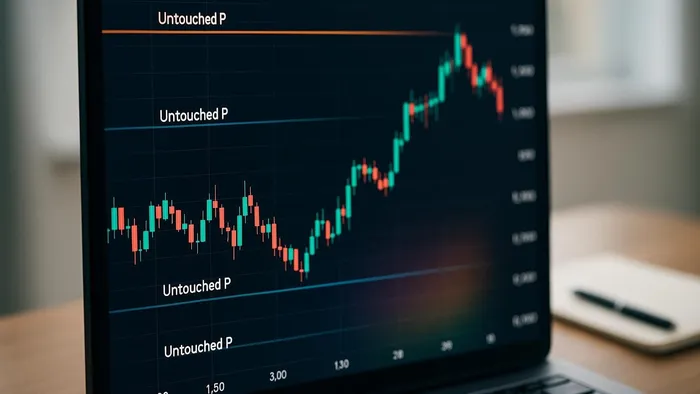

Explore a trading tool that identifies untouched pivot levels, helping traders find key support and resistance zones for better decision-making.
The Rob Booker Missed Pivot Points Indicator is a trading indicator that helps identify untested pivot levels - key pivot points that have not been traded through during a session. These untouched levels often act as strong support or resistance zones, attracting significant price reactions when approached. The indicator automates the process, saving traders time and highlighting potential trade opportunities.
Key Features:
- Pinpoints Untouched Pivot Levels: Automatically marks untested support and resistance zones on charts.
- Customizable Lookback Period: Tracks untouched levels from 1 day to several months, depending on your trading style (day trading, swing trading, or long-term investing).
- Actionable Trade Insights: Helps plan breakouts, reversals, and risk management strategies by focusing on these high-interest zones.
- Platform Compatibility: Works with popular trading platforms like TradingView, MetaTrader, and NinjaTrader.
Why It Matters:
Untouched pivot levels often act as magnets for price movement, driven by market psychology and clustered orders. In practice, the “strength” of an untouched level tends to increase when it aligns with broader structure (trend direction, nearby swing highs/lows) and when it remains untested through multiple sessions.
While the indicator can simplify trade planning, it’s not a standalone decision-maker. Pair it with other technical analysis methods like moving averages or RSI for better confirmation, and always define your risk before entering a trade.
How the Rob Booker Missed Pivot Points Indicator Works
Main Features and Functions
The Rob Booker Missed Pivot Points Indicator operates through a three-step process to identify untouched pivot levels. First, it calculates pivot points using the standard approach, factoring in the high, low, and close prices from the previous trading session [2][3]. This calculation results in a central pivot point, along with additional support and resistance levels.
Next, the indicator monitors price movements during subsequent trading sessions to check whether these pivot points were tested by market activity. It scans for any price candle crossing the pivot lines from the start to the end of each session [4]. If no interaction occurs, the pivot level is flagged as "missed" or "untouched."
Finally, the indicator marks these missed pivot points on your chart using customizable visual elements. These untouched levels are tracked over time, as they often become key areas of support or resistance in the future [2]. By automating this process, the indicator eliminates the need for manual checks of each pivot level.
A standout feature is the lookback period setting, which allows traders to decide how far back the indicator should track untouched pivot points [2]. This flexibility means you can focus on recent missed levels or extend the view to include older untouched pivots that may still influence price movements.
| Trading Style | Pivot Point Calculation Basis | Missed Pivot Points Lookback Period |
|---|---|---|
| Day Trading | Previous day's prices | 1-5 days |
| Swing Trading | Previous week's prices | 5-10 days |
| Long-term Investing | Previous month's or quarter's prices | 3-6 months or more |
Using the Indicator for Trade Planning
This indicator transforms untouched pivot levels into actionable trade signals by visually highlighting areas where significant price reactions are more likely. These missed pivot points can serve as natural targets for both entries and exits in your trading plan.
For breakout trading, untouched resistance levels are prime zones to watch for upward price moves. Since these levels haven't been tested, they often concentrate resting orders that, when cleared, can lead to strong momentum. Similarly, untouched support levels can signal opportunities for downward breakouts.
In reversal trading, the indicator is equally useful. When the price approaches an untouched pivot level, traders can anticipate potential bounces or rejections. The longer a pivot level remains untouched (especially across multiple sessions), the more pronounced the reaction can be when price finally reaches it.
The indicator also supports risk management by offering logical stop placement options. For example, if you're trading a bounce off an untouched support level, placing your stop just below that level is common, as a clean break can invalidate the setup. For resistance-based trades, stops are often placed just above the untouched level. If you're using broker-side orders, a stop-loss order is one standardized way to automate that exit.
Additionally, the indicator can help with position sizing by making it easier to estimate the distance between key levels and define your risk per trade. This ties directly into planning cleaner reward-to-risk ratios and consistent risk allocation. For a deeper overview of sizing methods, see position sizing.
Platform Compatibility and Setup
The Rob Booker Missed Pivot Points Indicator is fully compatible with TradingView and other modern trading platforms that support custom pivot point calculations [1][5]. To set it up, you’ll need access to a platform capable of handling Rob Booker’s specific formulas and the required historical data.
During the setup process, the indicator retrieves prior period data to calculate the central pivot point and related support and resistance levels [5]. You can also customize the appearance of pivot lines - adjusting size, color, and style for better clarity [1][4][5]. Many traders opt for distinct colors to differentiate untouched levels from tested ones, ensuring a clean and organized chart.
The indicator is most effective when recalculating pivot points for each trading session, especially on shorter timeframes where market conditions shift quickly [5]. This keeps missed pivot points relevant to the current market environment rather than relying on outdated references.
For the best experience, use platforms like MetaTrader, NinjaTrader, or TradingView, which offer extensive customization options and the computational power needed to track multiple untouched levels across various timeframes simultaneously [5].
Why Untouched Pivot Levels Matter in Trading
Market Psychology Behind Untouched Pivots
Untouched pivot levels carry a distinct psychological weight in trading. Their untested nature creates a sense of anticipation, often acting as magnets for concentrated buying or selling activity once they are reached. Since many traders incorporate pivot points into their strategies, these untouched levels become self-fulfilling zones where collective actions amplify the expected price movement.
Orders tend to cluster around these levels, intensifying the pressure when they are finally tested. The longer a pivot remains untouched, the more orders may accumulate, increasing the likelihood of a sharp price reaction when it is eventually reached.
For untouched resistance levels, there’s often latent selling pressure from traders who missed earlier opportunities to exit. On the flip side, untouched support levels attract buyers looking for favorable entry points. This imbalance between buyers and sellers can lead to dramatic price moves once the level is breached or confirmed, making these zones critical for identifying strong trade setups.
Finding High-Probability Trade Setups
Untouched pivot levels can be valuable for traders seeking high-probability opportunities. Breakouts at untouched resistance levels often deliver reliable trades, as the absence of recent trading through the level can leave more resting liquidity to be cleared in one directional move.
Older untouched pivot levels can trigger stronger reactions, but context still matters. Levels that remain “missed” during trending conditions can be revisited later as the market rotates, while levels in choppy conditions may be tested more quickly.
Volume is another key factor. Higher trading volume near an untouched pivot level often signals stronger participation, making the setup more reliable. This is especially true during major trading sessions, such as the New York open, when liquidity often increases across U.S. markets.
When untouched pivot levels align with other technical tools - like moving averages, Fibonacci retracements, or trend lines - the confluence strengthens the trade setup by reducing the chances of false signals. This alignment acts as confirmation, giving traders more confidence in their decisions.
How Untouched Pivots Affect Market Flow
Untouched pivot levels don’t just influence individual trades - they can shape broader market behavior. These levels often serve as turning points or accelerators within the market structure. For instance, in an uptrend, untouched support levels can act as springboards for further upward movement. Conversely, untouched resistance levels might temporarily slow the trend before eventually breaking through.
When an untouched pivot is finally tested, it can redefine market sentiment. A clean break of untouched resistance may shift sentiment to bullish, attracting momentum traders and triggering additional buying. On the other hand, a breakdown below untouched support can activate stop-losses and invite short sellers, intensifying the downward move.
Institutional traders often anchor their strategies around pivot points, using them as reference prices for managing positions. When an untouched pivot is breached, it can trigger a cascade of larger orders, creating the liquidity and volatility needed for significant price moves.
The length of time a pivot remains untouched also adds to its importance. The longer it goes untested, the more likely it is to act as a key inflection point, potentially signaling a shift in market direction.
Finally, volatility often expands when price interacts with untouched pivots. Markets that have been consolidating may experience sharp volatility spikes as price reaches these key levels, creating opportunities for traders who position themselves ahead of the breakout or breakdown.
| Market Condition | Untouched Pivot Behavior | Expected Price Action |
|---|---|---|
| Strong Uptrend | Resistance levels often break cleanly | Continuation higher with momentum |
| Strong Downtrend | Support levels typically fail quickly | Acceleration lower with volume |
| Sideways Market | Levels act as range boundaries | Reversal or consolidation patterns |
| Low Volatility | Pivots become more significant | Sharp reactions when finally tested |
Adding the Indicator to Your Trading Strategy
Trading Breakouts with Untouched Pivots
Untouched pivot levels can be a powerful way to time breakouts. These zones often highlight areas of potential price movement. Instead of waiting for the breakout to happen and chasing the move, some traders plan entries as price approaches the level and only trigger execution after clear confirmation (for example, a close beyond the level plus strong participation).
When you notice price consolidating near an untouched pivot, it could mean orders are building up. A spike in volume can help confirm the breakout. To manage risk effectively, place your entry slightly above the resistance level and your stop-loss just below it to account for any minor fluctuations. As for your profit target, you can either aim for the next major resistance level or align it with your preferred risk-to-reward ratio.
Using Untouched Pivots for Reversal Trades
Untouched pivot levels can also support reversal planning, especially when the market's momentum begins to fade. The longer a pivot remains untouched, the more visible it becomes to other market participants. Look for candlestick patterns like long wicks or doji formations around these levels to confirm a possible reversal. For added confidence, check multiple timeframes to see if they align with the untouched pivot.
Once you spot a clear rejection at the pivot, you can enter the trade. To minimize risk, set your stop-loss just beyond the untouched level. Profit targets can be placed near previous swing highs or lows, depending on the direction of the trade.
Managing Risk and Trade Execution
Incorporating untouched pivot levels into your risk plan can make a big difference. Use appropriate position sizing, especially during volatile market conditions. Keep in mind that pivot behavior can change based on the market session due to shifts in liquidity.
Adjust your stops as the trade progresses. For example, you can move your stop-loss to breakeven once the price moves in your favor. Actively monitor your trades, and consider taking partial profits along the way. Trailing stops can also help you lock in additional gains. If you automate exits with orders, a take-profit order is a common way to predefine where profits are realized.
Pros and Cons of the Rob Booker Missed Pivot Points Indicator
Benefits of Using the Indicator
The Rob Booker Missed Pivot Points Indicator is a handy indicator for traders, automatically pinpointing untouched pivot levels and simplifying trade planning. By clearly marking these untested levels, it allows traders to evaluate potential entry and exit points well in advance, giving them a strategic edge.
One of its standout features is its ability to highlight high-probability zones. Untouched pivot levels often act like magnets for price movement, making them key areas of interest on the chart. Plus, its user-friendly design ensures that even beginners can quickly grasp its functionality.
Drawbacks and Things to Consider
Despite its advantages, the indicator has its limitations. Since it relies on historical data, its signals can lag, which can be a drawback in fast-moving markets. In volatile conditions, this delay might mean missing out on the best entry points. Additionally, the indicator doesn’t provide standalone confirmation, so it’s more effective when paired with other technical analysis methods.
Pros vs Cons Comparison
Here’s a quick breakdown of the pros and cons:
| Advantages | Limitations |
|---|---|
| Identifies key market levels objectively | Relies on lagging signals from historical data |
| Facilitates forward trade planning | Struggles with accuracy in volatile markets |
| Highlights high-probability price zones | Needs additional tools for confirmation |
| Speeds up decision-making | Can make timing optimal entries tricky |
| Easy to use for traders of all levels | Not a standalone trading system |
To make the most of this indicator, it’s wise to combine it with other tools like Moving Averages, RSI, or Bollinger Bands. Incorporating solid risk management strategies - such as setting stop-losses, defining take-profit levels, and carefully managing position sizes - is also essential. And don’t skip the backtesting phase; running your rules on historical data helps ensure they align with your trading goals before moving to live markets[2].
The Missed Pivot Point Indicator on TradingView by Rob Booker

Video Walkthrough
This video provides a practical walkthrough of the Rob Booker Missed Pivot Points concept on TradingView, showing how “missed” pivot levels can remain relevant after a session ends and how traders commonly watch for reactions when price revisits those levels. Use it to better understand what qualifies as a missed pivot, how it’s visualized on-chart, and how traders often incorporate these levels into breakout or reversal planning.
Final Thoughts and Key Points
Let’s wrap up by highlighting the key advantages of the Rob Booker Missed Pivot Points Indicator and why untouched pivot levels play a crucial role in trading strategies. If you want a structured way to turn ideas into testable rules, LuxAlgo’s AI Backtesting Assistant can help translate concepts into strategies you can evaluate across markets.
Key Benefits of the Indicator
The Rob Booker Missed Pivot Points Indicator simplifies trading by automatically pinpointing untouched pivot levels. These levels highlight essential support and resistance zones, making it easier to plan trades for both breakouts and reversals. Plus, it emphasizes the importance of pairing this approach with solid risk management practices and confirmation-based analysis.
The Importance of Untouched Pivot Levels
Untouched pivot levels act as vital markers in the market. When prices approach these levels, they often trigger increased volume and volatility, creating opportunities for traders to enter or exit positions with clearer structure. Having an automated way to identify these levels helps you stay focused on the most relevant zones as market conditions evolve.
FAQs
How can I use the Rob Booker Missed Pivot Points Indicator with other tools to improve my trading strategy?
To maximize the potential of the Rob Booker Missed Pivot Points Indicator, consider pairing it with other well-known technical analysis tools like the RSI, MACD, or moving averages. These additional tools can provide extra layers of insight and help confirm signals from untouched pivot levels.
For instance, RSI or MACD can offer confirmation for possible reversals or breakouts occurring near pivot points, while moving averages can highlight the broader trend direction. Combining these tools allows you to filter out unreliable signals and make more confident trading decisions. Remember, effective analysis should always go hand-in-hand with solid risk management practices.
How should I set the lookback period on the Rob Booker Missed Pivot Points Indicator based on my trading style?
The best lookback period for the Rob Booker Missed Pivot Points Indicator depends on both your holding time and how often you want “fresh” levels:
- Scalpers usually focus on the most recent sessions (often 1–5 days) to keep levels tight and actionable on lower timeframes.
- Day traders often use 1–10 days, especially when trading around session structure and intraday rotations.
- Swing traders may extend to several weeks (or more) to capture pivots that remain relevant across larger market swings.
By tailoring the lookback period to your approach, you can keep the indicator focused on the levels most likely to influence your next trade.
What makes untouched pivot levels important in trading, and how do they influence market sentiment?
Untouched pivot levels hold importance because they represent key price zones that the market hasn’t yet explored. These levels often serve as psychological benchmarks for traders, acting as potential points where price reversals or breakouts might occur.
What makes these levels particularly interesting is the collective attention they draw. Traders closely watch them, expecting significant price action, which can lead to increased market activity. This anticipation often drives higher trading volumes and sharper price fluctuations near these points. Essentially, these levels can influence decision-making and help shape short-term market behavior.
References
LuxAlgo Resources
- Rob Booker Pivot Points Indicator: Support and Resistance Levels
- Support & Resistance Dynamic
- Risk/Reward Ratio vs Win Rate: Key Differences
- Trend Lines
- Market Sentiment Technicals
- LuxAlgo Price Action Concepts
- Breakouts with Tests & Retests
- Candlestick Structure
- Market Structure Trailing Stop
- Volume Forecasting
- Pivot Point Profile
- Ultimate Guide to Technical Analysis Tools for Crypto Trading
- AI Backtesting Assistant
- AI Backtesting Assistant Documentation: Introduction
- Price Action Concepts: Premium/Discount Zones
External Resources
- Pivot Point: Definition, Formulas, and How to Calculate (Investopedia)
- Position Sizing: Definition and Methods (Investopedia)
- Stop-Loss Order: How It Works (Investopedia)
- Take-Profit Order: How It Works (Investopedia)
- NYSE Trading Hours (NYSE)
- TradingView
- MetaTrader 5
- NinjaTrader
- Relative Strength Index (RSI) (Wikipedia)
- Fibonacci Retracement (Wikipedia)
- Bollinger Bands (Wikipedia)
- MACD (Wikipedia)
- Missed Pivot Points (BrokerCheck)
- Rob Booker Pivot Point (BrokerCheck)
- The Incredible Power of Missed Pivots (Scott Welsh Strategies)
- Rob Booker Missed Pivot Points (TradingView Support)
- Rob Booker Intraday Pivot Points (TradingView Support)
- Rob Booker Missed Pivot Points Video (YouTube)