Average True Range
 By LuxAlgoApr 13, 2020
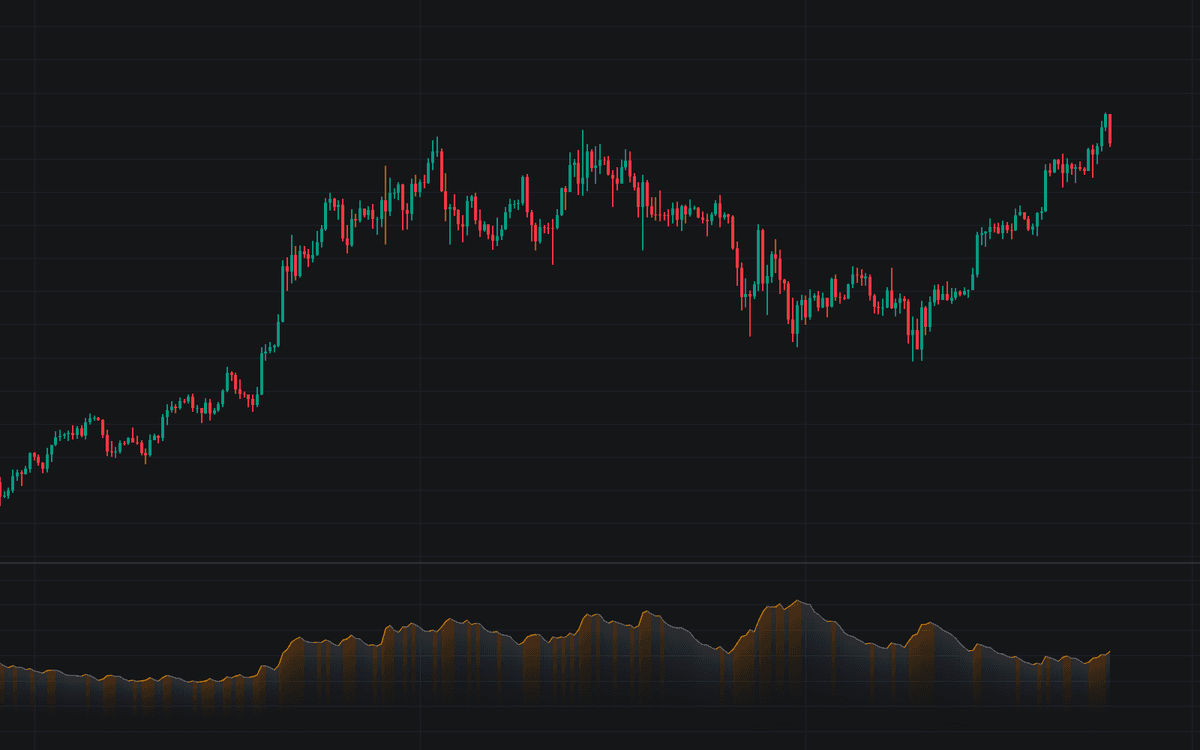

The Average True Range distills each bar's movement into a single volatility reading: the true range (the largest of the high-low span and the two distances from the prior close) averaged over a lookback. Measuring from the prior close captures gap moves a bare high-minus-low span would ignore, Wilder's reason for defining it this way. The build plots the classic 14-period ATR with a smoothing selector (Wilder's RMA default, plus SMA, EMA, and WMA), the standard, unaltered calculation.
How to Trade the Average True Range?
- Rising ATR: ranges are expanding. Moves travel farther, stops need more room, and position sizes should shrink to keep risk constant.
- Falling ATR: contraction. Tighter stops become viable, and compressed readings are where breakout traders start paying attention.
- Stops in ATR multiples: an ATR-sized buffer past entry or structure adapts the exit to current conditions instead of a fixed tick count.
- Sizing by ATR: dividing the account risk per trade by an ATR-based stop distance normalizes exposure across instruments and regimes.
- ATR spikes: sudden jumps mark event-driven volatility, after which recent readings, not older ones, define what a normal distance means.
ATR is direction-blind and denominated in price units: a waterfall decline expands it just as a powerful advance does; a reading only means something against the instrument's recent history.
Average True Range Settings
- Length (default 14): the number of bars averaged. Shorter lengths track regime shifts quickly but jump around; longer lengths give a stabler baseline for stops and sizing.
- Smoothing (default RMA): the moving average applied to the true range. RMA is Wilder's original smoothing and produces the classic ATR; SMA weighs all bars equally; EMA and WMA lean toward recent bars and react faster.
Frequently Asked Questions

The Library is free. Quant makes it yours.
Pull any concept or indicator into Quant: rebuild it, retune it, or turn it into a backtested strategy of your own.