Chandelier Exit
 By LuxAlgoApr 13, 2020
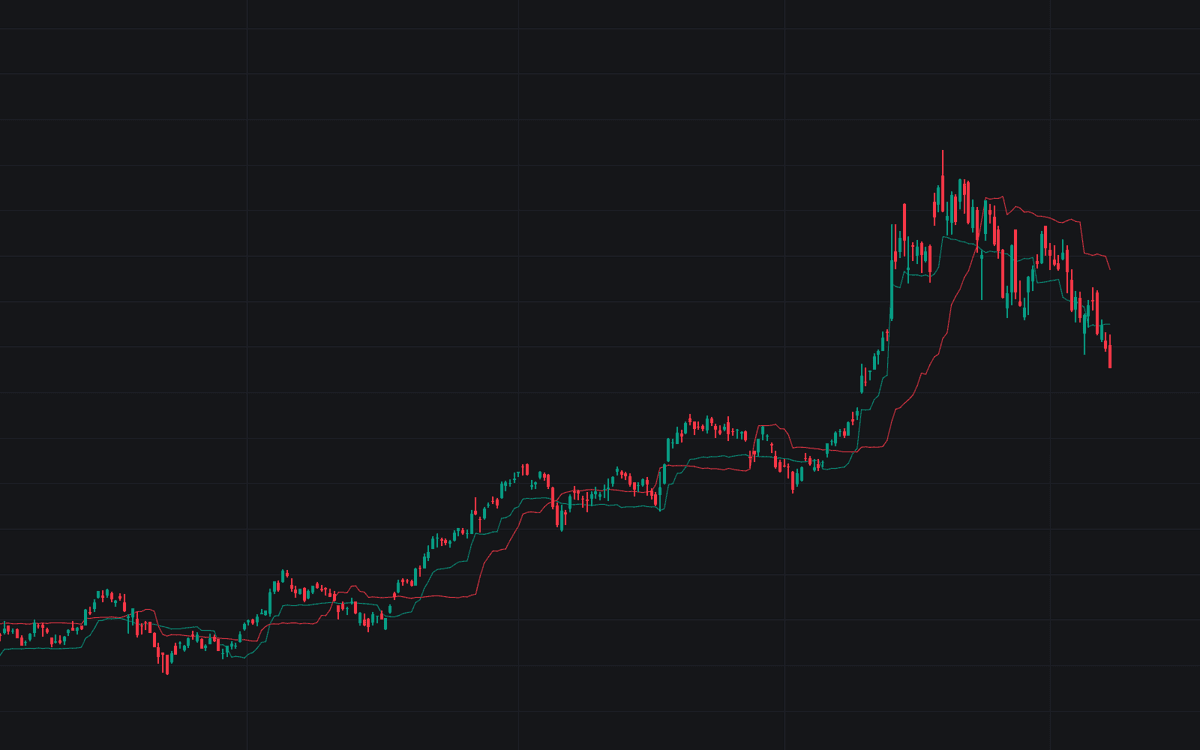

The Chandelier Exit is a volatility-scaled trailing stop that hangs from the extremes of the recent trend. For longs, the stop is the highest high of the lookback window minus a multiple of the Average True Range; for shorts, the lowest low plus the same multiple. Both lines plot continuously, stepping with new extremes. Defaults are a 22-period ATR with a multiplier of 3, following the classic parameterization. By default this is the standard raw Chandelier Exit with no added logic; an optional Ratchet Stops input suits traders who prefer a stop that only tightens.
How to Trade the Chandelier Exit?
- Close below the Long Stop: the uptrend has given back its volatility allowance from the peak, the long exit this indicator exists for.
- Close above the Short Stop: the mirror exit for shorts.
- Price riding above a rising Long Stop: the uptrend is intact; each new high within the lookback steps the stop forward.
- Stop distance as risk: the gap to the active stop is ATR-denominated and feeds volatility-based sizing.
Entries come from elsewhere: breakouts, crossovers, patterns; the chandelier manages the trade from its best extreme onward.
Chandelier Exit Settings
- Length (default 22): the window for both the price extremes and the ATR. Longer values anchor to older extremes and advance slower; shorter values track recent swings tightly.
- ATR Multiplier (default 3): the volatility cushion. A larger multiple rides deeper pullbacks but gives back more at the end; a smaller one tightens the trail and adds shakeouts.
- Ratchet Stops (default off): prevents the long stop from falling and the short stop from rising, resetting once the close crosses through the stop, removing the raw formula's habit of letting a long stop slip lower when ATR expands without a new high.
Alerts
Two alert conditions are built in: Exit Long, when the close crosses below the long stop, and Exit Short, when the close crosses above the short stop.
Frequently Asked Questions

The Library is free. Quant makes it yours.
Pull any concept or indicator into Quant: rebuild it, retune it, or turn it into a backtested strategy of your own.