Force Index
 By LuxAlgoApr 13, 2020
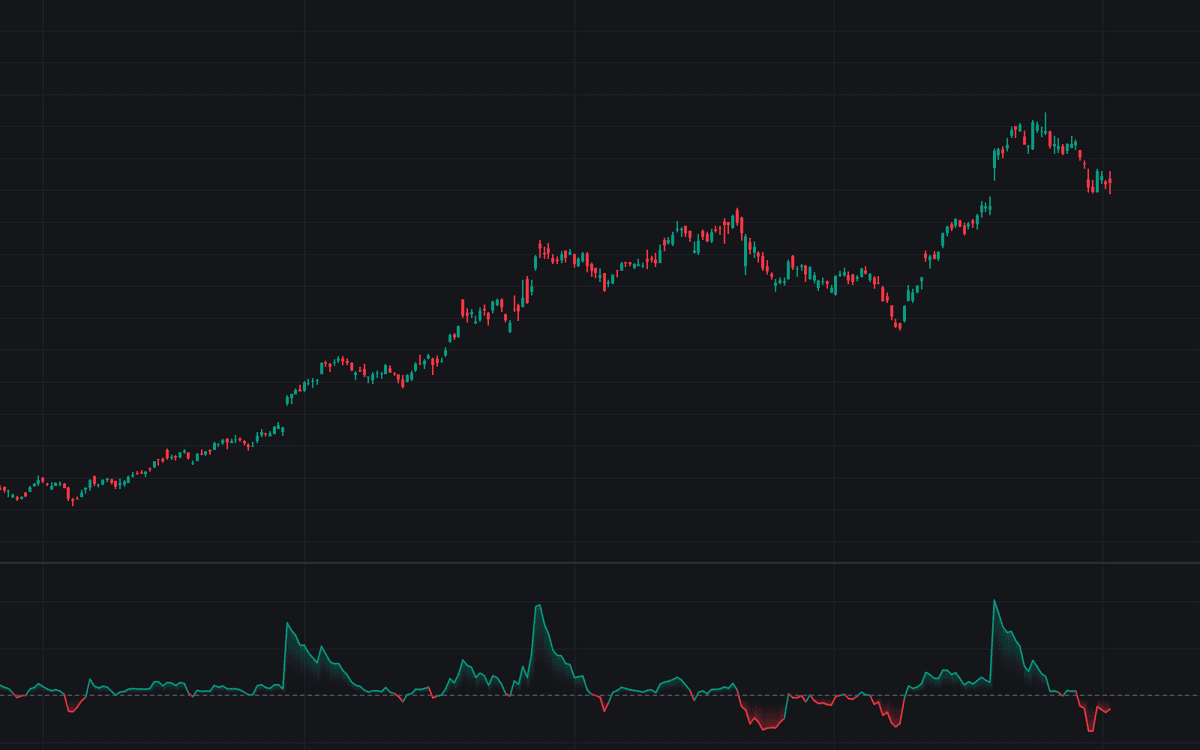

The Force Index multiplies the change in close from the prior bar by the current bar's volume, smoothing the product with an exponential moving average into an oscillator around zero that fuses direction, extent, and participation. The multiplication is the point: a strong advance on heavy turnover prints large positive values while a thin drift barely registers.
This build is the standard published formula without modification, defaulting to Alexander Elder's intermediate-term setting of a 13-period EMA. The line draws in a separate pane against a dashed zero line, formatted in volume units.
How to Trade the Force Index?
- Above zero: buyers have had the upper hand, a long-friendly backdrop.
- Below zero: bears control the tape; rallies against sustained negative readings deserve skepticism.
- Zero-line crosses: control has changed hands; bullish and bearish zero-cross alert conditions are included.
- Bullish divergence: price at a lower low while the Force Index bottoms higher shows selling force fading; bearish mirror at highs.
- Extreme spikes: readings far outside recent history mark a surge of one-sided pressure: confirmation with a breakout, or exhaustion after a long run.
Elder gave the lengths different jobs: 13 tracks the swing-scale contest; 2 is a fast pullback timer, buying brief negative readings in an uptrend. Either way, direction comes from a separate trend read. The Force Index times and confirms.
Force Index Settings
- Length (default 13): the EMA applied to the raw one-bar force, (close - close[1]) * volume. Elder used 13 for the intermediate trend and 2 for short-term timing. Raising it favors the slower read; toward 2 the values run nearly raw and whipsaw badly without a trend filter.
Frequently Asked Questions

The Library is free. Quant makes it yours.
Pull any concept or indicator into Quant: rebuild it, retune it, or turn it into a backtested strategy of your own.