Mass Index
 By LuxAlgoApr 13, 2020
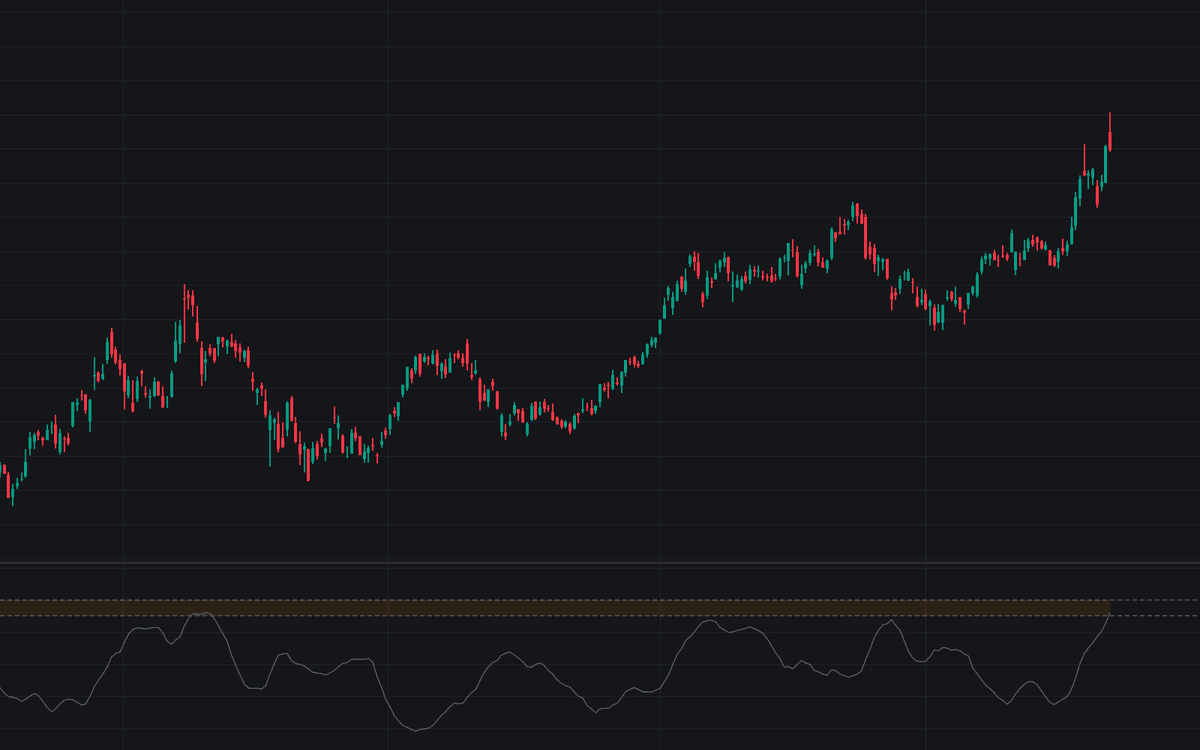

The Mass Index sums the ratio of a 9-period EMA of the high-low range to a double 9-period EMA of that range over a 25-bar window, producing an oscillator that rises as the trading range widens relative to its own smoothed baseline. It carries no directional information at all. The design detects range expansion and contraction, and its traditional read is the reversal bulge: a climb above 27 followed by a drop back below 26.5. Defaults match Donald Dorsey's original specification, and the script plots the Mass Index line against two dashed reference levels, the Setup Level and the Trigger Level.
How to Trade the Mass Index?
- Cross above the Setup Level (27): ranges have expanded well beyond their smoothed baseline. The bulge is armed.
- Subsequent drop below the Trigger Level (26.5): the contraction that completes the reversal bulge, traditionally read as raised odds that the prevailing move is exhausting.
- Rising index without a bulge: general range expansion; falling readings mark quieting bars.
- Direction comes from elsewhere: the index says a turn is more likely, never which way. A trend read such as the slope of a short moving average supplies the side.
Mass Index Settings
- Sum Length (default 25): bars over which the single/double EMA ratio is summed. Longer smooths the index and makes bulges rarer; shorter shifts its typical level lower.
- EMA Length (default 9): length of the single EMA of the high-low range and of its double smoothing.
- Setup Level (default 27): the arm level for the reversal bulge.
- Trigger Level (default 26.5): the completion level; widening its gap below the Setup Level delays triggers.
Frequently Asked Questions

Original indicatorBuilt in-house by LuxAlgo
The Library is free. Quant makes it yours.
Pull any concept or indicator into Quant: rebuild it, retune it, or turn it into a backtested strategy of your own.