Ultimate Smoother
 By LuxAlgoJun 4, 2026
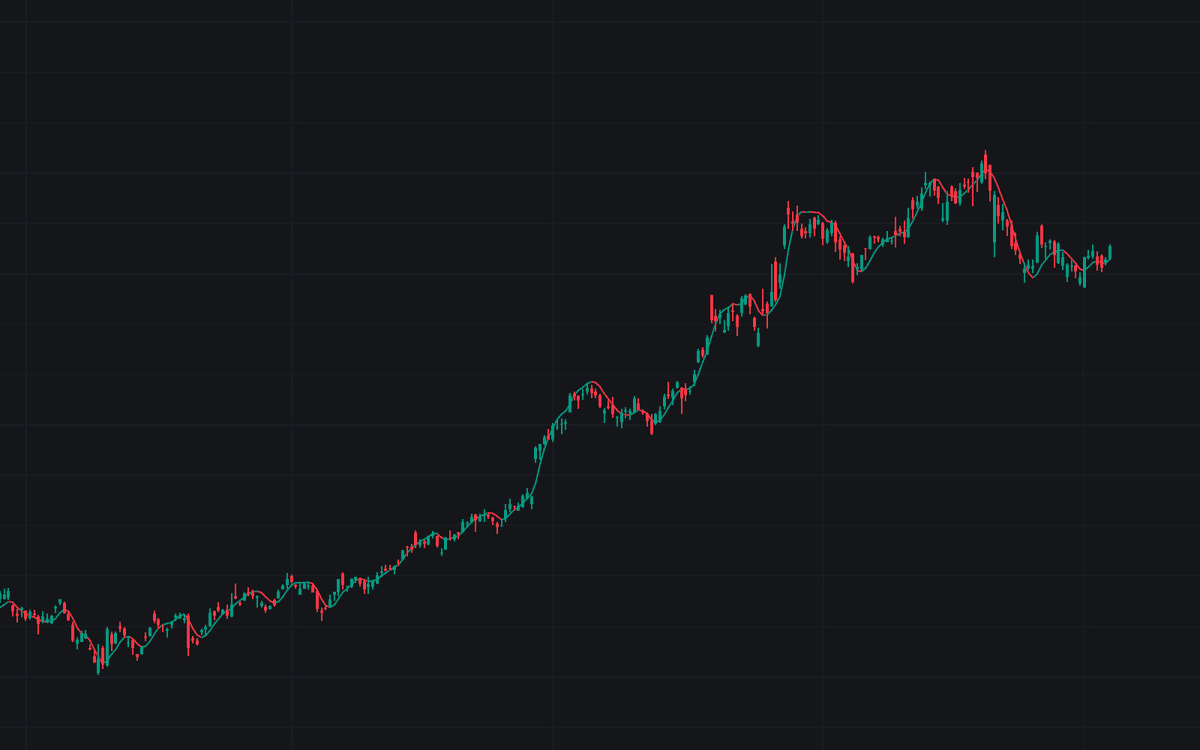

Ultimate Smoother gives the library a first-class build of John Ehlers' 2024 filter: a smoothed line that hugs slow price swings with essentially no delay. The Ultimate Smoother is built by subtracting a two-pole high-pass response from the input, collapsed into a single recursion: wavelengths shorter than the critical period are attenuated while the lowest frequencies stay pinned to price itself. The plotted line colors by its own slope, and an optional slow companion converts the single filter into a fast/slow pair.
How to Trade the Ultimate Smoother?
- Slope color: the line paints bullish while rising and bearish while falling; the Smoother Turned Rising and Smoother Turned Falling alerts catch the flips.
- Price crosses: because the line is not trailing behind price the way a comparable moving average would, closes crossing it are timely events. Optional triangles mark them and both directions are alerted.
- Companion crossovers: with the slow companion shown, fast-over-slow reads like a moving average crossover whose fast side barely lags; the fill colors by which line is on top, and bullish and bearish companion crosses carry alerts.
Ultimate Smoother Settings
- Critical Period (default 20): wavelengths shorter than this are attenuated. Lower values track aggressively and pass more chop; higher values smooth harder but drive useful swings into the less faithful response zone near the cutoff.
- Source (default close): the series being filtered.
- Show Slow Companion (default off) and Slow Critical Period (default 50): the crossover pair; keep the slow period above the main one.
- Style: Crossover Fill (default on) and Price Cross Markers (default off).
Frequently Asked Questions

Original indicatorBuilt in-house by LuxAlgo
The Library is free. Quant makes it yours.
Pull any concept or indicator into Quant: rebuild it, retune it, or turn it into a backtested strategy of your own.