Zero-lag MACD
 By LuxAlgoMar 29, 2026
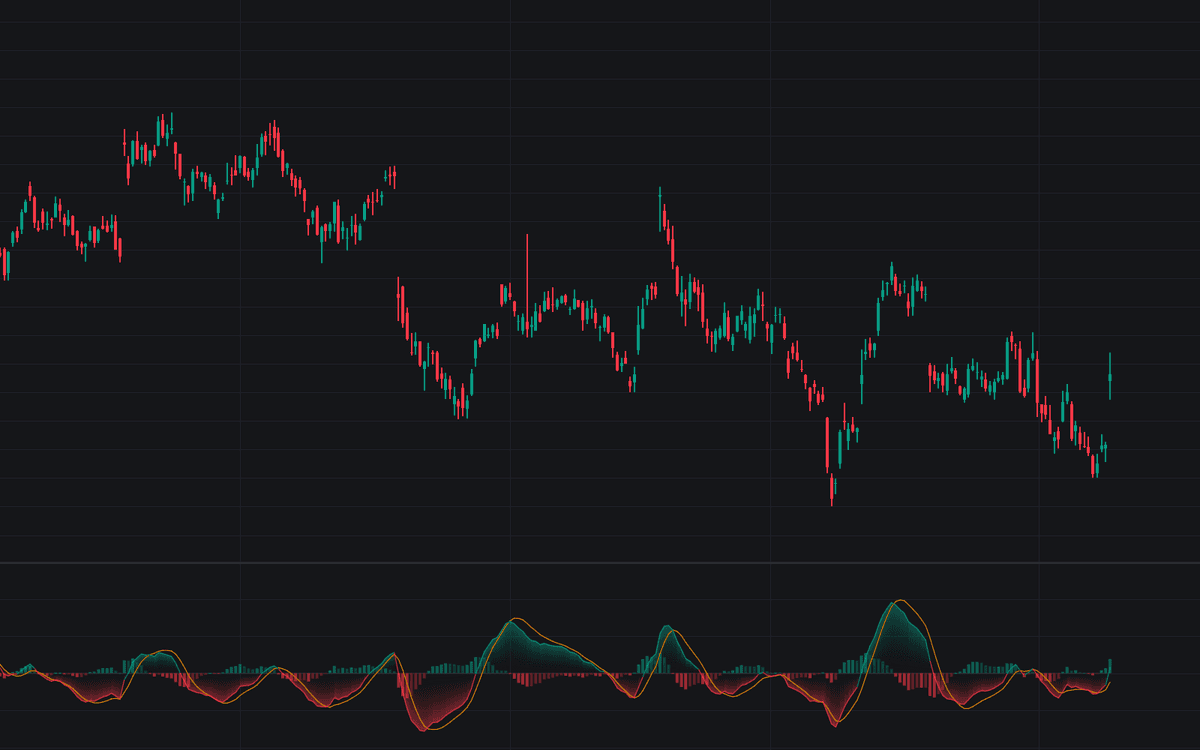

Zero-lag MACD is the definitive clean build of the zero-lag MACD: the familiar 12/26/9 study with most of its smoothing delay compensated away. Each average is de-lagged with a double-EMA correction (twice the average, minus an EMA of it), the MACD line is the gap between the corrected fast and slow averages, and by default the signal line receives the same correction so all three components run on the earlier clock. Histogram columns shade bright while the spread is widening and fade once it narrows (the early inflection cue), with a gradient fill tying the MACD line to zero.
How to Trade the Zero-lag MACD?
- Signal-line crosses: the MACD line crossing the signal line is the trigger, arriving a few bars ahead of the classic construction.
- Zero-line crosses: the MACD line crossing zero means the de-lagged fast average has moved across the slow one, the bias read.
- Histogram turns: the bright-to-faded shading and the turn alerts flag the spread swinging back before the cross itself prints.
De-lagging is a trade, not free speed: earlier crossovers are paid for with overshoot past sharp turns (the snap-back is the correction working as designed) and extra crosses in chop, so pair the triggers with a regime filter.
Zero-lag MACD Settings
- Source (default close): the series fed into the de-lagged averages.
- Fast Length (default 12): the fast de-lagged EMA; the standard number keeps comparisons meaningful.
- Slow Length (default 26): the slow de-lagged EMA subtracted from the fast one to form the MACD line.
- Signal Length (default 9): smoothing of the MACD line into the signal line.
- De-lag Signal Line (default on): applies the same correction to the signal line; disable for a plain-EMA signal that is steadier but slightly later.
- Style toggles: Show Histogram and Gradient Fill (both on by default).
Frequently Asked Questions

The Library is free. Quant makes it yours.
Pull any concept or indicator into Quant: rebuild it, retune it, or turn it into a backtested strategy of your own.