ZLEMA
 By LuxAlgoJun 22, 2026
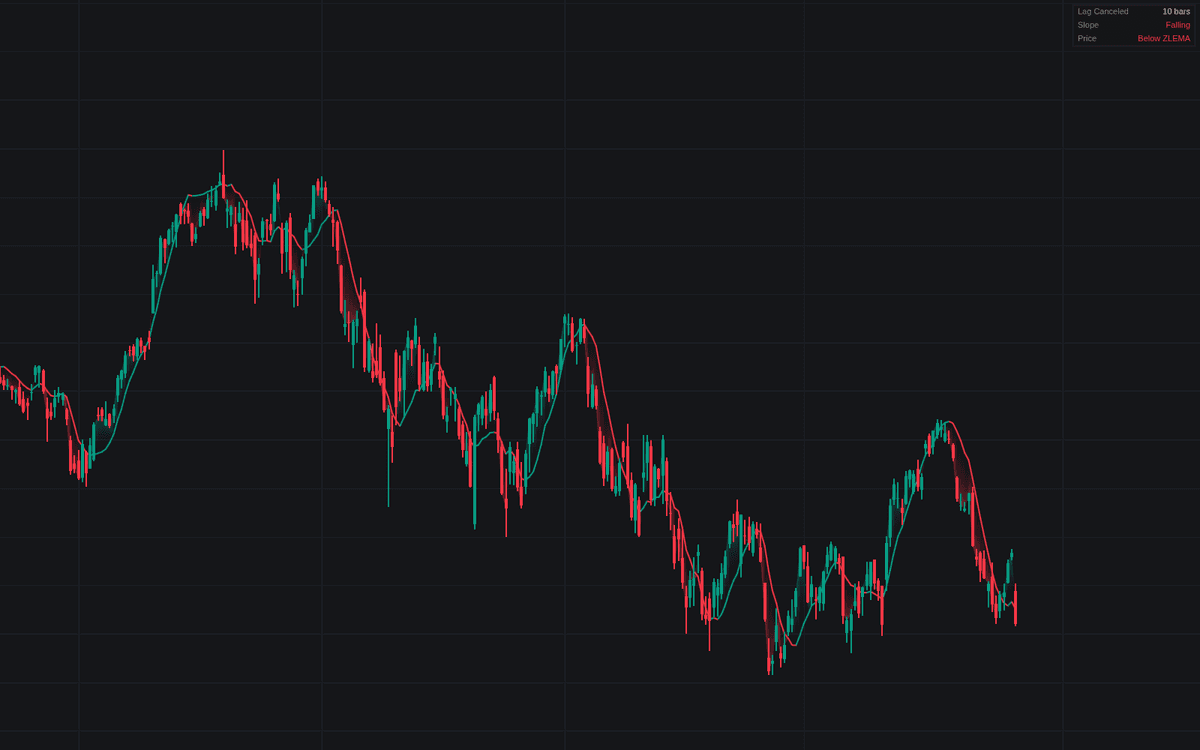

ZLEMA is the definitive clean build of the ZLEMA (zero-lag exponential moving average), in the de-lagged-input form most implementations ship. An EMA of length N shows the market roughly as it was (N - 1) / 2 bars ago, so the input is corrected by exactly that amount (the current price doubled, minus the price that many bars back) before a normal EMA smooths the result. An optional same-length EMA overlays as the honest benchmark: closer to price in trends, earlier at turns, including some that never follow through.
How to Trade the ZLEMA?
- Slope flips: the line's slope is the fast regime read, flipping ahead of an equal-length EMA's, with slope-turn alerts at each change.
- Price crossings: the source crossing the ZLEMA reads like any moving-average cross, and the smaller lag keeps it within reach of ordinary pullbacks, the dynamic support/resistance read behind the fill.
- Fast/slow pair: the optional Second ZLEMA builds the classic crossover setup; both lines turn earlier, so the pair fires earlier and fails more often in chop.
The dashboard reports the canceled lag, the current slope and where price sits.
ZLEMA Settings
- Source (default close): the series the average de-lags and then smooths.
- ZLEMA Length (default 21): sets both the smoothing and the correction size; there is no standard number, so start from EMA lengths you already use.
- Second ZLEMA (default off) and Second ZLEMA Length (default 50): the slower line of the crossover pair.
- EMA — Same Length (default off): overlays the plain EMA benchmark.
- Show Dashboard (default on): lag canceled, slope, and price-position readout.
- Style toggles: Slope Trend Coloring and Price / ZLEMA Gradient Fill (on by default), Price Crossing Markers (off by default), Line Width (default 2).
Frequently Asked Questions

Original indicatorBuilt in-house by LuxAlgo
The Library is free. Quant makes it yours.
Pull any concept or indicator into Quant: rebuild it, retune it, or turn it into a backtested strategy of your own.