


Volume Trends (VWMA & VWAP)
Sep 2, 2018

The Volume Trends (VWMA & VWAP) tool provides a comprehensive view of market momentum by combining price action with volume data to help traders identify trend strength and potential reversals.
Usage
The indicator is primarily used to gauge the conviction behind price movements by comparing standard moving averages with volume-weighted ones.
- Trend Strength: When the VWMA is trending above the SMA, it suggests that price increases are being supported by higher volume, indicating a strong bullish trend. Conversely, a VWMA below the SMA indicates that price action lacks volume support or is driven by selling pressure.
- Divergence: Traders can look for instances where price makes new highs while the VWMA fails to follow, suggesting a weakening trend.
- Intraday Benchmarking: On intraday timeframes, the VWAP dots serve as a dynamic support/resistance level and a mean-reversion benchmark. Price trading above VWAP is typically considered bullish, while price below is bearish.
Details
The script calculates three distinct components:
- Simple Moving Average (SMA): A standard calculation of the average price over a specific period.
- Volume-Weighted Moving Average (VWMA): This calculation weights price based on volume, ensuring that periods with higher trading activity have a greater impact on the average.
- Volume-Weighted Average Price (VWAP): Calculated using price and volume from the start of the trading session (applicable to intraday charts).
The relationship between the SMA and VWMA is a classic technique for volume analysis. Because the VWMA reacts more heavily to high-volume bars, its position relative to the SMA reveals whether volume is confirming the current price trend.
Settings
- Source: Determines the price data used for the SMA and VWMA calculations (e.g., Close, Open, High, Low).
- Length: Sets the lookback period for both the SMA and VWMA calculations.
FAQ
How do I use the Volume Trends (VWMA & VWAP) indicator?
You can use it to identify if a trend is supported by volume by checking the relationship between the VWMA and SMA lines, and use the VWAP dots for intraday price context.
What do the different colors mean?
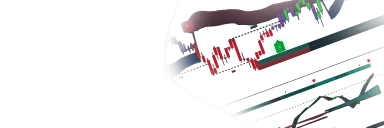
The SMA is plotted in the chart's foreground color, while the VWMA is blue. The VWAP dots change color based on whether the current price is above (green) or below (red) the volume-weighted average price.
Where can I access this tool?
You can get access on the LuxAlgo Library for charting platforms like TradingView, MetaTrader (MT4/MT5), and NinjaTrader for free.
Trading & investing are risky and many will lose money in connection with trading and investing activities. All content on this site is not intended to, and should not be, construed as financial advice. Decisions to buy, sell, hold or trade in securities, commodities and other investments involve risk and are best made based on the advice of qualified financial professionals. Past performance does not guarantee future results.
Hypothetical or Simulated performance results have certain limitations. Unlike an actual performance record, simulated results do not represent actual trading. Also, since the trades have not been executed, the results may have under-or-over compensated for the impact, if any, of certain market factors, including, but not limited to, lack of liquidity. Simulated trading programs in general are designed with the benefit of hindsight, and are based on historical information. No representation is being made that any account will or is likely to achieve profit or losses similar to those shown.
Testimonials appearing on this website may not be representative of other clients or customers and is not a guarantee of future performance or success.
As a provider of technical analysis tools and strategies, we do not have access to the personal trading accounts or brokerage statements of our customers. As a result, we have no reason to believe our customers perform better or worse than traders as a whole based on any content, tool, or platform feature we provide.
Charts used on this site are by TradingView in which the majority of our technical indicators are built on. TradingView® is a registered trademark of TradingView, Inc. www.TradingView.com TradingView® has no affiliation with the owner, developer, or provider of the Services described herein.
Market data is provided by CBOE, CME Group, BarChart, Massive, CoinAPI. Select U.S. equities data is provided through Massive. CBOE BZX real-time U.S. equities data is licensed from CBOE and provided through BarChart. Real-time futures data is licensed from CME Group and provided through BarChart. Select cryptocurrency data, including major coins, is provided through CoinAPI. All data is provided “as is” and should be verified independently for trading purposes.
This does not represent our full Disclaimer. Please read our full disclaimer.
© 2026 LuxAlgo Global, LLC.