



Cumulative Volume Delta
Jul 2, 2021

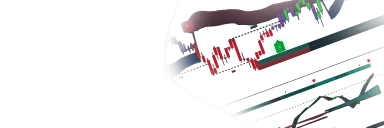
The Cumulative Volume Delta indicator provides a cumulative representation of market buying and selling pressure by applying the Bull and Bear Balance logic to volume data. This tool allows traders to visualize the long-term trend of aggressive buying versus aggressive selling, helping to identify potential trend reversals or continuations based on volume flows.
Usage
The indicator can be used to gauge the overall sentiment of the market. When the Cumulative Volume Delta (CVD) line is rising, it suggests that buying pressure is dominant, whereas a falling line indicates prevailing selling pressure.
Traders can enable a Moving Average (MA) to filter the CVD movements. Interactions between the CVD and its MA can serve as directional signals:
- Bullish Sentiment: When the CVD line crosses above its MA, the background often transitions to a bullish color, suggesting a shift toward buying momentum.
- Bearish Sentiment: When the CVD line crosses below its MA, the background often transitions to a bearish color, suggesting a shift toward selling momentum.
Details
This implementation is based on the Bull and Bear Balance Indicator developed by Vadim Gimelfarb, originally published in the October 2003 issue of Technical Analysis of Stocks & Commodities magazine.
Unlike standard delta calculations that simply use price close relative to open, this method evaluates the relationship between the current bar's high, low, open, and close, as well as the previous bar's price action, to determine "Bull Power" and "Bear Power." These power values are then used to fractionally assign the bar's total volume to either the bull or bear side. The resulting delta (Bull Volume - Bear Volume) is then accumulated over time to create the CVD line.
Settings
- MA Length: Determines the period used for the Simple Moving Average (SMA) calculation applied to the CVD.
- Plot MA?: Toggles the visibility of the Moving Average line and the associated cloud fill on the chart.
FAQ
How do I interpret the CVD line?
A rising CVD line indicates that net buying volume is increasing, while a falling line indicates that net selling volume is increasing. Divergences between price and CVD can often signal weakening trends.
What does the cloud color represent?
The cloud color changes based on the relationship between the CVD and its Moving Average, helping to visually highlight shifts in volume-weighted momentum.
How can I access this tool?
You can get access on the LuxAlgo Library for charting platforms like TradingView, MetaTrader (MT4/MT5), and NinjaTrader for free.
Trading & investing are risky and many will lose money in connection with trading and investing activities. All content on this site is not intended to, and should not be, construed as financial advice. Decisions to buy, sell, hold or trade in securities, commodities and other investments involve risk and are best made based on the advice of qualified financial professionals. Past performance does not guarantee future results.
Hypothetical or Simulated performance results have certain limitations. Unlike an actual performance record, simulated results do not represent actual trading. Also, since the trades have not been executed, the results may have under-or-over compensated for the impact, if any, of certain market factors, including, but not limited to, lack of liquidity. Simulated trading programs in general are designed with the benefit of hindsight, and are based on historical information. No representation is being made that any account will or is likely to achieve profit or losses similar to those shown.
Testimonials appearing on this website may not be representative of other clients or customers and is not a guarantee of future performance or success.
As a provider of technical analysis tools and strategies, we do not have access to the personal trading accounts or brokerage statements of our customers. As a result, we have no reason to believe our customers perform better or worse than traders as a whole based on any content, tool, or platform feature we provide.
Charts used on this site are by TradingView in which the majority of our technical indicators are built on. TradingView® is a registered trademark of TradingView, Inc. www.TradingView.com TradingView® has no affiliation with the owner, developer, or provider of the Services described herein.
Market data is provided by CBOE, CME Group, BarChart, Massive, CoinAPI. Select U.S. equities data is provided through Massive. CBOE BZX real-time U.S. equities data is licensed from CBOE and provided through BarChart. Real-time futures data is licensed from CME Group and provided through BarChart. Select cryptocurrency data, including major coins, is provided through CoinAPI. All data is provided “as is” and should be verified independently for trading purposes.
This does not represent our full Disclaimer. Please read our full disclaimer.
© 2026 LuxAlgo Global, LLC.