Auction Failure
 By LuxAlgoApr 26, 2026
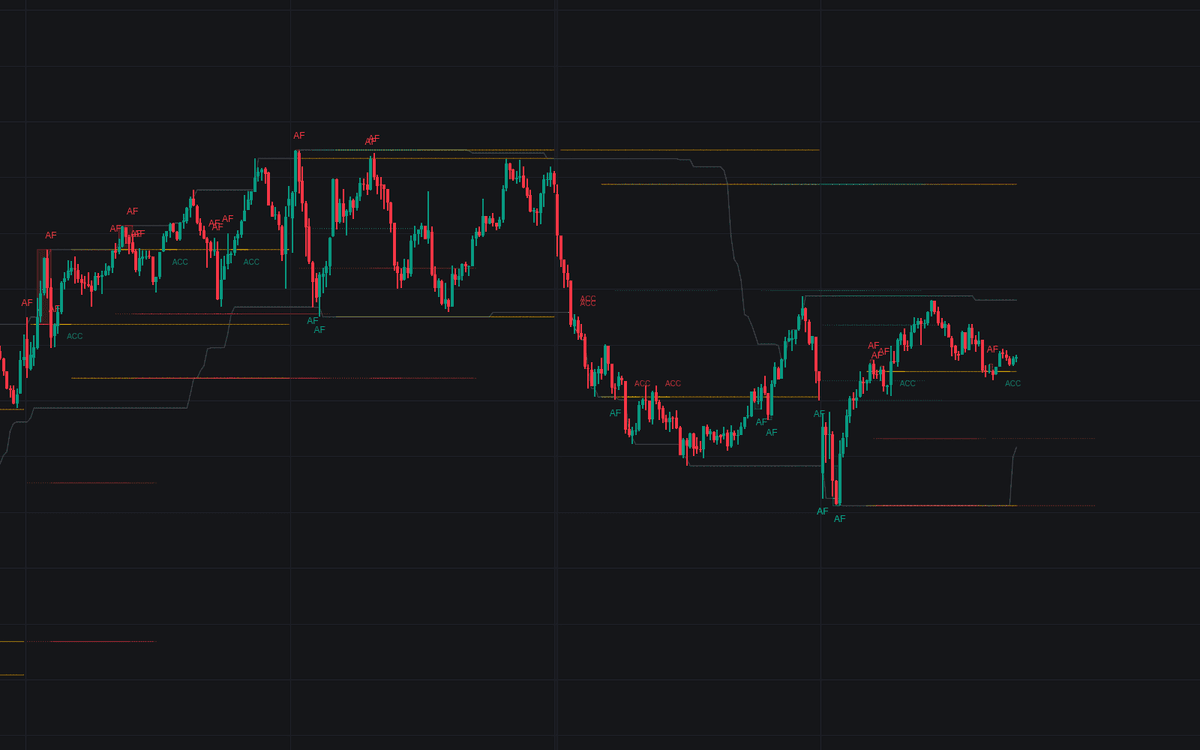

Auction Failure runs auction failure detection as a state machine across up to eight reference sides: prior session extremes, initial balance extremes, rolling range boundaries and prior value area edges. A probe beyond any of them is tracked until it builds acceptance (six held closes by default) or returns back inside, confirming the failure.
Failures are classified by volume traded beyond the level: an average bar's worth or more is a rejection (faded aggressively), less an abandonment (no interest). The failed excursion is shaded, with dotted rotation targets at the range's mid and opposite extreme.
How to Trade the Auction Failure?
- AF label: failure above a reference is bearish, below bullish; the tooltip carries type and probe stats.
- Rejection over abandonment: the stronger form. Size was absorbed and beaten back.
- Rotation targets: the mid as interim objective, the opposite extreme as the full rotation.
- ACC markers: acceptance. Expansion found follow-through, so no failure trade exists.
Auction Failure Settings
- Acceptance: Bars Held Beyond (default 6): held closes after which a probe cannot fail.
- Failure Confirmation: Closes Back Inside (default 1): closes back inside that confirm it.
- Minimum Penetration (xATR) (default 0): ignores pokes below this ATR multiple.
- Rejection Volume Threshold (default 1) and Average Volume Length (default 20): the rejection/abandonment split.
- Prior Session High/Low (default on): intraday charts only.
- Initial Balance Extremes (default on) with Initial Balance Length (Minutes) (default 60).
- Rolling Range Extremes (default on) with Range Length (Bars) (default 50): the only family on daily and higher charts.
- Prior Session Value Area (default off) with Value Area Profile Rows (default 24) and Value Area Volume % (default 70).
- Style toggles cover levels, probe zones, rotation targets (Target Extension (Bars), default 30) and acceptance markers.
Frequently Asked Questions

Original indicatorBuilt in-house by LuxAlgo
The Library is free. Quant makes it yours.
Pull any concept or indicator into Quant: rebuild it, retune it, or turn it into a backtested strategy of your own.