80% Rule
 By LuxAlgoMar 26, 2026
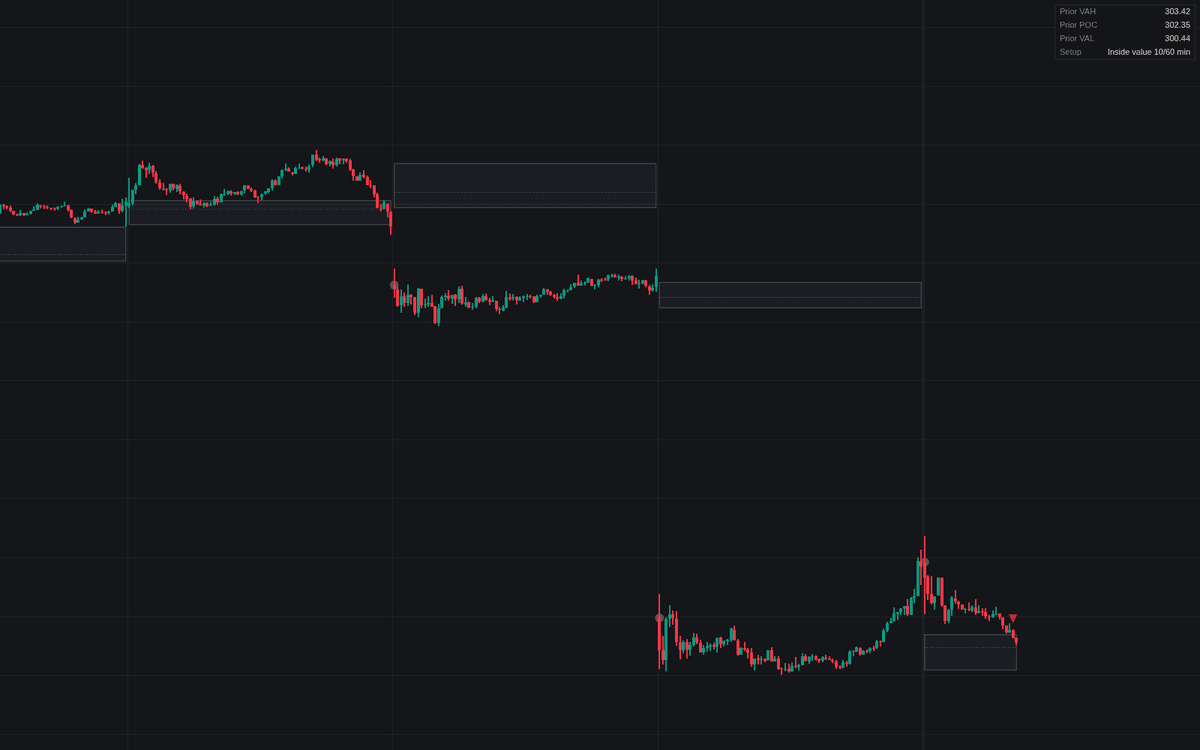

80% Rule mechanizes the 80% rule rotation setup from open to resolution: it builds the prior session's value area, classifies today's open against it, and signals only once price has re-entered the area and held inside for the acceptance time. Each step is marked on the chart and mirrored in a live status table.
The value area comes from a 25-row profile of the completed session, expanded around the point of control to 70% of its weight; the 60-minute default clock matches the classic two 30-minute periods of acceptance.
How to Trade the 80% Rule?
- Open outside value: a circle marks an open above or beneath the prior value area, the precondition, not yet a signal.
- Re-entry triangle: price closed back inside and the acceptance clock is running.
- 80% Rule label: acceptance confirmed (bullish after an open below value, bearish after an open above), targeting the opposite boundary, with the prior POC as interim reference.
- Outcome tags: ✓ marks rotation complete; ✕ marks a rejected re-entry or a stop-out back through the entry side.
Run it on a 30-minute or lower timeframe so the clock resolves cleanly, and cross-check the levels against a full volume profile when methods disagree.
80% Rule Settings
- Value Area % (default 70): share of the profile weight around the POC that defines value.
- Profile Rows (default 25): profile resolution; more rows sharpen the levels, fewer smooth them.
- Profile Weighting (default Volume): or TPO (Time) for symbols without reliable volume.
- Custom Session (default off): restricts the tool to a session window (default 0930-1600).
- Acceptance Time (Minutes) (default 60): time closes must hold inside value before the signal fires.
- Style toggles cover the value area box, POC line, signal labels, step markers and the status table.
Frequently Asked Questions

The Library is free. Quant makes it yours.
Pull any concept or indicator into Quant: rebuild it, retune it, or turn it into a backtested strategy of your own.