Cyber Cycle
 By LuxAlgoJun 10, 2026
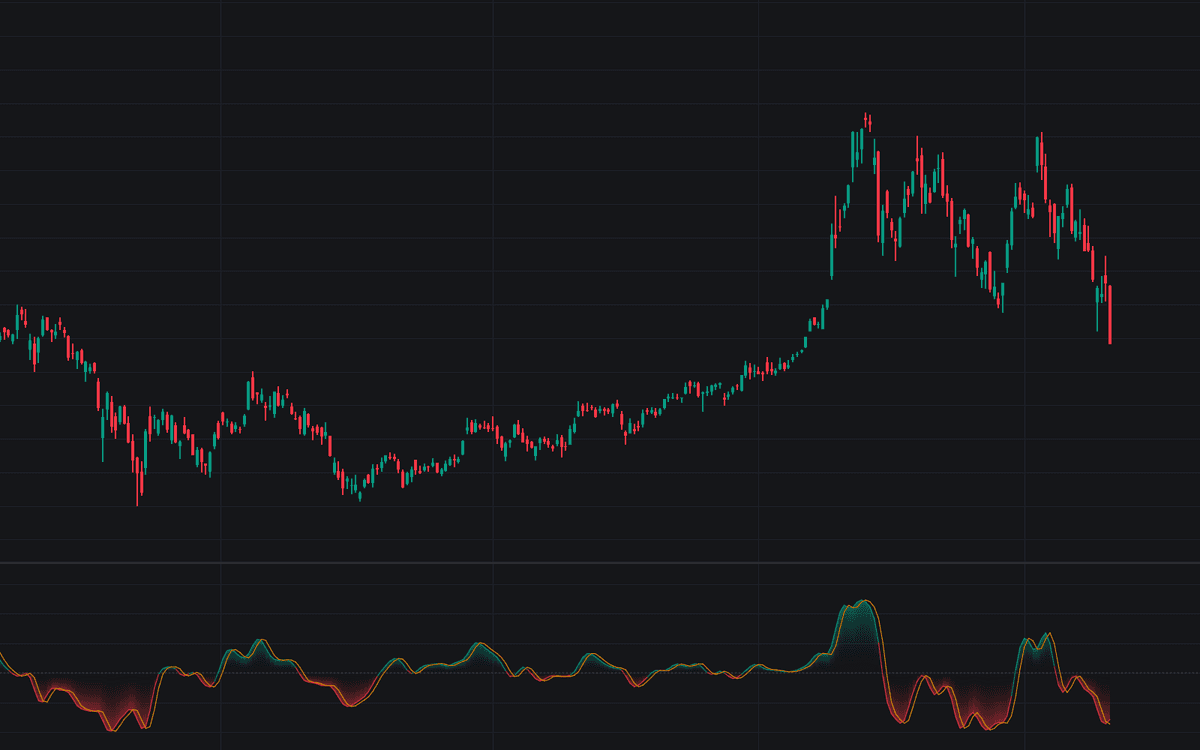

Cyber Cycle filters price down to its tradable swing component and plots it as a zero-centered oscillator beside a trigger line (the previous bar's cycle value) whose crossings time entries near the cycle's turning points. The definitive clean build of John Ehlers' Cyber Cycle filter, it smooths the bar midpoint, screens out the slow trend component with a recursive filter, and colors the result by its side of zero. A Display option switches to the Stochastic Cyber Cycle, which ranks the cycle against its recent extremes and rescales it between -1 and +1.
How to Trade the Cyber Cycle?
- Cycle crosses above Trigger: a potential cycle trough: the low-lag long timing read, covered by the Bullish Crossover alert.
- Cycle crosses below Trigger: a potential cycle crest, mirroring the read for exits or shorts.
- Stochastic Cyber Cycle beyond ±0.5: the Overbought Level and Oversold Level guides mark stretched readings; entering either zone fires its own alert.
- Swing amplitude: the raw display has no fixed scale, so extremes are judged against recent swing size.
In a strong trend the filter is overrun and counter-trend crossings fail repeatedly, so gate the tool with a regime read.
Cyber Cycle Settings
- Source (default hl2): price fed to the filter, the published code's bar midpoint.
- Alpha (default 0.07): smoothing constant; higher reacts faster but passes more noise.
- Display (default Cyber Cycle): raw unbounded cycle, or the Stochastic Cyber Cycle.
- Stochastic Length (default 8): lookback used by the stochastic variant's ranking.
- Extreme Levels (default enabled, levels 0.5 and -0.5): guides on the stochastic display only.
- Crossover Markers (default disabled): dots at each crossing; the matching alerts fire either way.
Frequently Asked Questions

The Library is free. Quant makes it yours.
Pull any concept or indicator into Quant: rebuild it, retune it, or turn it into a backtested strategy of your own.