Dark Cloud Cover
 By LuxAlgoMar 23, 2026
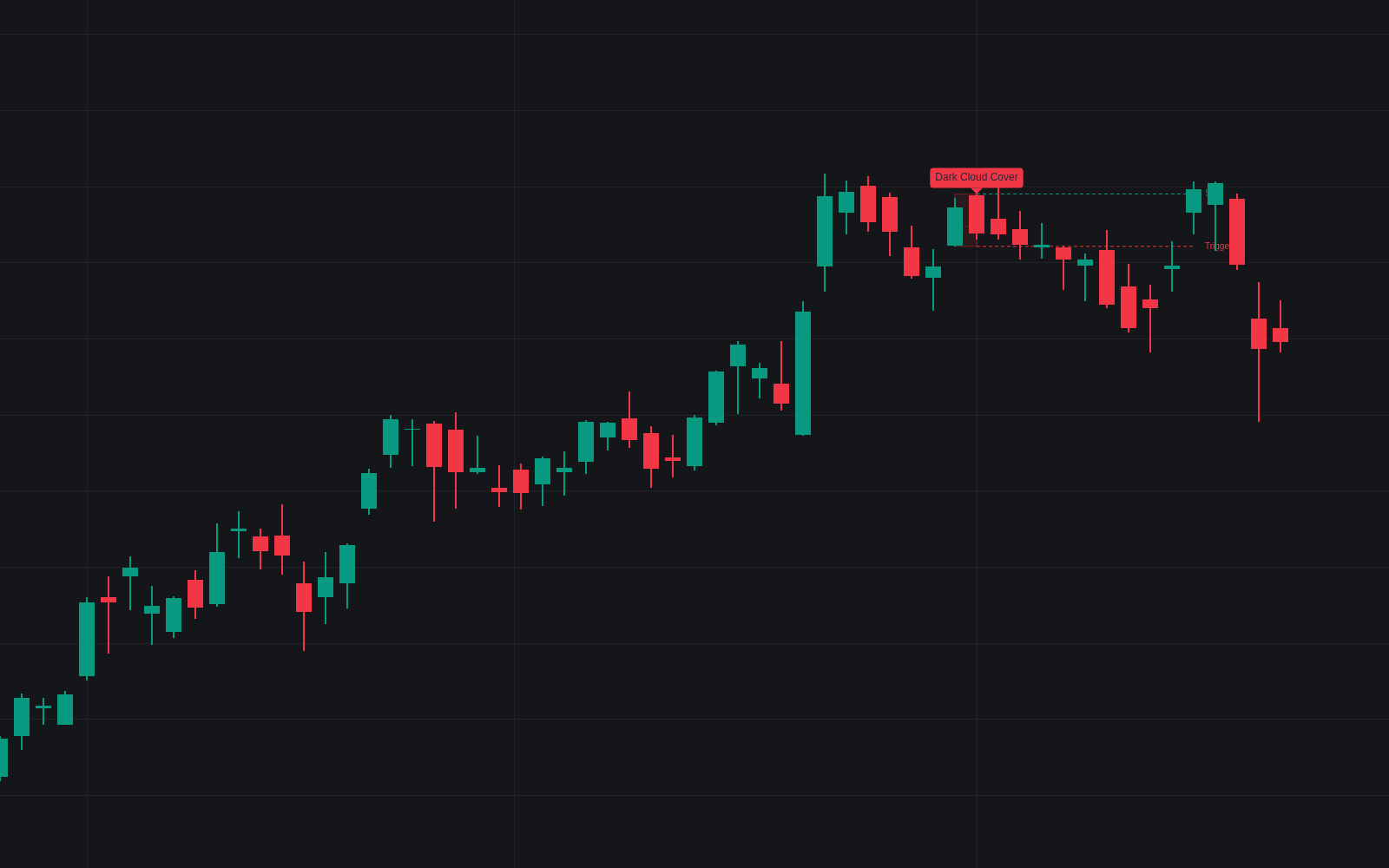

Dark Cloud Cover detects the classic two-candle bearish reversal (a strong bullish candle answered by an open above it and a sell-off closing deep into its real body) and grades every print with context filters and trade levels. Rebuilt from the strict definition of dark cloud cover, it sizes the first candle against the preceding tape's average real body and by default demands an advance above a 50-period average.
How to Trade the Dark Cloud Cover?
- Pattern label prints: buyers paid up for new highs and instantly gave them back, a short-horizon top warning. Hover for close depth, volume ratio, and the trigger/stop prices.
- Bearish Follow-Through: a bearish candle right after the pattern is the conventional confirmation.
- Trigger Level break: price below the dashed trigger (the pattern low by default) marks downside follow-through: the reversal is active.
- Stop level break: a trade back over the second candle's high invalidates the pattern.
Dark Cloud Cover Settings
- Open Requirement (default Above Prior High (Strict)): classic gap open, or a relaxed open above the prior close where gaps are rare.
- Body Average Length (default 14): candles in the average real body yardstick.
- Strong Body Multiplier (default 1.0): minimum first-candle body versus that average.
- Minimum Close Depth % (default 50): how far into the first body the close must reach.
- Uptrend Filter (default enabled) with SMA Length (default 50): the first candle must close above the average.
- New High Location (default disabled) with Window (default 20): only patterns at the window's highest high.
- Volume Filter (default disabled) with Multiple (default 1.0) and Length (default 20): elevated second-candle volume.
- Trigger & Stop Levels (default enabled), Trigger Level (default Pattern Low), Levels Extension (default 10), plus Pattern Labels and Pattern Highlight (both enabled).
Frequently Asked Questions

Original indicatorBuilt in-house by LuxAlgo
The Library is free. Quant makes it yours.
Pull any concept or indicator into Quant: rebuild it, retune it, or turn it into a backtested strategy of your own.