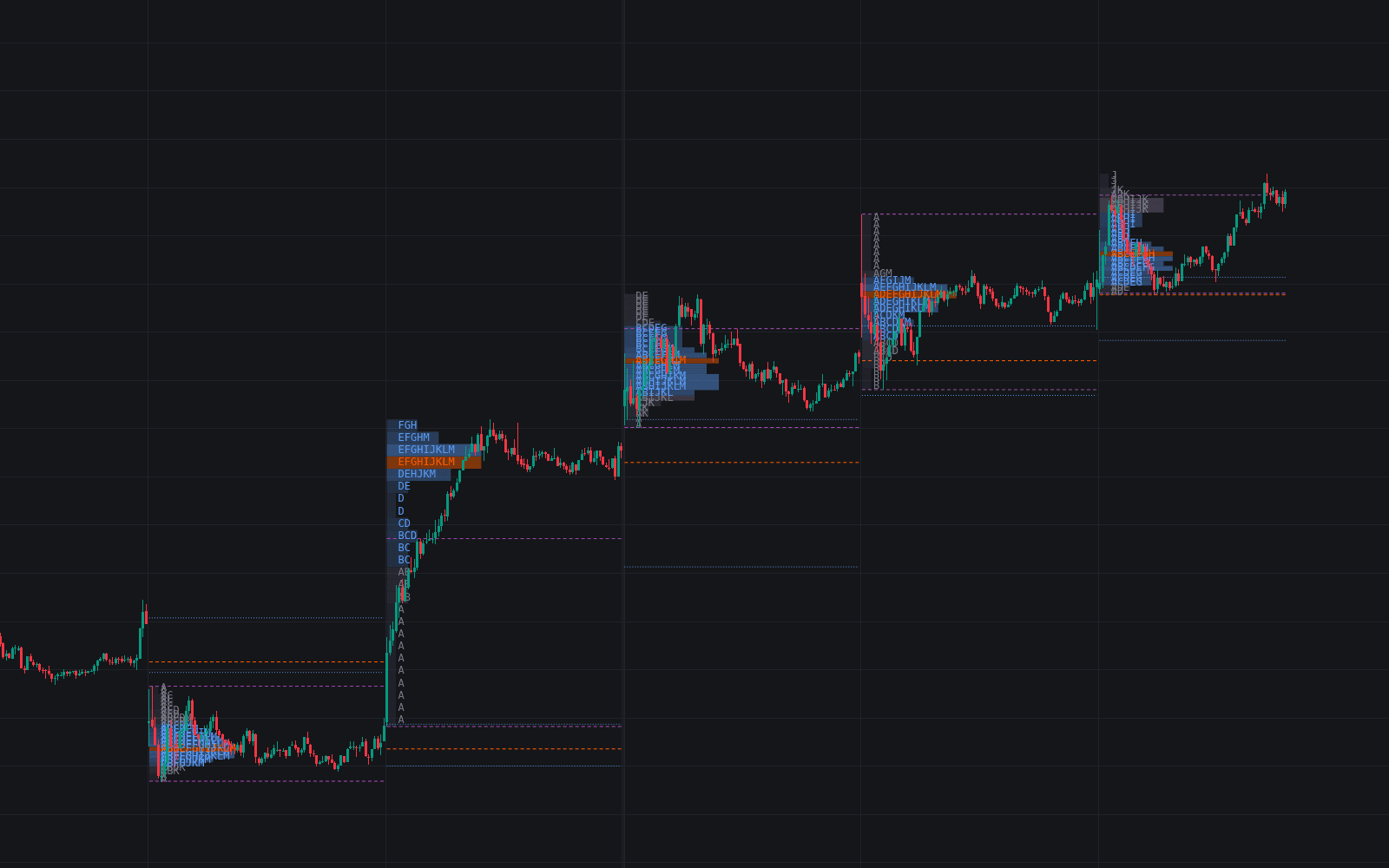
Initial Balance Volume Deficit

Apr 2, 2026

Static chart image
Volume Based
Cycle
Liquidity
Works on the following platforms:
tradingviewSymbolTradingView
For free use on the TradingView platform
ninjatraderNinjaTrader
For free use on the NinjaTrader platform
metatrader4MetaTrader 4/5
For free use on the MetaTrader 4/5 platform
thinkorswimThinkorswim
For free use on the Thinkorswim platform

The IB Volume Deficit trading indicator helps traders understand whether the volume committed during the market open is being reinforced or faded as the session develops. By comparing Initial Balance volume from the first 60 minutes against the volume traded during the rest of the day, this tool reveals whether a move has real follow-through, whether participation is drying up, and whether the session is developing into a trend day, an exhaustion day, or a range-bound trading environment. For traders looking for a volume-based trading strategy, this indicator offers a simple way to measure conviction, participation, and momentum after the open.

How to Trade the IB Volume Deficit Indicator

The core idea behind this trading indicator is that the first hour of the session, often called the Initial Balance (IB), is one of the most important periods of the day. This is where institutions, overnight repricing, and major reactions to news often show up first. The indicator tracks all volume traded during that opening window, then subtracts the volume that comes afterward.

This creates an oscillator that answers an important question:

Is the rest of the session strong enough to overwhelm the opening auction, or did the market use most of its energy right away?

Traders can use this information to judge whether the day is likely to support continuation, fade into chop, or show signs of exhaustion.

Volume Deficit as a Trend Confirmation Signal

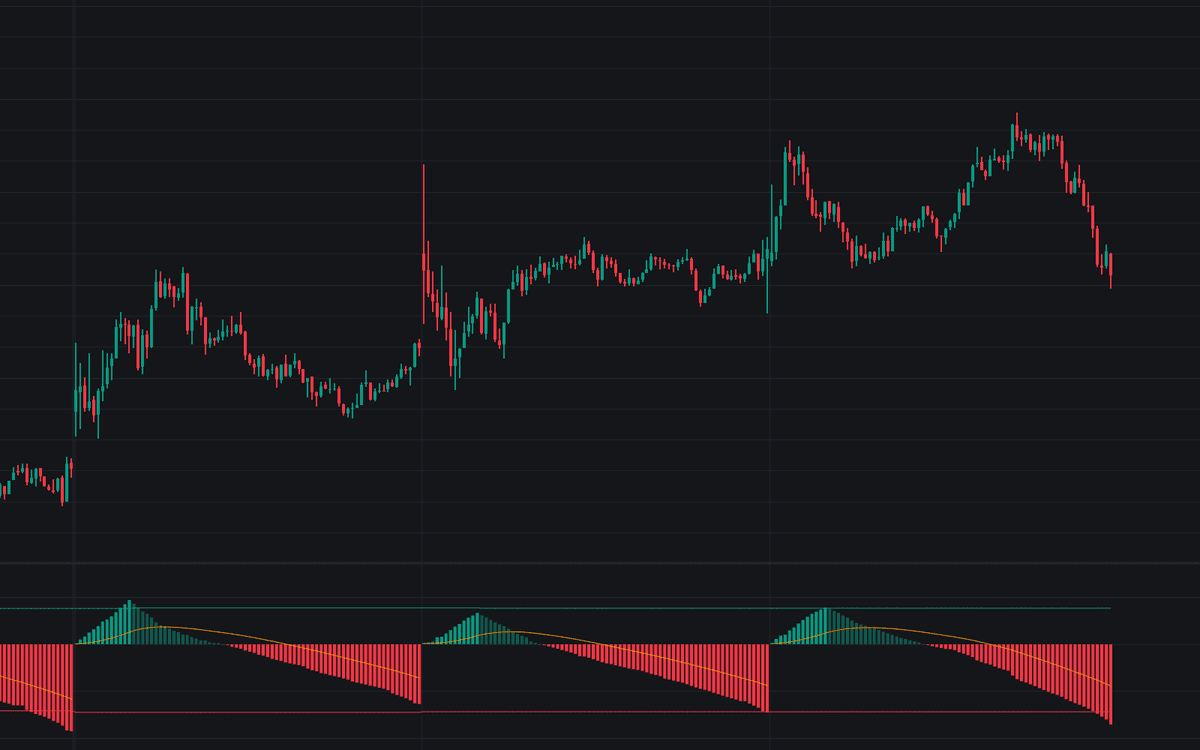
When the oscillator falls below the zero line, the market enters a Volume Deficit. This means the volume traded after the Initial Balance has become larger than the volume traded during the first hour.

That matters because it shows the opening activity was not the whole story. Instead, participation continued and expanded later in the session.

For trend traders, this can be an important confirmation signal:

  • A move into deficit suggests the market is attracting sustained interest after the open.
  • A deeper move below zero signals stronger conviction from participants later in the day.
  • A growing deficit can support breakout trades, trend continuation setups, or momentum-based trading strategies.

In practical terms, a strong negative reading often means the market did not simply react at the open and stall. It kept pulling in volume as the day continued, which is often what healthy trend days do.

What a “No Deficit” Session Tells Traders

If the oscillator stays above zero all session, the indicator marks this on the following session with a colored background. This is a No Deficit event.

A No Deficit session means the first hour of trading contained more volume than the entire remainder of the day. That creates a very different read on market behavior.

From a market psychology standpoint, this often reflects a “Loud Open, Quiet Close” structure. The open was active and important, but that activity failed to attract meaningful follow-through later.

This can point to several outcomes:

  • Exhaustion: The market made its biggest effort early and ran out of energy.
  • Range-Bound Conditions: Price may drift sideways after the open without enough participation to trend.
  • Weak Follow-Through: Institutions or news may have sparked the move, but broader participants did not chase it.

For traders, this can be valuable context. Sessions without a deficit are often less favorable for continuation trades and may be better suited for range trading, fade setups, or more cautious intraday execution.

Using the Anchored Moving Average (AMA) for Volume Momentum

The indicator also includes an Anchored Moving Average (AMA) that resets at the start of each session. This line acts as a session-based volume momentum benchmark.

The relationship between the oscillator and the AMA helps traders gauge whether current participation is building or weakening relative to the session’s average pace.

  • Bullish Volume Momentum: When the oscillator holds above the AMA during the Initial Balance, it suggests volume is building quickly and the open has strong participation.
  • Bearish Volume Momentum or Depletion: After the IB ends, a move below the AMA suggests volume is being consumed faster than average, which can confirm growing pressure toward a deficit.

This makes the AMA especially useful as a confirmation layer. Instead of only watching the zero line, traders can also monitor whether the oscillator is gaining or losing momentum relative to its session anchor.

Why This Trading Indicator Matters

Many volume indicators show raw activity, but the IB Volume Deficit indicator focuses on when that activity happens. That timing matters.

A market that does all its volume in the first hour and then fades is very different from one that continues to build participation as the session unfolds. This indicator helps traders separate those two environments.

That makes it useful for:

  • Intraday trend traders
  • Breakout traders
  • Opening range traders
  • Volume-based trading strategy development
  • Market participation and exhaustion analysis

Because it compares opening conviction to later-session follow-through, it can provide context that price alone may not show clearly.

How the IB Volume Deficit Indicator Works

The calculation starts fresh at the first bar of every new session.

During the first 60 minutes of trading, the indicator adds each bar’s volume to a cumulative total. This forms the Initial Balance volume build.

After those first 60 minutes, the logic flips. Instead of adding volume, the indicator subtracts each new bar’s volume from the cumulative total.

This produces an oscillator that rises during the IB and then declines afterward as the day progresses. Whether that line stays above zero or falls below it reveals whether the opening auction remains dominant or is overtaken by later trading activity.

Historical Benchmarks: Tops and Bottoms Averages

To give traders more context, the indicator includes two dashed benchmark lines that compare today’s session to prior sessions.

  • Tops Average: This shows the average peak volume reached by the end of the Initial Balance over the last N sessions. A strong move above this line can signal an unusually active open with above-normal conviction.
  • Bottoms Average: This shows the average closing deficit over the last N sessions. If today’s oscillator falls below this level, it suggests the session is showing stronger-than-usual trend participation relative to recent history.

These levels help traders avoid looking at the oscillator in isolation. Instead of asking only whether the market is in deficit, they can also ask whether today’s open or deficit is meaningful compared with normal session behavior.

Best Ways to Read the Indicator During the Session

The IB Volume Deficit trading indicator can be read in stages:

During the Initial Balance

Watch how quickly the oscillator climbs and whether it holds above the AMA. A strong opening build often signals aggressive early participation and can hint at important session structure.

After the Initial Balance

Focus on whether the oscillator starts to fall sharply, flatten out, or remain elevated.

  • A sharp move lower suggests strong later-session participation.
  • A break below zero confirms a volume deficit.
  • A slow decline that never reaches zero may reflect a day with weak follow-through.

Into the Close

By the end of the session, the final position of the oscillator helps classify the day:

  • Deep negative close: Strong trend participation
  • Near zero close: Balanced session
  • Positive close: Loud open, quiet close, potential exhaustion or chop

SETTINGS

  • Moving Average Length: Controls the smoothing period of the Anchored Moving Average. Lower values make the AMA more responsive to changes in session volume momentum.
  • Tops/Bottoms Average Length: Sets how many prior sessions are used to calculate the historical benchmark lines for opening peaks and session-end deficits.
  • Style Group:
    • Bullish Color: Defines the color of the oscillator during the Initial Balance accumulation phase.
    • Bearish Color: Defines the color used when the oscillator enters a deficit or begins subtracting volume after the IB.
    • MA Color: Sets the color of the Anchored Moving Average line.

FAQ

What is the IB Volume Deficit indicator?

The IB Volume Deficit indicator is a volume-based trading indicator that compares Initial Balance volume from the first 60 minutes of the session with the volume traded afterward. It helps traders identify trend conviction, follow-through participation, and possible exhaustion.

How can traders use the IB Volume Deficit in a trading strategy?

Traders can use it to confirm whether an opening move is being supported later in the day. A move below zero can confirm stronger trend participation, while a session that stays above zero may suggest exhaustion, weak follow-through, or range-bound conditions.

What does a Volume Deficit mean?

A Volume Deficit means that post-IB volume has exceeded the volume traded during the Initial Balance. This often signals that market participation remained strong after the open and may support trend continuation.

What does a No Deficit session mean?

A No Deficit session means the first hour had more volume than the rest of the session combined. This often points to a strong open followed by reduced participation, which can lead to choppy or exhausted market behavior.

How do I access the IB Volume Deficit indicator?

You can get access on the LuxAlgo Library for charting platforms like TradingView, MetaTrader (MT4/MT5), and NinjaTrader for free.

Trading & investing are risky and many will lose money in connection with trading and investing activities. All content on this site is not intended to, and should not be, construed as financial advice. Decisions to buy, sell, hold or trade in securities, commodities and other investments involve risk and are best made based on the advice of qualified financial professionals. Past performance does not guarantee future results.

Hypothetical or Simulated performance results have certain limitations. Unlike an actual performance record, simulated results do not represent actual trading. Also, since the trades have not been executed, the results may have under-or-over compensated for the impact, if any, of certain market factors, including, but not limited to, lack of liquidity. Simulated trading programs in general are designed with the benefit of hindsight, and are based on historical information. No representation is being made that any account will or is likely to achieve profit or losses similar to those shown.

Testimonials appearing on this website may not be representative of other clients or customers and is not a guarantee of future performance or success.

As a provider of technical analysis tools and strategies, we do not have access to the personal trading accounts or brokerage statements of our customers. As a result, we have no reason to believe our customers perform better or worse than traders as a whole based on any content, tool, or platform feature we provide.

Charts used on this site are by TradingView in which the majority of our technical indicators are built on. TradingView® is a registered trademark of TradingView, Inc. www.TradingView.comTradingView® has no affiliation with the owner, developer, or provider of the Services described herein.

Market data is provided by CBOE, CME Group, BarChart, CoinAPI. CBOE BZX real-time US equities data is licensed from CBOE and provided through BarChart. Real-time futures data is licensed from CME Group and provided through BarChart. Select cryptocurrency data, including major coins, is provided through CoinAPI. All data is provided “as is” and should be verified independently for trading purposes.

This does not represent our full Disclaimer. Please read our full disclaimer.

© 2026 LuxAlgo Global, LLC.