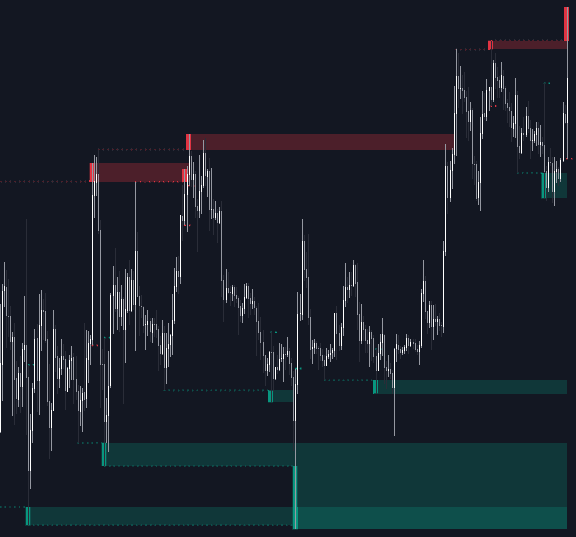
POC Sweep Reclaim

Feb 18, 2026

Static chart image
Price Action Based
Volume Based
Signals
Liquidity
Works on the following platforms:
tradingviewSymbolTradingView
For free use on the TradingView platform
ninjatraderNinjaTrader
For free use on the NinjaTrader platform
metatrader4MetaTrader 4/5
For free use on the MetaTrader 4/5 platform
thinkorswimThinkorswim
For free use on the Thinkorswim platform

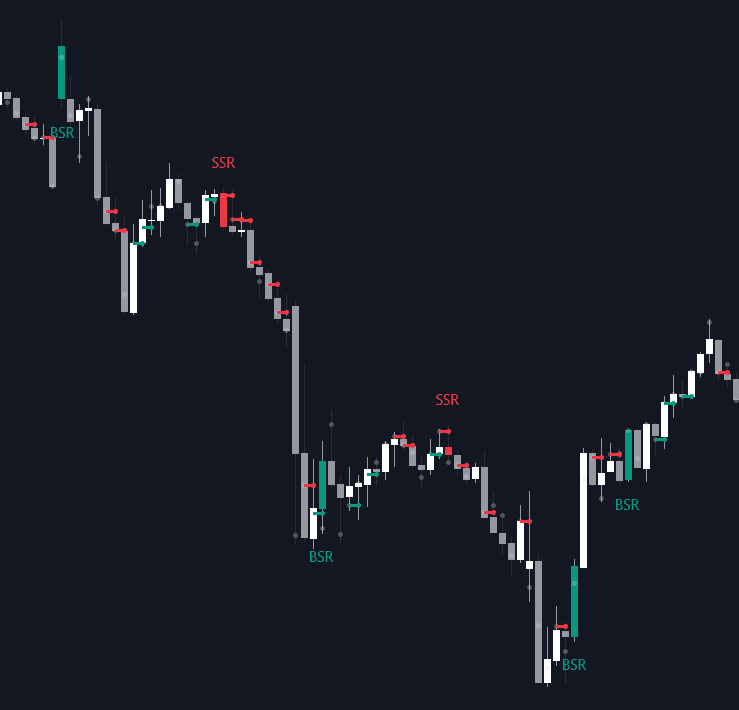
The POC Sweep Reclaim (PSR) model is a price action trading indicator designed to detect high-probability liquidity traps around the Point of Control (POC). By combining lower timeframe (LTF) volume aggregation with a two-step “sweep then reclaim” confirmation, this trading strategy highlights moments where price first rejects a high-volume level and then decisively reclaims it—often signaling a shift in short-term market control.

Unlike standard support and resistance tools, the PSR trading indicator focuses on market microstructure behavior: rejection of value followed by acceptance beyond it. This makes it especially useful for traders seeking structured entries after liquidity grabs, stop-loss cascades, and failed breakouts.

How to Trade the POC Sweep Reclaim Trading Indicator

The POC Sweep Reclaim model visualizes a two-event sequence:

  1. The Sweep (Rejection of Value)
  2. The Reclaim (Acceptance Beyond Value)

Together, these form a complete trading setup centered around the previous candle’s Point of Control (POC)—the price level with the highest traded volume.

The Sweep (The Rejection Phase)

A Sweep occurs when price probes beyond the previous bar’s POC with a wick, but the candle body fails to close past it. This behavior signals a failed breakout attempt and often traps traders who entered on the initial push.

This is commonly known as a liquidity grab.

  • Buyside Sweep (Bearish Rejection):
    Price wicks above the previous POC but closes back below it.
    This suggests buyers attempted to push higher but failed to achieve acceptance.

  • Sellside Sweep (Bullish Rejection):
    Price wicks below the previous POC but closes back above it.
    This suggests sellers attempted to break lower but failed to gain control.

At this stage, the market has rejected the move—but the trade is not yet confirmed. The sweep alone identifies trapped participants, not direction.

The Reclaim (The Acceptance Phase)

The true signal in this trading strategy occurs on the very next candle.

A Reclaim happens when price closes decisively beyond the same POC level that was just rejected. This shows that the side that initially failed has now regained control and achieved acceptance beyond value.

  • BSR (Buyside Reclaim):
    After a Buyside Sweep, price closes above the swept upper POC.
    This bullish signal suggests that trapped breakout sellers may fuel upside continuation.

  • SSR (Sellside Reclaim):
    After a Sellside Sweep, price closes below the swept lower POC.
    This bearish signal suggests downside follow-through after clearing liquidity.

This two-step pattern—rejection followed by acceptance—forms the core of the PSR trading model and can be used for:

  • Breakout continuation strategies
  • Intraday reversal trading
  • Liquidity-based scalping setups
  • Market structure confirmation entries

Why the POC Matters in This Trading Strategy

The Point of Control (POC) represents the highest-volume traded price within a candle. In market profile theory, high-volume nodes act as:

  • Psychological value areas
  • Liquidity clusters
  • Mechanical support and resistance levels

When price interacts with the POC, it is interacting with consensus value. A failure beyond it indicates rejection. A successful close beyond it indicates acceptance and potential dominance by one side.

This makes the POC Sweep Reclaim model particularly effective for traders focused on:

  • Order-flow concepts
  • Volume-based trading strategies
  • Liquidity trap identification
  • Market microstructure analysis

Academic Intuition Behind the PSR Model

Order-Flow Imbalance (OFI)

Short-term price movements are often driven by temporary imbalances in liquidity. A sweep reflects a moment where one side attempts to push price but lacks sufficient depth. A reclaim signals that the opposing side has absorbed liquidity and taken control.

Salient Price Levels

Research shows that high-volume nodes attract liquidity. These “salient” prices become battlegrounds between buyers and sellers. The POC frequently acts as a decision point in intraday trading.

Stop-Loss Cascades

Sweeps often trigger clusters of stop-loss orders. When price reclaims the swept level, it can create momentum as the market clears liquidity and accelerates away from trapped traders.

Practical Considerations for Traders

Footprint Proxy

This trading indicator approximates volume-at-price using lower timeframe aggregation (such as 1-minute data). While not as precise as a true footprint engine, it provides a practical and accessible proxy for most traders.

Data Snooping Risk

Like all pattern-based trading strategies, the PSR model should be validated using robust backtesting and forward testing. Not every sweep-reclaim sequence will result in a sustained move.

Repainting Considerations

Because the POC is derived from lower timeframe data, the value for the current developing candle may fluctuate until the bar closes. Confirm signals only after candle completion.

Indicator Settings Explained

  • Lower Timeframe for POC:
    Controls the granularity of volume aggregation. Lower timeframes (e.g., 1-minute) provide a more precise POC estimate.

  • Show POC:
    Displays calculated POC dots for each candle.

  • Show Sweep Dots:
    Marks wick interactions where rejection occurs without a body close beyond the POC.

  • Show BSR (Buyside Reclaim):
    Highlights confirmed bullish reclaim signals.

  • Show SSR (Sellside Reclaim):
    Highlights confirmed bearish reclaim signals.

When to Use the POC Sweep Reclaim Model

This trading indicator performs particularly well in:

  • High-liquidity markets (indices, forex majors, crypto majors)
  • Intraday timeframes (1m–1h)
  • Trending markets after pullbacks
  • Breakout environments with visible liquidity clusters

For best results, combine the PSR trading strategy with:

  • Higher timeframe bias
  • Session highs and lows
  • Fair Value Gaps (FVGs)
  • Market structure analysis
  • Risk management rules based on invalidation at the swept POC

FAQ

What is the POC Sweep Reclaim trading indicator?

It is a volume-based trading indicator that identifies liquidity traps around the Point of Control and confirms direction using a two-step sweep and reclaim pattern.

Is the PSR model suitable for beginners?

Yes. While based on advanced market microstructure concepts, the visual signals are straightforward: first a sweep (rejection), then a reclaim (acceptance). Beginners can use it alongside basic trend analysis.

Does this trading strategy repaint?

The current bar’s POC may fluctuate while forming due to lower timeframe aggregation. However, confirmed sweep and reclaim signals should be evaluated only after candle close.

How do I access the POC Sweep Reclaim indicator?

You can get access on the LuxAlgo Library for charting platforms like TradingView, MetaTrader (MT4/MT5), and NinjaTrader for free.

Trading & investing are risky and many will lose money in connection with trading and investing activities. All content on this site is not intended to, and should not be, construed as financial advice. Decisions to buy, sell, hold or trade in securities, commodities and other investments involve risk and are best made based on the advice of qualified financial professionals. Past performance does not guarantee future results.

Hypothetical or Simulated performance results have certain limitations. Unlike an actual performance record, simulated results do not represent actual trading. Also, since the trades have not been executed, the results may have under-or-over compensated for the impact, if any, of certain market factors, including, but not limited to, lack of liquidity. Simulated trading programs in general are designed with the benefit of hindsight, and are based on historical information. No representation is being made that any account will or is likely to achieve profit or losses similar to those shown.

Testimonials appearing on this website may not be representative of other clients or customers and is not a guarantee of future performance or success.

As a provider of technical analysis tools and strategies, we do not have access to the personal trading accounts or brokerage statements of our customers. As a result, we have no reason to believe our customers perform better or worse than traders as a whole based on any content, tool, or platform feature we provide.

Charts used on this site are by TradingView in which the majority of our technical indicators are built on. TradingView® is a registered trademark of TradingView, Inc. www.TradingView.comTradingView® has no affiliation with the owner, developer, or provider of the Services described herein.

Market data is provided by CBOE, CME Group, BarChart, CoinAPI. CBOE BZX real-time US equities data is licensed from CBOE and provided through BarChart. Real-time futures data is licensed from CME Group and provided through BarChart. Select cryptocurrency data, including major coins, is provided through CoinAPI. All data is provided “as is” and should be verified independently for trading purposes.

This does not represent our full Disclaimer. Please read our full disclaimer.

© 2026 LuxAlgo Global, LLC.