Reversal Probability Zone & Levels
 By LuxAlgoFeb 12, 2025
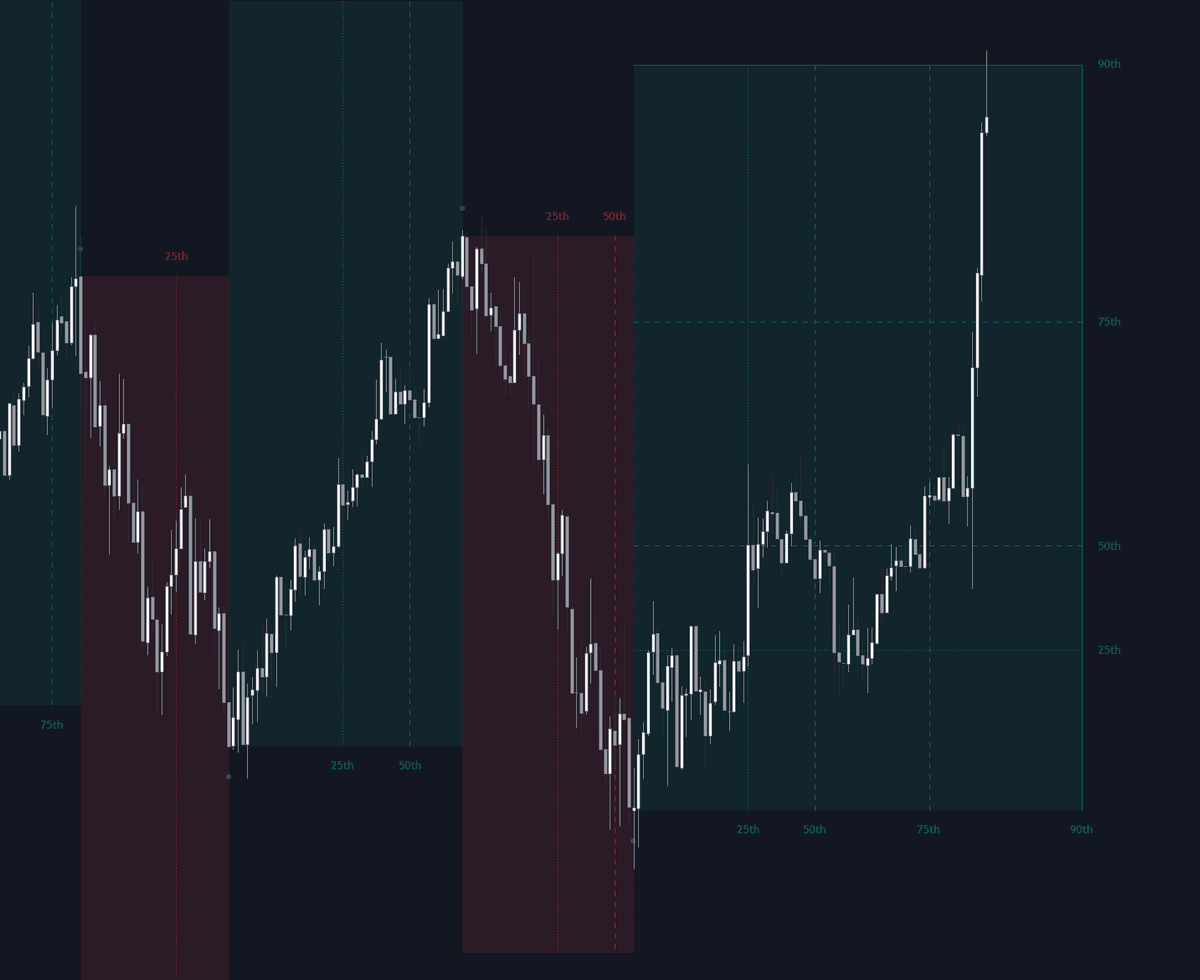

Reversal Probability Zone & Levels projects a probability zone from the last detected swing, estimating where, and when, the next reversal is statistically likely. Past swings are ranked along both price and time axes, and up to four percentile levels (25th, 50th, 75th, and 90th by default) mark how far and how long previous moves ran before turning.
Bullish and bearish reversals are sampled separately, so if the last pivot was a swing high, the zone is built strictly from comparable cases. A Normalize Data option swaps raw prices for returns between swings, keeping zones comparable across regimes and higher timeframes.
How to Trade the Reversal Probability Zone & Levels?
- Price reaches a percentile level: each level marks the share of past reversals finished by that distance: at the 75th percentile rank, three quarters of prior swings had already turned.
- Time edge of the zone: the same logic on the time axis flags moves lasting longer than most of their predecessors.
- Deep-zone confluence: high percentiles on both axes mark a historically stretched move, a spot to tighten risk or demand confirmation.
Sample size drives quality: probabilities from a deep Maximum Reversals pool are far steadier than ones built on a handful of swings. Zones avoid overlapping by default, and the display can be limited to the most recent one.
Reversal Probability Zone & Levels Settings
- Swing Length: bar count used to detect a swing; higher values track larger, slower reversals.
- Maximum Reversals: cap on past reversals in the probability sample. Raise it where history allows.
- Normalize Data: measure swings as returns instead of raw price.
- Percentiles: enable up to four levels and set each value; style and size options per level.
- No Overlapping Zones / Show Only Last Zone / Show Marks: display toggles for overlap, zone history, and swing markers.
Frequently Asked Questions
Free indicator
Get free access to this indicator on the platforms below.

The Library is free. Quant makes it yours.
Pull any concept or indicator into Quant: rebuild it, retune it, or turn it into a backtested strategy of your own.