Concept
Reversal
Reversal is a Trend concept. The Library holds 6 implementations, each one a working definition you can pull into Quant.
Top Reversal indicators
The top custom implementations, built on the original standard Reversal formula.
6 total
Want to trade Reversal? Any of the 6 implementations below is one prompt away from a backtested strategy in Quant.
.png&w=3840&q=75)
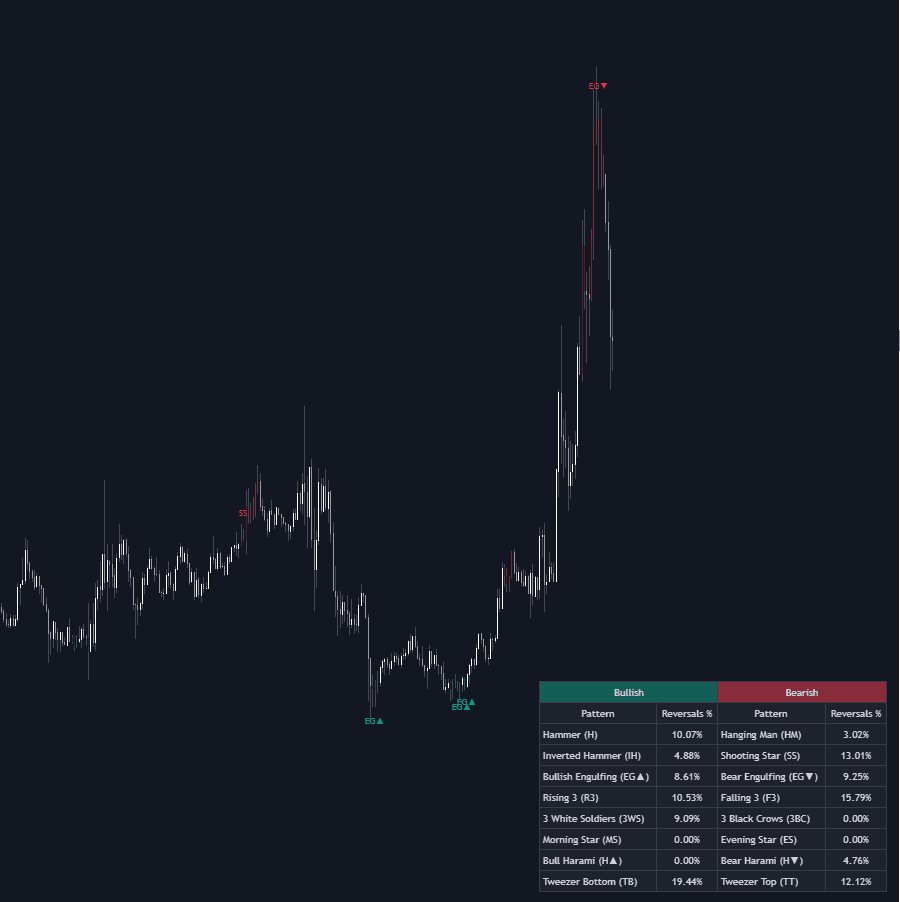
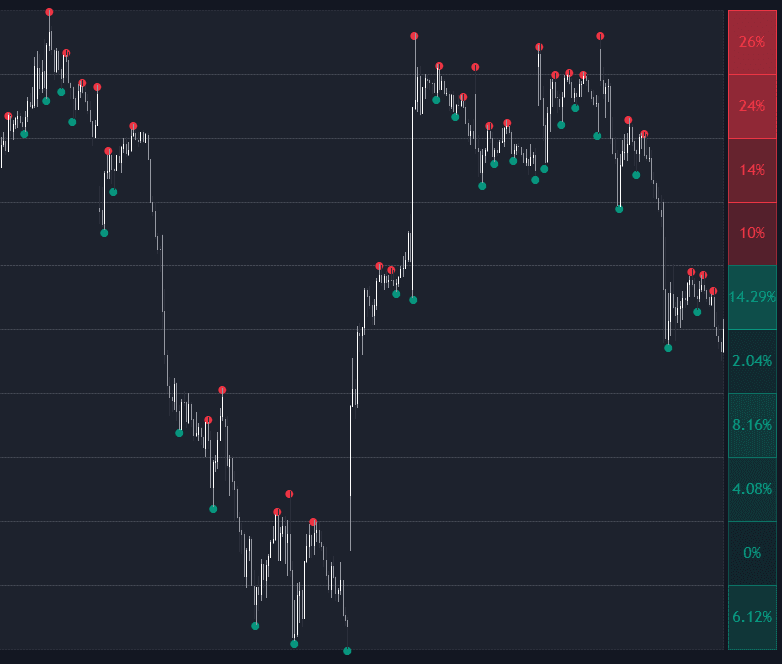
What is a Reversal?
A reversal is a durable change in the direction of the prevailing trend: an uptrend rolling over into a downtrend, or a downtrend turning up. In structural terms the trend's swing pattern fails first. An uptrend stops printing higher highs and higher lows, breaks its most recent higher low, and begins building the opposite sequence. That is what separates a reversal from a pullback, a counter-move the trend later absorbs.
Reversals are usually a process rather than an event. A common anatomy runs: momentum fades against price (divergence), the trend makes a final climactic or failed push, often sweeping an obvious high or low (liquidity sweep), and then structure breaks the other way, a change of character in modern structure grammar. Candlestick signals such as engulfing bars appear earliest but carry the least weight alone; structural confirmation arrives later but means more.
Reversals matter because they bracket every trend trade: catching one early offers the largest repricing available, and missing one turns winners back into losers. They are also where most counter-trend attempts die, since strong trends generate failed reversal signals continuously. That asymmetry is why experienced traders demand confluence and a defined invalidation before calling a turn, and why the old line that the trend is your friend until it ends survives as a warning.
How to identify a Reversal
No single bar announces a reversal. The read is a sequence: trend evidence deteriorates, then opposite structure appears.
- 1Establish what is being reversed: a clear sequence of higher highs and higher lows, or the mirror image. In a sideways range there is no trend to reverse, only rotation between the extremes.
- 2Watch for deterioration: momentum divergence at the newest extreme, shrinking follow-through after breakouts, climactic volume, or a sweep of an obvious high or low that immediately fails.
- 3Require the structural break: price closing through the most recent counter-swing, in an uptrend the last higher low. Until that break, the move is still a pullback by definition.
- 4Track the retest: reversals commonly return to the broken area before extending. A rejection there strengthens the case; a reclaim of the old trend's extreme invalidates it.
How traders use it
- As a counter-trend entry model: exhaustion evidence plus a structural break plus a meaningful location (a higher-timeframe support level or supply zone) stacked into one setup, sized conservatively because failure is common.
- As an exit or de-risking trigger for trend followers: the same structural break that starts a reversal trade tells a holder of the old trend that the easy portion is over.
- As the backbone of Smart Money Concepts sequencing: a sweep of liquidity, then a break of structure in the new direction, then entry on the retracement into the origin of the move.
- As a filter discipline: taking reversal signals only at pre-marked levels and ignoring them mid-range, which removes many failed counter-trend attempts before they are ever taken.
Reversal vs look-alike events
Pullback: A pullback moves against the trend and then the trend resumes; a reversal moves against the trend and keeps going. The two are indistinguishable early on, which is why the break of the prior counter-swing is the usual dividing line.
False Breakout: A false breakout is a single failed excursion beyond a level that snaps back. It often seeds a reversal, but it is one event; a reversal is the full directional change that may follow it.
Change of Character: CHoCH is the first structural break against the prevailing trend, the earliest chart evidence of a possible turn. The reversal is the completed outcome; plenty of CHoCHs resolve into ranges instead.
Trend Exhaustion: Exhaustion is the fading of trend momentum, a precondition rather than a turn. An exhausted trend can consolidate sideways and then continue; a reversal requires the opposite trend to actually begin.
More Reversal implementations
Concept family
Trend
100 concepts mapped · 100 in the Library
Reversal FAQ
Turn Reversal into a trading strategy.
Take any implementation from this page into Quant, then build on it, backtest it on real data, and keep refining it in conversation.