ROC-of-ROC
 By LuxAlgoJun 19, 2026
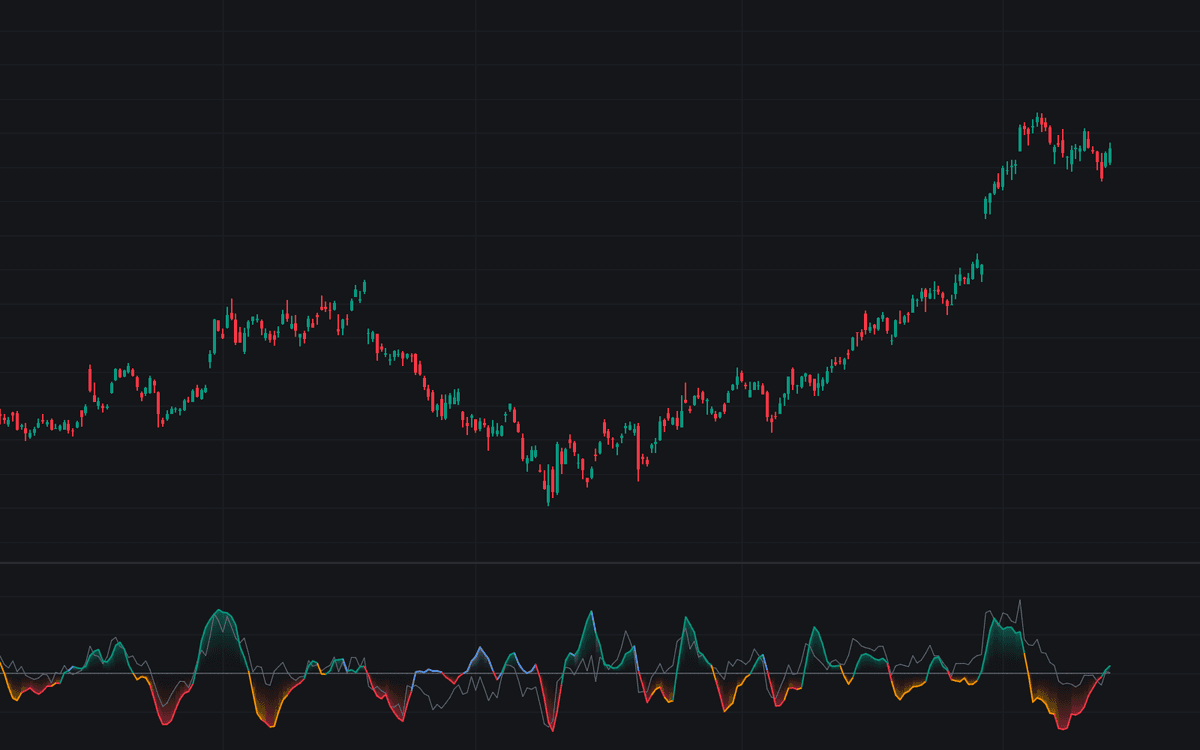

ROC-of-ROC plots the acceleration of price: a 9-bar percent rate of change (velocity) differenced again over 9 bars. The line runs positive while momentum is still building and turns negative once it starts to fade, often while price is still pressing on. The definitive clean build of ROC-of-ROC takes the second pass as a difference rather than a percent change and colors the acceleration line by a four-state read: advance or decline from velocity's sign, accelerating or decelerating from acceleration's.
How to Trade the ROC-of-ROC?
- Zero crosses: acceleration crossing above zero says momentum stopped decaying and started building; crossing below says the opposite, both arriving before momentum itself crosses zero.
- Deceleration warnings: velocity positive with acceleration negative is an advance still rising but losing thrust, a cue to tighten risk, not an automatic reversal call. The mirrored state is an early basing cue.
- Velocity context: read the acceleration sign against the velocity line; agreement is thrust, a split is the early warning.
Four alerts cover both zero crosses and the first bar of each deceleration state; optional circles mark those bars.
ROC-of-ROC Settings
- Source (default close): series both derivatives run on.
- Velocity Length (default 9): lookback of the first rate of change.
- Acceleration Length (default 9): bars over which the change in velocity is measured.
- Method (default SMA): average type used by both smoothing steps.
- Source Smoothing (default 1): pre-smoothing of the source; 1 keeps the textbook construction.
- Acceleration Smoothing (default 3): smoothing on the final line, filtering false starts around zero.
- Velocity Context Line (default enabled), Deceleration Warning Markers (default disabled), Gradient Fill (default enabled); Style colors set the four states.
Frequently Asked Questions

The Library is free. Quant makes it yours.
Pull any concept or indicator into Quant: rebuild it, retune it, or turn it into a backtested strategy of your own.