



Linear Regression Channel / Curve / Slope by DGT
Apr 19, 2021

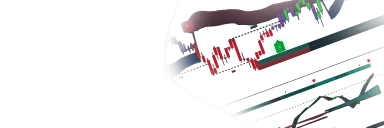
The Linear Regression Channel / Curve / Slope indicator provides a comprehensive statistical suite for trend identification, reversion analysis, and volatility tracking using least-squares regression techniques. It offers traders multiple visualization methods, including dynamic channels, smoothed curves, and slope indications to determine if a security is overbought or oversold relative to its historical trend.
Usage
The Usage section describes how the script can be used to identify trend direction and potential mean reversion points.
- Linear Regression Channels: Traders use these to establish a "best-fit" path for price action. When price reaches the upper or lower standard deviation bands, it may indicate overbought or oversold conditions, suggesting a potential move back toward the median regression line.
- Linear Regression Curve: Unlike the static channel which projects a straight line over a fixed lookback, the curve plots the ending value of the regression calculation for every bar. This provides a smoothed trendline that can be used similarly to a moving average but with less lag.
- Higher Timeframe (HTF) Analysis: The script allows for a second regression channel projected from a higher timeframe (e.g., 1H, 4H, or 1D). This helps traders maintain a "top-down" perspective on the primary trend while navigating lower-interval price action.
- Volume and Volatility Add-ons: The indicator includes visual markers for high-volatility bars (ATR-based) and volume spikes. These can be used to identify exhaustion points or the start of significant trend shifts.
Details
The script utilizes the least-squares statistical technique to calculate a linear regression line that best fits the data points within a specified lookback period.
- Standard Deviation Bands: The channel levels are calculated using normal distribution principles. Generally, one standard deviation captures approximately 68% of price action, while two standard deviations capture roughly 95%. Movements outside these bands are statistically rare and often precede mean reversion.
- Linear Regression Curve & Bands: The curve represents the "endpoint" of a linear regression line for each bar. Traders can apply bands based on either Standard Deviation or Average True Range (ATR) to create dynamic support and resistance zones.
- Slope Calculation: The slope indicates the rate of change of the regression line. Upward and downward arrows can be toggled to highlight changes in trend momentum over a user-defined period.
Settings
Linear Regression — 1st Channel
- LinReg1 ⇨ Count: Sets the number of bars used to calculate the primary regression line.
- Source: The price input used for the calculation (default is Close).
- Extend Lines: Extends the channel lines indefinitely to the right.
- Use Trend Colors: Changes the line colors based on the direction of the slope.
- StdDev (1, 2, 3): Toggles and adjusts the multiplier for up to three standard deviation channel levels.
Linear Regression — 2nd Channel (HTF)
- Extend to User-Defined TF: Enables the projection of a regression channel from a higher timeframe.
- HTF Selection: Choose between 1D, 4H, or 1H for the higher timeframe basis.
- Shorten Display: Limits the historical calculation to prevent performance issues on lower timeframes.
Linear Regression Curve
- Linear Regression Curve Length: Adjusts the period for the smoothed regression curve.
- Bands Type: Selects between Standard Deviation or ATR for the curve's outer envelopes.
Volume / Volatility AddOns
- High Volatility (⚡): Highlights bars where the range exceeds the ATR multiplied by a specific threshold.
- Volume Spike (🚦): Marks bars where volume significantly exceeds the Volume Moving Average.
- VWCB (Volume-Weighted Colored Bars): Colors candles based on relative volume intensity (High, Medium, or Low).
FAQ
How do I interpret price moving outside the outer channel lines? Price moving outside the second or third standard deviation bands is statistically rare (occurring less than 5% of the time). It often suggests an overextended market that is likely to revert toward the median linear regression line.
What is the difference between the Channel and the Curve? The Channel draws a straight "best-fit" line over a specific window of time (e.g., the last 200 bars). The Curve plots a continuous, flowing line by recording the end value of a regression calculation at every single bar, making it more reactive to recent price changes.
How can I access this indicator? You can get access on the LuxAlgo Library for charting platforms like TradingView, MetaTrader (MT4/MT5), and NinjaTrader for free.
Trading & investing are risky and many will lose money in connection with trading and investing activities. All content on this site is not intended to, and should not be, construed as financial advice. Decisions to buy, sell, hold or trade in securities, commodities and other investments involve risk and are best made based on the advice of qualified financial professionals. Past performance does not guarantee future results.
Hypothetical or Simulated performance results have certain limitations. Unlike an actual performance record, simulated results do not represent actual trading. Also, since the trades have not been executed, the results may have under-or-over compensated for the impact, if any, of certain market factors, including, but not limited to, lack of liquidity. Simulated trading programs in general are designed with the benefit of hindsight, and are based on historical information. No representation is being made that any account will or is likely to achieve profit or losses similar to those shown.
Testimonials appearing on this website may not be representative of other clients or customers and is not a guarantee of future performance or success.
As a provider of technical analysis tools and strategies, we do not have access to the personal trading accounts or brokerage statements of our customers. As a result, we have no reason to believe our customers perform better or worse than traders as a whole based on any content, tool, or platform feature we provide.
Charts used on this site are by TradingView in which the majority of our technical indicators are built on. TradingView® is a registered trademark of TradingView, Inc. www.TradingView.com TradingView® has no affiliation with the owner, developer, or provider of the Services described herein.
Market data is provided by CBOE, CME Group, BarChart, Massive, CoinAPI. Select U.S. equities data is provided through Massive. CBOE BZX real-time U.S. equities data is licensed from CBOE and provided through BarChart. Real-time futures data is licensed from CME Group and provided through BarChart. Select cryptocurrency data, including major coins, is provided through CoinAPI. All data is provided “as is” and should be verified independently for trading purposes.
This does not represent our full Disclaimer. Please read our full disclaimer.
© 2026 LuxAlgo Global, LLC.