Support & Resistance Zones Strength Classifier

Feb 16, 2026

Static chart image
Price Action Based
Support and Resistance
Pivot Based (Retrospective)
Works on the following platforms:
tradingviewSymbolTradingView
For free use on the TradingView platform
ninjatraderNinjaTrader
For free use on the NinjaTrader platform
metatrader4MetaTrader 4/5
For free use on the MetaTrader 4/5 platform
thinkorswimThinkorswim
For free use on the Thinkorswim platform

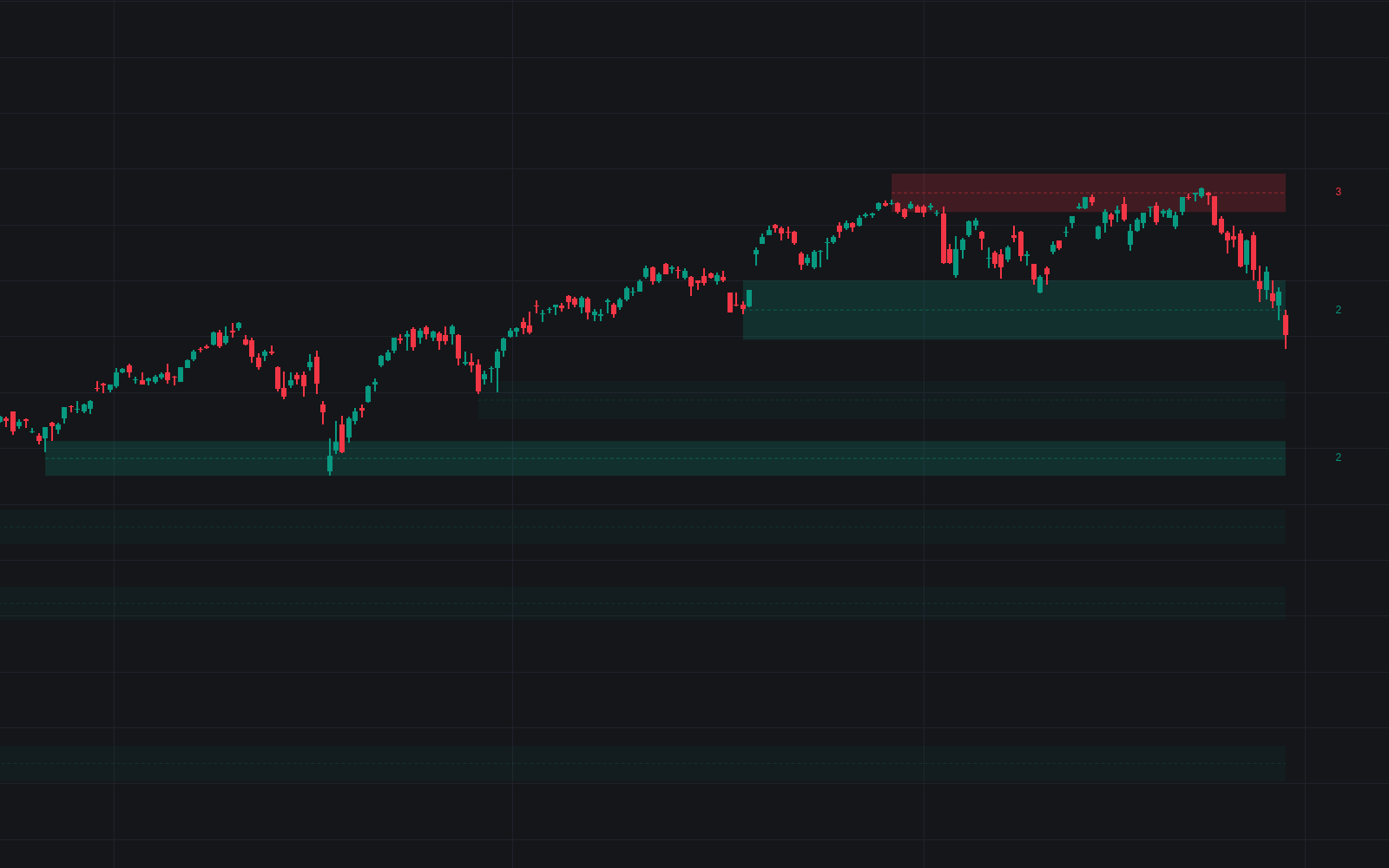
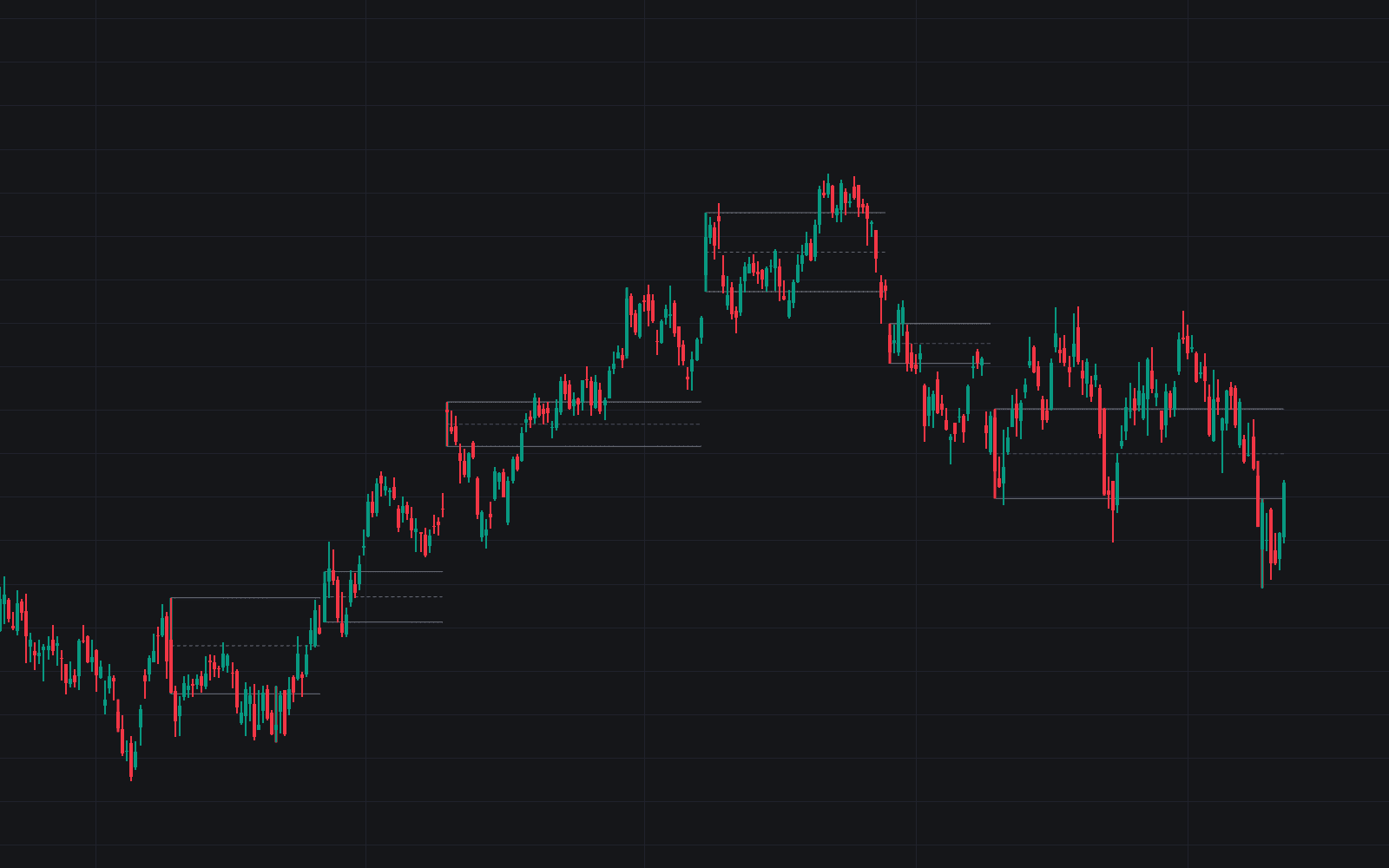
The Support & Resistance Zones Strength Classifier indicator is a professional trading indicator built to automatically detect, group, and rank key support and resistance levels based on real market reactions. By clustering pivot highs and lows into adaptive price zones and tracking how often they are tested, this tool transforms raw price structure into a dynamic support and resistance trading strategy that works across crypto, forex, stocks, and futures markets.

Unlike traditional support and resistance indicators that plot a single line for every pivot, this script consolidates nearby swing points into structured zones. These zones expand and adapt to volatility, highlight institutional reaction areas, and automatically remove broken levels — ensuring your chart stays clean, relevant, and focused on actionable price levels.

How to Trade the Support & Resistance Zones Strength Classifier Indicator?

This trading indicator identifies supply and demand zones by analyzing historical pivot highs and lows. When multiple pivots occur near the same price, they are grouped into a cohesive zone rather than plotted as separate lines. This creates a clearer, more strategic view of where the market repeatedly reacts.

Traders can use these zones for:

  • Entry planning during pullbacks
  • Stop loss placement beyond structural levels
  • Breakout trading strategies
  • Reversal confirmation at strong tested zones
  • Trend continuation setups after successful retests

Because zones are built from confirmed pivots, they represent validated structure rather than speculative projections.

Zone Strength Classification for Smarter Trading Decisions

One of the most powerful aspects of this trading strategy tool is its strength scoring system.

Every time price revisits a zone and respects it (without closing through it), the zone’s test count increases. This allows traders to differentiate between newly formed levels and well-established institutional areas.

  • Weak / New Zones

    • Higher transparency
    • Fewer historical reactions
    • Potential early-stage support or resistance
  • Strong / Highly Tested Zones

    • Higher opacity
    • Clear test-count label (optional)
    • Proven reaction zones with multiple confirmations

The more times price respects a level, the more significant it becomes. This mirrors how professional traders evaluate liquidity pools and structural price memory.

Dynamic Zone Management for Clean Charts

This indicator actively manages support and resistance zones in real time to maintain chart clarity and structural accuracy.

Automatic Zone Merging

When two zones overlap, they are merged into a single consolidated zone. Their test counts are combined, strengthening the level. This prevents visual clutter and better reflects how markets treat nearby liquidity levels as a single reaction area.

Breakout Detection & Zone Removal

If a candle closes beyond a zone boundary:

  • A resistance zone broken to the upside is removed.
  • A support zone broken to the downside is removed.

This ensures that only active, respected zones remain visible.

Role Reversal Concept

While this script focuses on active zones:

  • Broken resistance often becomes future support.
  • Broken support can act as future resistance.

Traders can incorporate this behavior into breakout and retest trading strategies.

Volatility-Adjusted Zone Construction

This support and resistance indicator adapts to different asset classes by calculating zone thickness using a volatility-adjusted distance based on average bar range.

This means:

  • High-volatility markets like BTC or NASDAQ futures produce proportionally wider zones.
  • Lower-volatility assets like stablecoins or blue-chip stocks produce tighter zones.

This dynamic sizing prevents zones from being too narrow in fast markets or too wide in slow ones, making the indicator suitable for intraday trading, swing trading, and position trading.

Sensitivity Control with Pivot Lookback

The Pivot Lookback parameter determines how sensitive the indicator is to swing detection.

  • Higher values:
    • Capture major structural highs and lows
    • Ideal for swing trading and higher timeframes
  • Lower values:
    • Capture smaller, more frequent pivots
    • Useful for scalping and lower timeframes

This flexibility allows traders to tailor the trading indicator to their strategy and timeframe.

SETTINGS

Calculation Settings

  • Pivot Lookback: Number of bars required on both sides of a pivot to confirm it.
  • Zone Width (dist Multiplier): Controls vertical thickness of zones using average bar range.
  • Minimum Tests to Highlight: Number of reactions required before a zone is visually emphasized.
  • Max Active Zones Per Type: Limits total support and resistance zones to reduce clutter.
  • Max Zone Height (dist Multiplier): Deletes excessively wide zones caused by over-merging.

These settings allow precise optimization for different markets and volatility environments.

Visual Customization

  • Support / Resistance Colors: Fully customizable bullish and bearish zone colors.
  • Show Test Count Labels: Displays the number of successful reactions per zone.
  • Extend Zones to Right: Projects zones forward to the current bar for active trade planning.

This makes the indicator adaptable to both minimalist and information-rich chart layouts.

Why Use a Zone-Based Support & Resistance Trading Indicator?

Traditional horizontal line methods often oversimplify market structure. Markets react to areas, not single price ticks. By grouping pivots into dynamic zones and ranking them by strength, this tool provides:

  • Objective structural analysis
  • Institutional-style level clustering
  • Automatic breakout invalidation
  • Adaptive volatility scaling
  • Clean chart management

Whether you trade reversals, breakouts, liquidity sweeps, or pullback continuations, this indicator enhances price action trading with quantified structure.

Frequently Asked Questions

What makes this support and resistance indicator different from standard pivot tools?

Instead of plotting isolated pivot lines, it clusters nearby pivots into zones and ranks them by strength based on test frequency. This provides a more realistic representation of supply and demand.

Can this indicator be used for breakout trading strategies?

Yes. When a strong zone is broken with a confirmed close, traders can use the breakout for continuation setups or wait for a retest of the broken level.

Is this indicator suitable for all markets?

Yes. Because zone thickness adapts to volatility, it works across crypto, forex, stocks, and futures on multiple timeframes.

How do I access the Support & Resistance Zones Strength Classifier indicator?

You can get access on the LuxAlgo Library for charting platforms like TradingView, MetaTrader (MT4/MT5), and NinjaTrader for free.

Trading & investing are risky and many will lose money in connection with trading and investing activities. All content on this site is not intended to, and should not be, construed as financial advice. Decisions to buy, sell, hold or trade in securities, commodities and other investments involve risk and are best made based on the advice of qualified financial professionals. Past performance does not guarantee future results.

Hypothetical or Simulated performance results have certain limitations. Unlike an actual performance record, simulated results do not represent actual trading. Also, since the trades have not been executed, the results may have under-or-over compensated for the impact, if any, of certain market factors, including, but not limited to, lack of liquidity. Simulated trading programs in general are designed with the benefit of hindsight, and are based on historical information. No representation is being made that any account will or is likely to achieve profit or losses similar to those shown.

Testimonials appearing on this website may not be representative of other clients or customers and is not a guarantee of future performance or success.

As a provider of technical analysis tools and strategies, we do not have access to the personal trading accounts or brokerage statements of our customers. As a result, we have no reason to believe our customers perform better or worse than traders as a whole based on any content, tool, or platform feature we provide.

Charts used on this site are by TradingView in which the majority of our technical indicators are built on. TradingView® is a registered trademark of TradingView, Inc. www.TradingView.comTradingView® has no affiliation with the owner, developer, or provider of the Services described herein.

Market data is provided by CBOE, CME Group, BarChart, CoinAPI. CBOE BZX real-time US equities data is licensed from CBOE and provided through BarChart. Real-time futures data is licensed from CME Group and provided through BarChart. Select cryptocurrency data, including major coins, is provided through CoinAPI. All data is provided “as is” and should be verified independently for trading purposes.

This does not represent our full Disclaimer. Please read our full disclaimer.

© 2026 LuxAlgo Global, LLC.