



Advanced Volume Profile Pro Delta + POC + VAH/VAL
Aug 19, 2025

The Advanced Volume Profile Pro indicator provides a comprehensive volume-at-price analysis system that combines traditional distribution mapping with delta volume calculations, Point of Control (POC) tracking, and Value Area (VAH/VAL) identification. It offers traders a deep look into market structure by estimating buying versus selling pressure across specific price levels to reveal institutional accumulation or distribution patterns.
Usage
The Usage section describes how the script can be used to interpret market structure and sentiment.
Core Analysis
- Volume Distribution: The horizontal bars show where the most trading activity occurred. Longer bars represent high-volume nodes (price acceptance), while shorter bars represent low-volume nodes (price rejection).
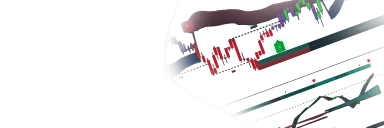
- Point of Control (POC): The solid blue line identifies the price level with the highest volume concentration. This level often acts as a significant "magnet" for price or a major support/resistance zone.
- Value Area (VAH/VAL): The area encompassing 70% of the total volume (purple and orange dashed lines). Price trading inside the Value Area suggests a balanced market, while trading outside suggests a breakout or trend phase.
- Delta Sentiment: Volume bars are color-coded based on the net buying (green) or selling (red) pressure at that specific price. Darker intensities highlight "Imbalances" where one side significantly dominates.
Features & Examples
- Developing POC: Enable this to see a dotted trail showing how the POC migrated throughout the session. An upward-moving trail suggests bullish accumulation, while a downward trail suggests bearish distribution.
- Profile Types: Switch between "N Bars Back" for fixed lookbacks, "Days Back" for calendar-based analysis, or "Session" for intraday-specific structures.
- Imbalance Detection: Use the "Highlight Imbalances" setting to visually isolate price levels where aggressive participants entered the market, often serving as future support/resistance.
Details
The indicator utilizes several methodologies to calculate and project volume data:
- Price Level Distribution: The price range (High - Low) is divided into user-defined rows. Each bar's volume is then distributed proportionally across the price levels it intersected.
- Delta Calculation Methods:
- Price Action: Distributes volume based on where the candle closed relative to its high and low.
- Bid/Ask Estimation: Compares the close to the average price to estimate market taker activity.
- Cumulative: A smoothed approach that assigns volume based on candle polarity (Bullish vs. Bearish).
- Value Area Algorithm: Starting from the POC, the script expands upward and downward, adding volume from adjacent rows until 70% (standard) of the total volume is reached.
Settings
Volume Profile Settings
- Profile Type: Selection of data range calculation (N Bars Back, Days Back, or Session).
- Number of Rows: Determines the vertical resolution of the profile (10-50).
- Profile Width (%): Controls how much horizontal space the profile occupies on the chart.
- Value Area %: The percentage of volume used to calculate the VAH and VAL (typically 70%).
- Auto-Adjust: Optimizes the lookback period automatically based on the current chart timeframe.
Delta & Visual Settings
- Delta Calculation: Choose between Price Action, Bid/Ask Estimate, or Cumulative methods.
- Highlight Imbalances: Enables visual emphasis for rows exceeding the imbalance threshold.
- Imbalance Threshold %: The percentage of dominance required (e.g., 60% buy volume) to trigger an imbalance highlight.
- Show Developing POC: Toggles the real-time tracking trail of the POC migration.
- Profile Position: Shifts the profile to the Left or Right side of the chart.
Alert Settings
- Alert on POC Touch: Triggers an alert when price crosses the Point of Control.
- Alert on VA Entry/Exit: Triggers when price enters or leaves the Value Area boundaries.
- Alert on Major Imbalance: Notifies the user when a price level reaches a significant volume imbalance.
FAQ
How do I interpret the "Developing POC" trail? The trail shows the history of the POC. If the trail is stepping higher, it indicates that the highest volume of trading is moving to higher prices (accumulation). If it steps lower, the market is finding value at lower prices (distribution).
What is the best Delta Calculation method? The "Price Action" method is generally best for trending markets as it weights volume based on the close. "Bid/Ask Estimate" is often preferred in ranging markets to see which side is more aggressive at the boundaries.
How do I access the Advanced Volume Profile Pro? You can get access on the LuxAlgo Library for charting platforms like TradingView, MetaTrader (MT4/MT5), and NinjaTrader for free.
Trading & investing are risky and many will lose money in connection with trading and investing activities. All content on this site is not intended to, and should not be, construed as financial advice. Decisions to buy, sell, hold or trade in securities, commodities and other investments involve risk and are best made based on the advice of qualified financial professionals. Past performance does not guarantee future results.
Hypothetical or Simulated performance results have certain limitations. Unlike an actual performance record, simulated results do not represent actual trading. Also, since the trades have not been executed, the results may have under-or-over compensated for the impact, if any, of certain market factors, including, but not limited to, lack of liquidity. Simulated trading programs in general are designed with the benefit of hindsight, and are based on historical information. No representation is being made that any account will or is likely to achieve profit or losses similar to those shown.
Testimonials appearing on this website may not be representative of other clients or customers and is not a guarantee of future performance or success.
As a provider of technical analysis tools and strategies, we do not have access to the personal trading accounts or brokerage statements of our customers. As a result, we have no reason to believe our customers perform better or worse than traders as a whole based on any content, tool, or platform feature we provide.
Charts used on this site are by TradingView in which the majority of our technical indicators are built on. TradingView® is a registered trademark of TradingView, Inc. www.TradingView.com TradingView® has no affiliation with the owner, developer, or provider of the Services described herein.
Market data is provided by CBOE, CME Group, BarChart, Massive, CoinAPI. Select U.S. equities data is provided through Massive. CBOE BZX real-time U.S. equities data is licensed from CBOE and provided through BarChart. Real-time futures data is licensed from CME Group and provided through BarChart. Select cryptocurrency data, including major coins, is provided through CoinAPI. All data is provided “as is” and should be verified independently for trading purposes.
This does not represent our full Disclaimer. Please read our full disclaimer.
© 2026 LuxAlgo Global, LLC.