Trend Regularity Adaptive Moving Average
 By LuxAlgoDec 1, 2020
Trend Regularity Adaptive Moving Average is an indicator on Vela, our next-generation charting platform, written in Pine Script®.
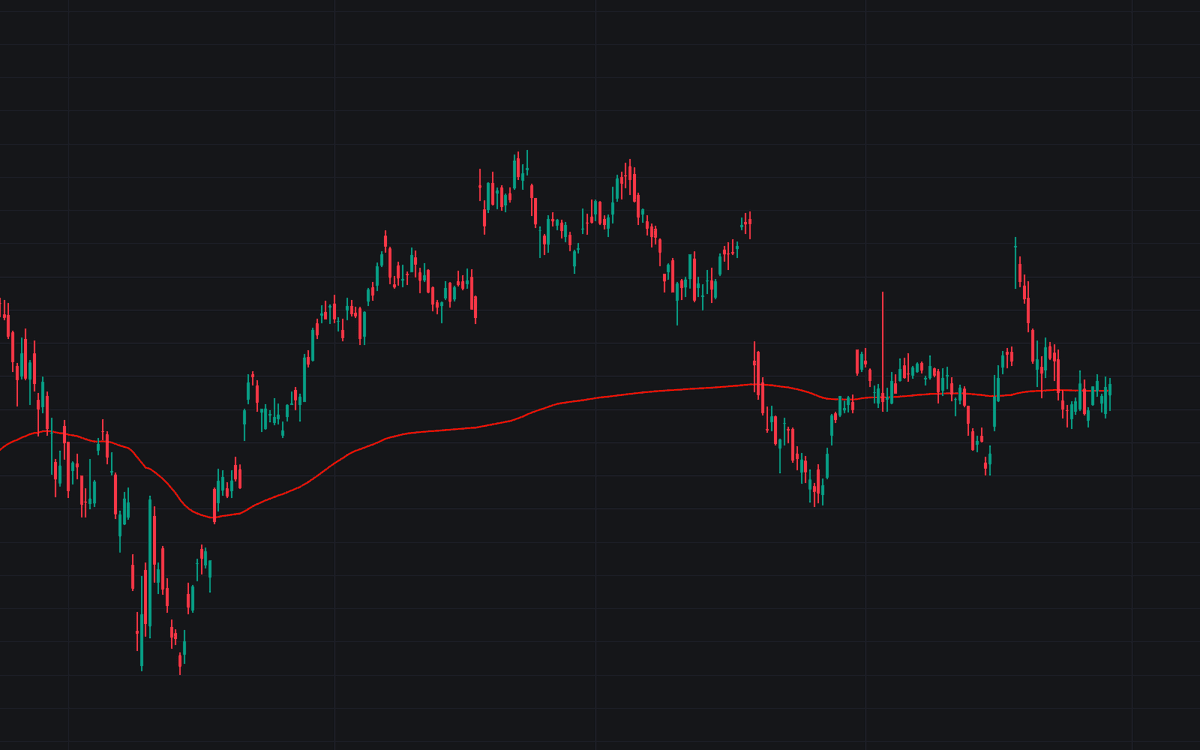

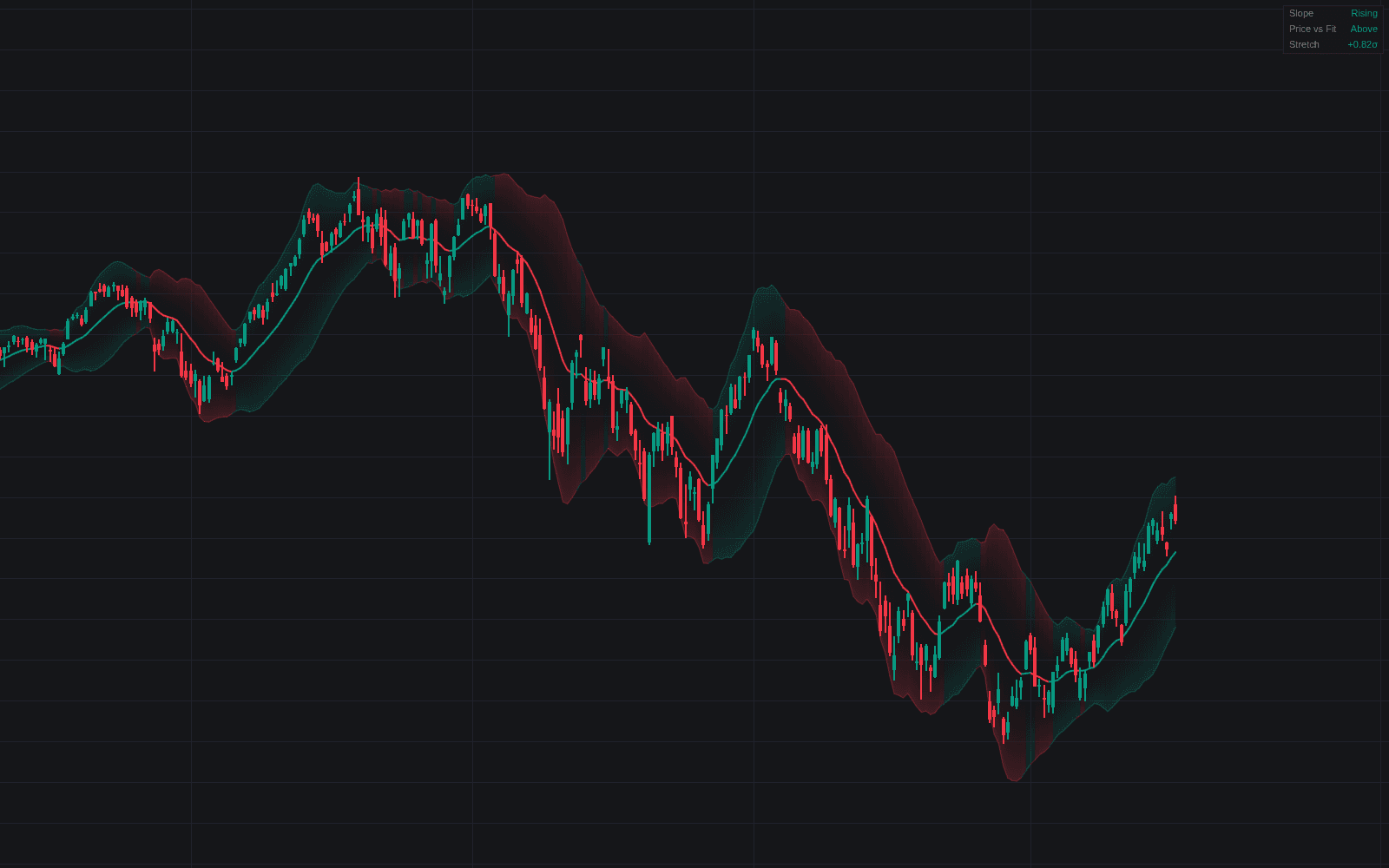
Trend Regularity Adaptive Moving Average (TRAMA) is the LuxAlgo original that re-times its own smoothing to match the regularity of the trend it is tracking. The TRAMA calculation squares the average number of highest highs and lowest lows recorded over the lookback and uses the result as its smoothing factor, so the line hugs price through persistent trends and settles into a stable shelf when the market goes quiet. That single property makes it useful twice over: as a crossover average and as trailing support and resistance.
How to Trade the Trend Regularity Adaptive Moving Average?
- Price crossing the line: works in any MA crossover system; because TRAMA tightens toward price as a trend extends, crossovers can arrive earlier than a fixed-speed average allows.
- Flat line: no new highs or lows are being recorded, a built-in regime filter telling you the market is ranging.
- Trailing support/resistance: trail stops behind the line in established moves; its stability in chop makes it a practical risk anchor in volatile markets.
One caveat comes straight from the math: after a prolonged uptrend the smoothing factor is still elevated, so TRAMA can be slow to adapt when the market flips abruptly into a downtrend, and the same applies in reverse. Like its siblings in the trend family, it rewards persistence, not sudden reversals.
Trend Regularity Adaptive Moving Average Settings
- Length: the indicator period; longer settings record fewer new extremes, producing a smoother, slower line.
- Src: the price source the average is computed on.
Frequently Asked Questions
Free to use
Run it on Vela. Go further with a paid plan.
- Up to 500 strategy alerts, with webhook automation
- Up to 10× the chart history of Free
- Orderflow lookback up to full history
- More Quant usage to customize it, plus extra usage when you need it
- Futures data alongside crypto, stocks, forex and commodities
Also works on

Related indicators
Run it on Vela. Make it yours with Quant.
Open this indicator free on Vela, our next-generation charting platform. Then ask Quant, our coding agent built into Vela, to retune it or turn it into a backtested strategy of your own.