Volume-weighted MACD
 By LuxAlgoApr 15, 2026
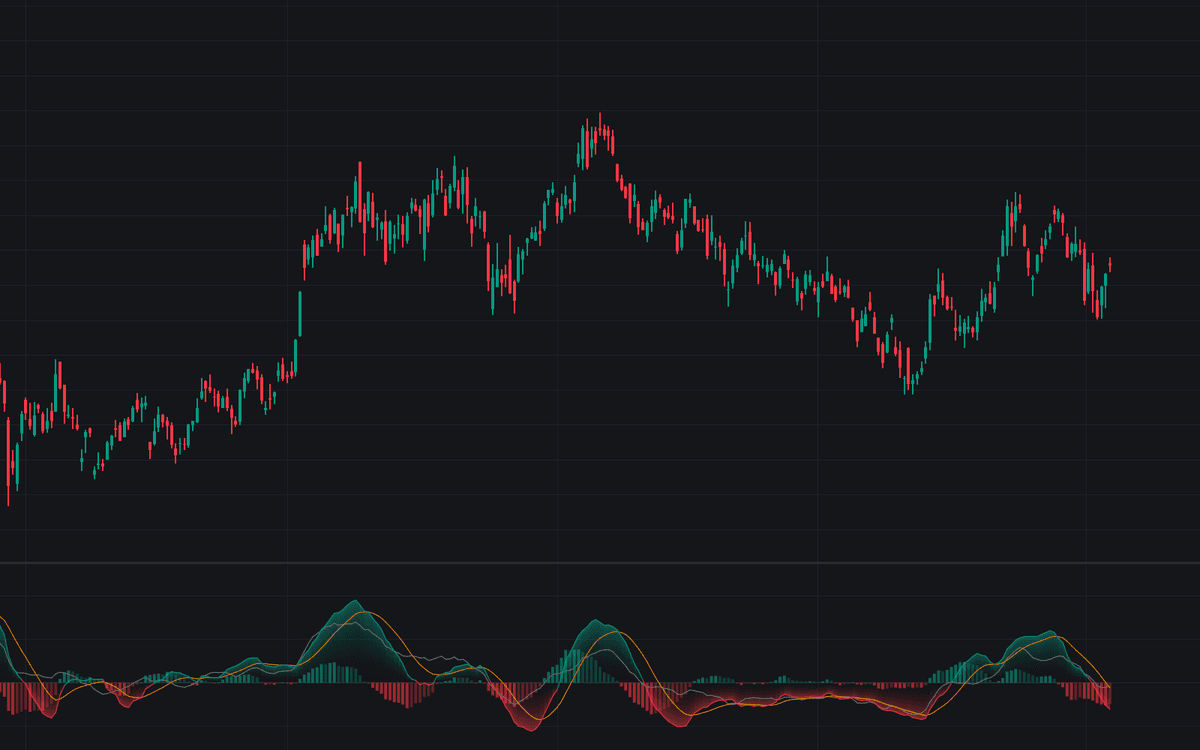

Volume-weighted MACD rebuilds the familiar momentum engine with participation deciding each bar's weight. Following the Volume-weighted MACD construction, it subtracts a 26-period slow VWMA from a 12-period fast VWMA, smoothing the spread with a 9-period signal line. Every close is multiplied by its volume before averaging, so busy bars drag the lines hard while thin drift barely registers. The optional price-only MACD overlay runs on the same source and lengths, making the disagreement between the two lines directly readable.
How to Trade the Volume-weighted MACD?
- Signal-line crosses: volume-weighted momentum turning up or down, the standard crossover grammar with participation built in.
- Zero-line crosses: the fast VWMA moving above or below the slow, the regime boundary.
- Histogram shading: bright columns mark expanding momentum, faded columns a histogram already contracting toward its signal line.
- VW-MACD versus the classic line: the weighted line outrunning its price-only twin says volume sits behind the move; a weaker line warns participation is thinning as price advances.
Six alerts cover both signal crosses, both zero crosses, and both histogram turns. It sits naturally in the momentum toolkit wherever the price-only version would.
Volume-weighted MACD Settings
- Source (default close): the series fed into both volume-weighted averages.
- Fast VWMA Length (default 12) and Slow VWMA Length (default 26): the familiar spans carried over from the classic formulation.
- Signal Smoothing (default 9, EMA): signal-line length, with an SMA option for the smoothing type.
- Classic MACD Comparison (default enabled): overlays the price-only line for the participation read.
- Style toggles cover Show Histogram (default enabled), Gradient Fill (default enabled), and the directional colors.
Frequently Asked Questions

The Library is free. Quant makes it yours.
Pull any concept or indicator into Quant: rebuild it, retune it, or turn it into a backtested strategy of your own.