What Is Short Selling in Stocks?

Short selling means selling stock you do not own, usually by borrowing shares through a broker, with the obligation to return equivalent shares later. A trader aims to buy them back at a lower price. If the stock rises instead, the repurchase costs more and the position loses money.
For an unhedged stock short, the maximum gross trading gain is the original sale proceeds if the stock becomes worthless, while potential price losses have no theoretical upper limit. Borrowing costs, dividend obligations and forced closure can make the outcome worse than a simple price chart suggests.
- Purpose: speculate on a decline or offset some exposure elsewhere in a portfolio.
- Requirements: an approved account, available borrow, sufficient collateral and compliance with applicable trading rules.
- Ongoing obligations: monitor the position, borrow terms, corporate events and margin, then buy to cover and reconcile costs.
How Short Selling Works
The Process, Step by Step
- Obtain the appropriate account approval. Ordinary U.S. retail stock shorting requires a margin account and the broker’s permission. A standard cash account is not enough.
- Research the trade. Define the company or price-based thesis, entry, exit, expected holding period and reasons to abandon it.
- Check availability and charges. The broker must satisfy the relevant locate requirements. Check the share quantity, current borrow rate, any locate fee and restrictions; availability can change.
- Submit a short-sale order. Execution creates sale proceeds and a share-return obligation. The proceeds remain subject to collateral requirements; they are not an immediate profit or unrestricted cash.
- Monitor the open position. Rising prices, higher borrow charges, lender recalls or tighter broker requirements can require action even when the original thesis has not changed.
- Buy to cover. Buy equivalent shares to close the position and allow the broker to return borrowed securities. Corporate actions can alter the quantity or obligations.
- Review the result. Reconcile fills, stock-loan charges, financing and any dividend substitute payments against the account statement.
FINRA’s short-interest explanation describes the margin-account and locate process. Schwab’s short-selling guide also explains the practical risks, including changing borrow charges and the possibility that the broker cannot maintain a position indefinitely.
Profit and Loss: A Correct Worked Example
Assume you sell 100 borrowed shares of XYZ at $50, generating $5,000 of proceeds. Before costs, trading profit or loss equals (sale price − repurchase price) × shares.
| Repurchase price | Cost to cover 100 shares | Gross profit or loss |
|---|---|---|
| $40 | $4,000 | +$1,000 |
| $50 | $5,000 | $0 |
| $65 | $6,500 | −$1,500 |
| $100 | $10,000 | −$5,000 |
At $100, the $10,000 is the repurchase cost, not the loss: subtract the original $5,000 received. If the profitable $40 exit incurred exactly $20 of total costs, net profit would be $980. In practice, include all relevant charges, not just the trading commission.
A return percentage also needs a denominator. The $1,000 gross gain is 20% of the $5,000 short-sale value, but 40% of a hypothetical $2,500 initial equity contribution. Neither percentage accounts for costs or subsequent collateral added. Record dollars and the capital basis together.
U.S. Short-Selling Rules and Margin
Regulation SHO and the Short-Sale Price Test
The SEC’s Regulation SHO overview explains order marking, locate and close-out requirements. Subject to exceptions, a broker-dealer must borrow, arrange to borrow, or have reasonable grounds to believe shares can be borrowed for timely delivery before effecting a short sale. A locate is not a promise that borrow will remain available throughout the trade.
Regulation SHO addresses delivery failures; describing it as a blanket prohibition of every transaction called “naked short selling” is too broad. Exceptions exist, and a failure to deliver alone does not establish unlawful trading. Manipulative activity and failures to meet applicable requirements are separate concerns.
Rule 201, often called the short-sale restriction or SSR, is triggered when a covered security declines at least 10% from the previous regular-session closing price. Subject to exceptions, the restriction generally prevents displaying or executing short-sale orders at or below the current national best bid for the rest of that day and the next trading day.
For example, a $50 prior close gives a $45 trigger. Once triggered, if the national best bid is $44.80, a non-exempt short-sale execution at $44.80 would fail the price test. A price above that bid may satisfy it, subject to the other rules. This is not simply a requirement that the last trade tick upward, and it does not stop traders buying to cover existing shorts.
Initial and Maintenance Margin Are Different
For an ordinary unhedged short sale of a nonexempt equity security under Regulation T, the 150% requirement commonly comprises 100% sale proceeds plus 50% additional equity. Thus a $5,000 sale can require $2,500 of the trader’s own eligible collateral, before higher broker requirements. Other account arrangements or positions can be treated differently.
FINRA Rule 4210(c) sets these ordinary short-stock maintenance floors, subject to the rule’s scope and exceptions:
| Current short-stock price | Maintenance requirement per share | Illustration |
|---|---|---|
| Below $5 | Greater of $2.50 or 100% of current market value | $2 stock: $2.50 per share |
| $5 or above | Greater of $5 or 30% of current market value | $10 stock: $5 per share; $50 stock: $15 per share |
The familiar 25% figure is the ordinary long-position maintenance floor, not the general stock-short requirement. Brokers may impose higher house requirements or change them; portfolio margin and special securities have different rules.
Continue the 100-share short at $50: suppose the account contains only $5,000 sale proceeds plus $2,500 cash collateral. If the stock rises to $60, the $6,000 short liability leaves $1,500 equity. A 30% maintenance requirement is $1,800, so the simplified account is $300 short of that requirement. A broker using a higher rate would demand more. Losses reduce equity while a higher share price increases the required collateral.
Do not assume a margin call provides a guaranteed grace period. A broker can liquidate positions under its agreement, potentially without advance notice. A lender recall can also prompt a replacement borrow or buy-in independently of a margin shortfall.
Short-Position Reporting Is a Separate Issue
The earlier January 2025 compliance timetable for institutional Form SHO reporting is outdated. The SEC’s December 3, 2025 order granted a temporary exemption from Rule 13f-2 and Form SHO compliance until January 2, 2028. This reporting relief does not suspend retail locate, margin or trading obligations.
Borrowing Costs and Other Charges
Stock-loan fees and interest on borrowed cash are different items. Do not automatically apply the broker’s cash margin-loan rate to the full short-stock value. Interactive Brokers’ short-sale cost explanation, for example, separates the stock-borrow fee from potential interest on short-sale proceeds; eligibility, collateral calculations and account terms affect the result.
- Stock-borrow fees: rates can change sharply, and a hard-to-borrow security may be expensive or unavailable.
- Locate charges: where applicable, check whether the broker charges separately and whether the fee is refundable.
- Dividend substitutes: a short position held across the relevant entitlement date can create a payment obligation. Merely announcing a dividend does not mean every short holder immediately owes it.
- Execution and financing: include spreads, commissions, slippage and any actual cash-borrowing interest that applies to the account.
A simplified estimate using $5,000 as the fee base, a 12% annual rate and a 360-day convention gives $5,000 × 0.12 × 10 ÷ 360 = $16.67 for ten days. Real brokers may use a different collateral base, rounding, settlement dates or day-count convention. At a 60% rate, the same simplified calculation becomes $83.33.
There is no universal 8 p.m. cutoff that makes a short free of borrowing costs. Read the broker’s terms for intraday positions, settlement and minimum charges. For a 100-share position with a $0.50 dividend substitute obligation, another $50 would reduce the result.
Short-Selling Risks and Risk Management
A short squeeze can develop when rising prices induce or force short sellers to buy, adding demand to an already rising market. Earnings surprises, takeover announcements, thin liquidity and crowded positioning can accelerate the move. A high short-interest reading is a risk input, not proof that a squeeze must occur.
Shorting can help express a negative valuation view or hedge related long exposure, but the hedge may be imperfect. A $10,000 long position and a $10,000 short position have zero net dollar exposure and $20,000 gross exposure; both can lose if the long falls and the short rises. Borrow costs remain even when the intended hedge works.
- Size from a planned loss budget: a $100 budget and a $2 distance between entry and buy-stop imply no more than 50 shares before costs.
- Allow for gaps: on a short entered at $50 with a stop at $52, execution at $60 loses $500 on those 50 shares, not the planned $100.
- Check event exposure: review earnings, corporate actions, ex-dividend dates, borrow conditions and broker restrictions.
- Keep collateral capacity: assess house requirements and other positions together rather than using every dollar of available buying power.
- Define an exit beyond price: specify maximum holding time, acceptable carrying cost and conditions that invalidate the thesis.
A buy-stop becomes a market order when triggered and can execute above the stop; a stop-limit can remain unfilled. The SEC’s stop-order bulletin explains this tradeoff. Halts or gaps can prevent an immediate exit.
Buying a put instead creates a different payoff: the fully paid standalone option’s loss is limited to its premium and costs, but expiry, volatility and time decay matter. It is not equivalent to short stock. A put bought alongside an existing short does not cap that short’s loss if the stock rises. Exercise of a physically settled put can create a stock-delivery obligation or short position, so check expiration procedures.
Video: What Is Short Selling?
This Investment Management Lab explainer introduces the mechanics and unlimited-loss risk. Treat its broader comments about taxes and options as topics requiring separate analysis: shorting does not automatically avoid tax, and different option positions have different risks.
Research Short Strategies With LuxAlgo
Separate a Candidate From an Executable Trade
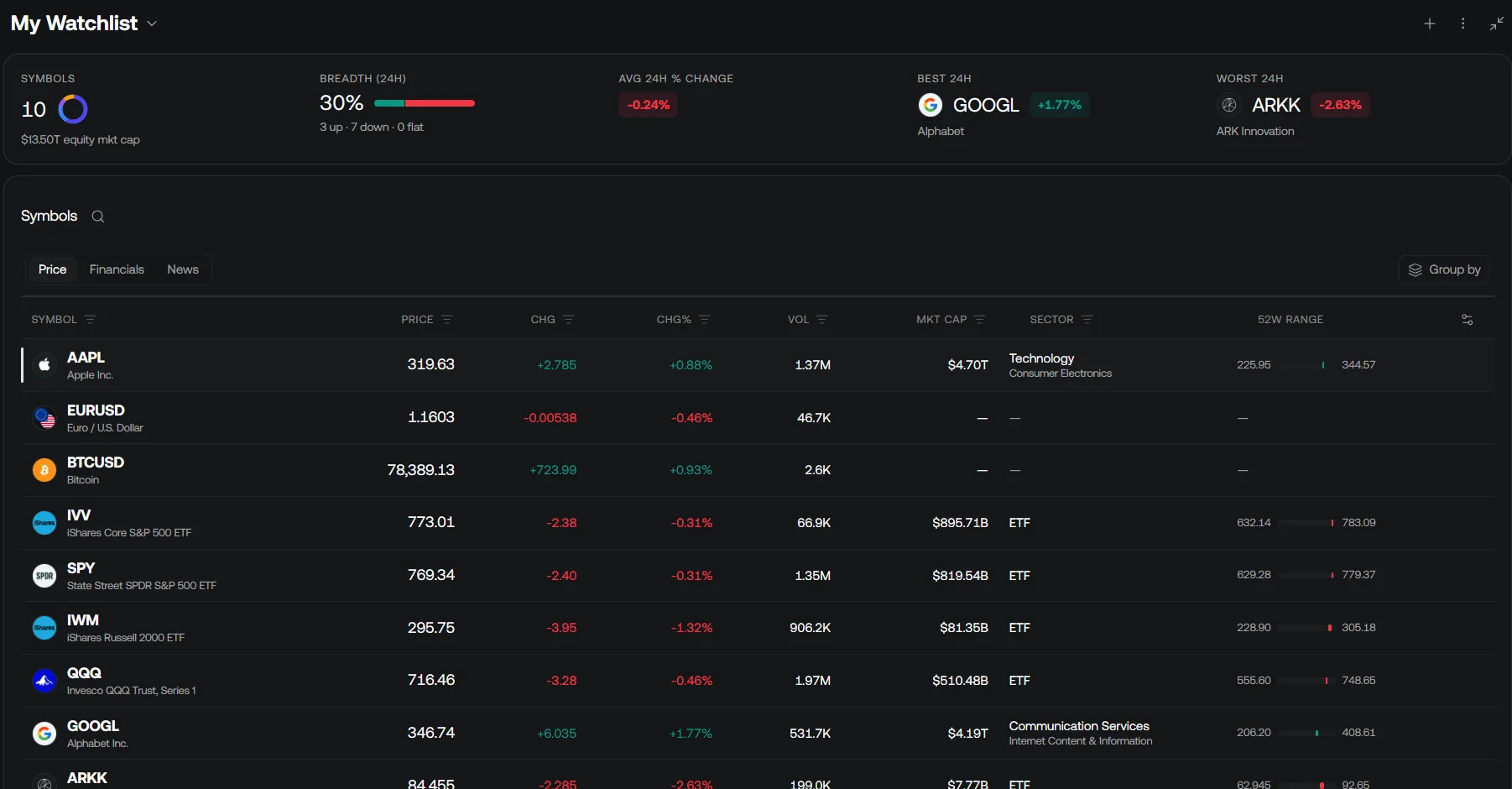
Use the LuxAlgo Watchlist to organize available symbols and review supported market, financial and news information. Then confirm actual borrow availability, charges and trading restrictions with the broker. A chart symbol is not evidence that you can short it.
Reported short interest is a position snapshot, distinct from daily short-sale volume. Check the observation date, publication delay and provider methodology. Dividing short interest by average daily volume gives a days-to-cover measure, not a repayment deadline.
On LuxAlgo charts, trend, momentum and order-flow tools can help define hypotheses. Footprint data summarizes executed activity; it does not identify whether a seller opened a short or closed a long. U.S. equity data sourced from Cboe EDGX should not be treated as consolidated whole-market volume. A bearish indicator cannot establish borrow availability or predict a squeeze with certainty.
Build, Review and Test the Rules
Quant, our coding agent, can help write a strategy from defined entry and exit conditions. Review the generated code, use completed-bar signals where intended, and configure order size, commission and slippage before running the test.
Inspect Backtest Summary and Trades Log for drawdowns, adverse trades and sensitivity to assumptions. A historical short signal does not prove shares were borrowable at that time. Variable borrow fees, recalls, dividend obligations, halts and rejected orders require suitable data or explicit limitations; they are not automatically captured by a price-only backtest.
Test untouched periods after selecting the rules and include delisted securities when a historical stock-selection study requires them. A test using only today’s surviving stocks can misrepresent the opportunity set. Historical results are research evidence, not a guarantee that a live short will be available or profitable.
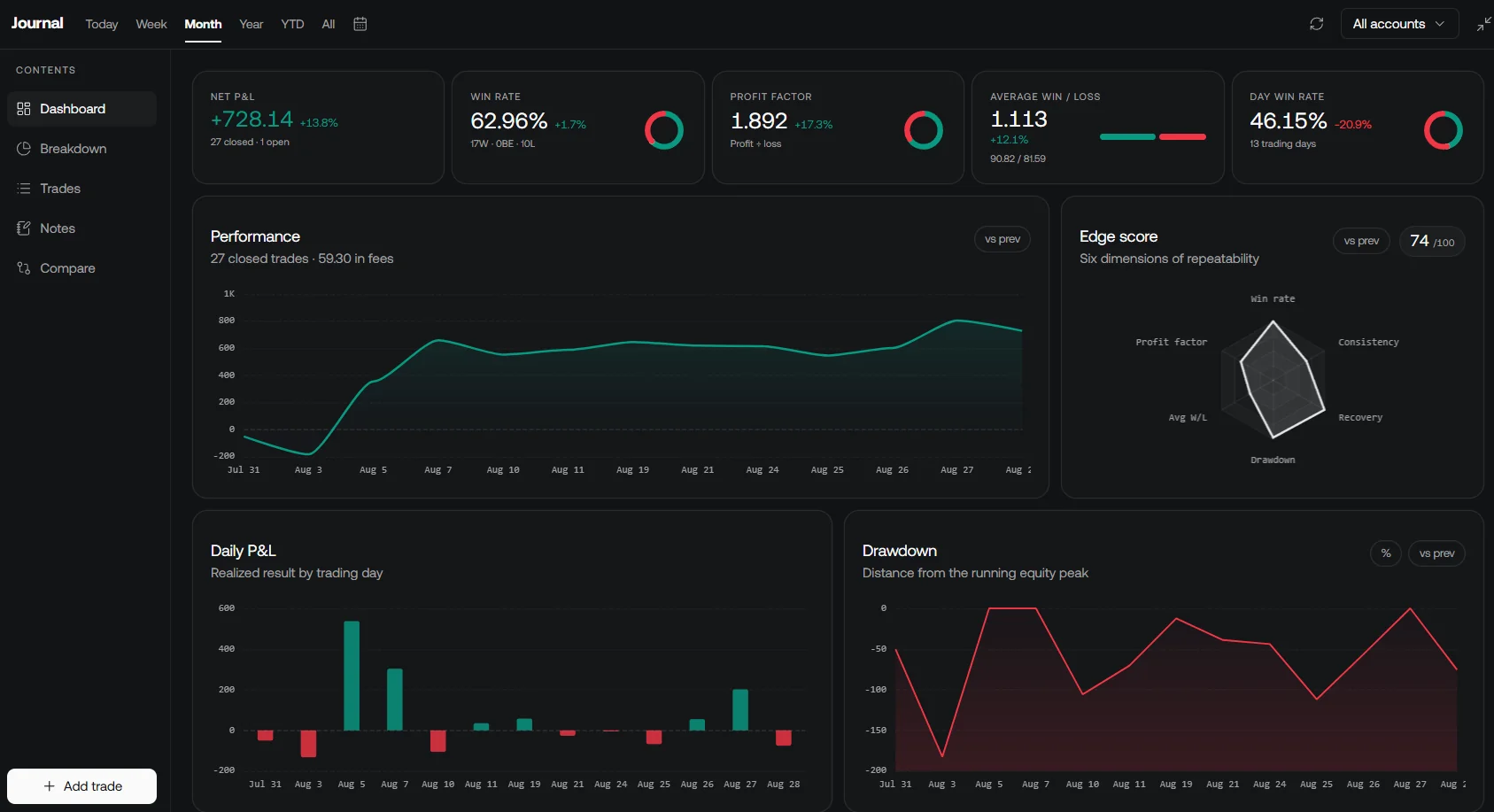
After execution, use the LuxAlgo Journal to review supported imported or manually recorded trades. Keep borrow and event notes with the trade, and reconcile displayed results with the broker statement so omitted stock-loan charges do not inflate the apparent edge.
FAQs
What are the biggest risks of short selling?
An unhedged stock short has theoretically unlimited price losses. Borrow fees, recalls, dividend obligations, margin changes, gaps and short squeezes add risk. Small positions and buy-stops can reduce planned exposure but do not guarantee a maximum loss.
How do Regulation SHO and SSR affect a short sale?
Regulation SHO includes locate and delivery requirements, subject to exceptions. After a qualifying 10% decline from the prior close, Rule 201 generally restricts short-sale prices relative to the national best bid for that day and the next trading day; it is not simply a last-trade uptick rule.
Can LuxAlgo confirm that a stock is safe or available to short?
No. Charts and Quant can support research and historical testing, but broker borrow availability, loan terms, margin and execution restrictions need separate verification. A short signal or profitable backtest does not establish that the live trade can be executed.
Read next