Concept
Prior Period Levels
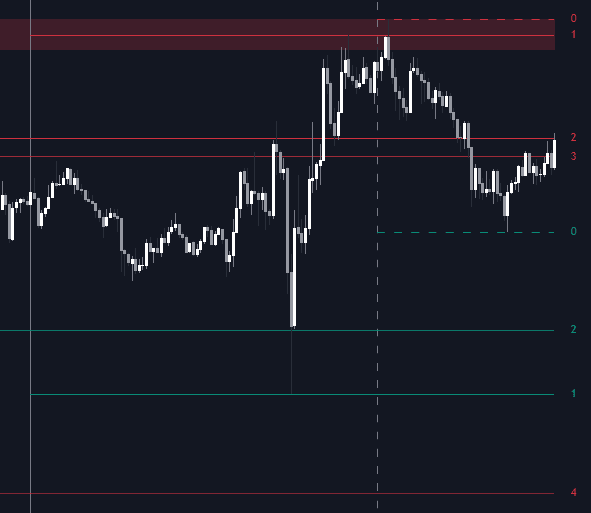
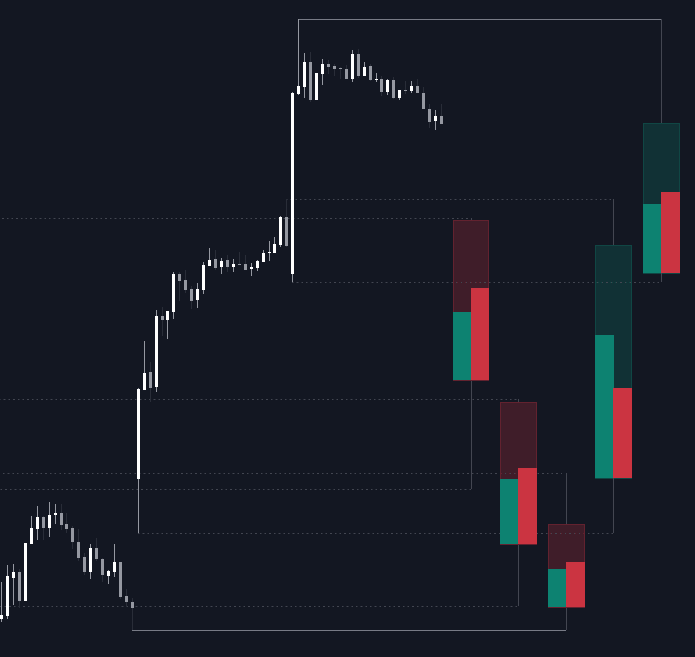
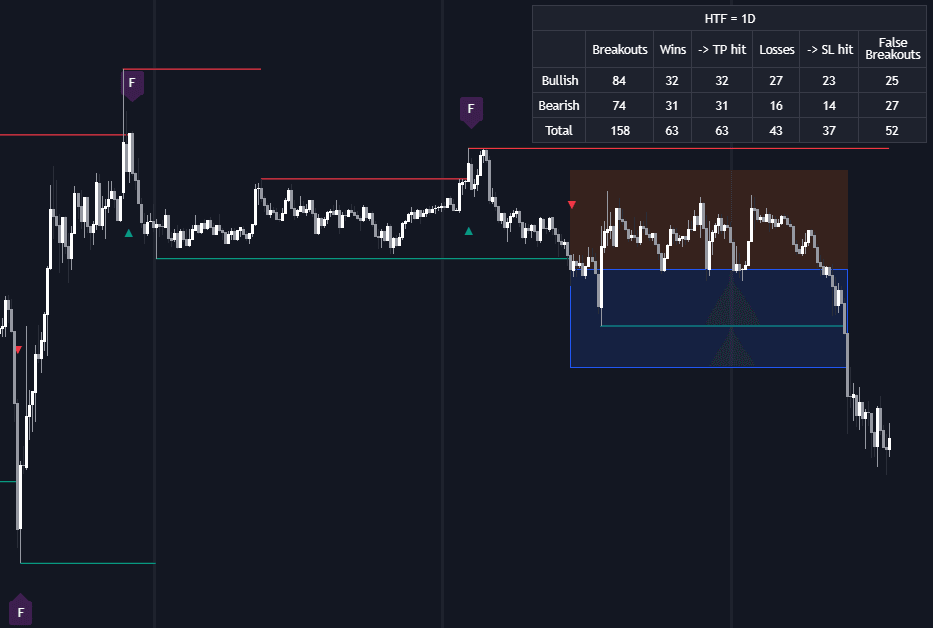
Prior Period Levels, also known as PDH/PDL, prior week/month H/L, prior close, settlement, are Support/Resistance & Levels concepts. The Library holds 3 implementations, each one a working definition you can pull into Quant.
Top Prior Period Levels indicators
The top custom implementations, built on the original standard Prior Period Levels formula.
3 total
Any of the 3 Prior Period Levels implementations below can become a backtested trading strategy — describe your rules and Quant writes the code.
What are Prior Period Levels?
Prior period levels are the high, low, and close of a completed period, the previous day, week, month, quarter, or year, projected forward onto the current chart as horizontal references. The best known are the prior day high and low (PDH and PDL), with PWH/PWL for the prior week and equivalents up the calendar; on futures, the prior settlement joins the set as the official mark. Because the inputs are fixed facts of a finished period, the levels are objective: any two traders using the same session convention plot identical lines.
Two schools lean on them for different reasons. Classical technicians treat them as natural support and resistance: yesterday's high is where sellers last won, so it is the first place today's strength gets audited. Liquidity-based frameworks, including smart money approaches, read the same prices as order magnets: stops from shorts stack above the prior high as buy-side liquidity, stops from longs rest below the prior low as sell-side liquidity, and in that reading price seeks those pools before revealing its real direction.
They matter because they are watched at scale. A discretionary scalper, a systematic desk, and the journalist recapping the session all reference the same prior day high, and that shared attention concentrates orders around the level, making it a focal point where reactions are often visible. None of this guarantees a bounce or a break on the touch: prior levels are best read as decision points that force the market to show its hand.
How to read prior period levels
Plotting is mechanical; the judgment lies in the session convention you choose and in how price behaves on arrival.
- 1Fix the data convention first. On futures and equities, RTH versus ETH changes where the prior high and low sit; on 24-hour markets the daily close depends on the platform's day boundary (midnight UTC, New York 5 pm, or exchange-specific).
- 2Use completed periods only: yesterday's finished candle, last week's finished bar. Today's developing high and low become prior levels only once the period closes.
- 3Project the high, low, and close (plus settlement on futures) forward as horizontal rays, keeping daily, weekly, and monthly sets visually distinct so higher-timeframe levels stand out.
- 4Read the first interaction: sharp rejection keeps the level acting as S/R, a probe through it that closes back inside marks a sweep, and a firm close beyond it with follow-through reads as acceptance into new territory.
How traders use it
- As a daily bias frame: opening inside yesterday's range suggests two-way rotation between PDH and PDL, while opening or accepting outside it puts the session in breakout territory and shifts attention to continuation versus a failed-break snap-back.
- As sweep-and-reversal setups: a liquidity sweep of the prior day low that quickly reclaims the level is a classic long trigger, the same structure traded as Turtle Soup or a swing failure, on the logic that the push below collected sell stops without finding real supply.
- As targets: traders positioned from lower levels commonly project the prior day or prior week high as the draw, taking profit into the expected pool of orders rather than hoping price passes through it.
- As gap context: the prior close anchors the day's opening gap, and gap-fill behavior, whether price returns to the prior close or runs away from it, is itself a tell about the session type.
Prior Period Levels vs related references
Period Opens: Period opens mark where the day, week, or month began rather than the extremes of the finished one. Open-anchored frameworks judge premium versus discount around that price; prior highs and lows mark the liquidity at the range edges.
Overnight & ETH Levels: Overnight and ETH levels are carved out of the extended-hours slice of trading, so they depend on splitting the day into sessions; prior period levels summarize the whole completed period under whichever session convention the chart uses.
Opening Range & ORB: The opening range forms during the first minutes of today's session, so it is current-period information; prior period levels are inherited from finished periods and sit on the chart before the open.
Floor Pivots: Floor pivots are computed from the prior period's high, low, and close rather than being those prices themselves: a derived ladder of P, R1-R3, and S1-S3 versus the raw untouched levels.
Concept family
Support/Resistance & Levels
38 concepts mapped · 38 in the Library
Prior Period Levels FAQ
Turn Prior Period Levels into a trading strategy.
Take any implementation from this page into Quant, then build on it, backtest it on real data, and keep refining it in conversation.