Responsive vs Initiative Activity
 By LuxAlgoMar 30, 2026
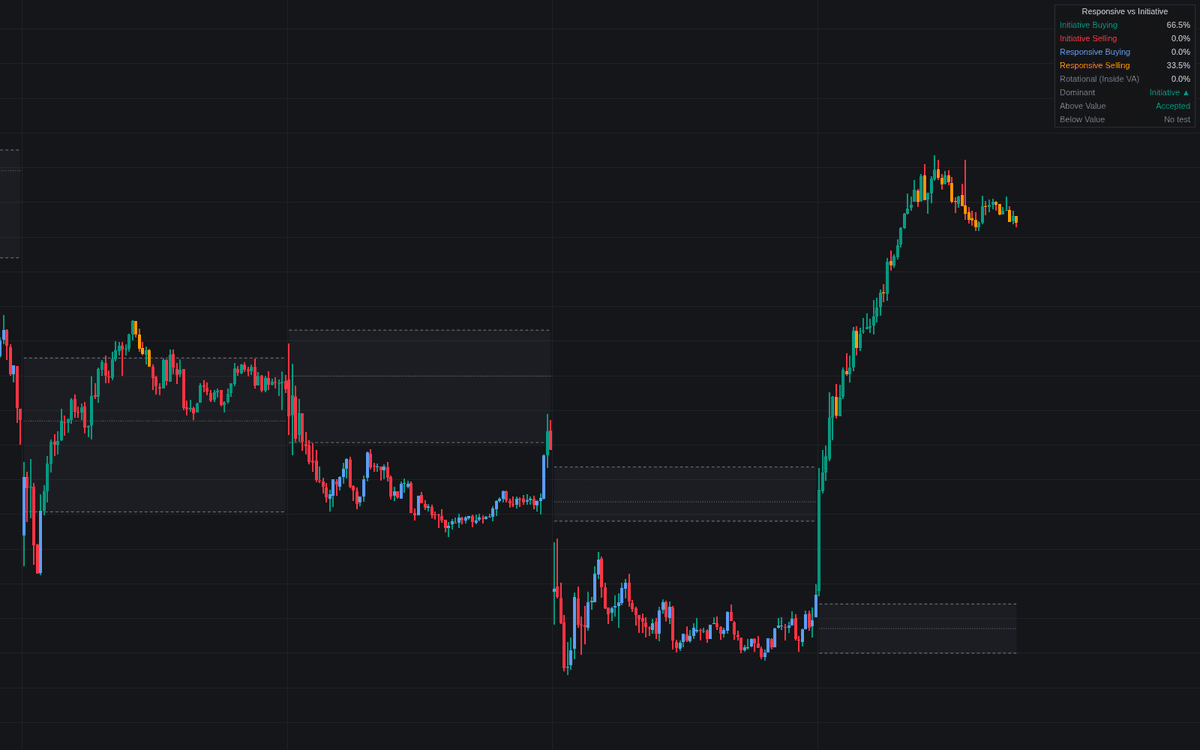

Responsive vs Initiative Activity sorts a session's trade into the four quadrants auction logic cares about. Each completed anchor period collapses into a value-area grid, and every new bar is classified by the responsive vs initiative activity framework: buying above the prior value area is initiative, buying below it responsive, selling mirrored, and activity inside it rotational. Bars color by class, the prior VAH, VAL and POC extend across the session, and the dashboard totals each class's volume share while tracking acceptance beyond value.
How to Trade the Responsive vs Initiative Activity?
- Initiative dominance: trade pressing past the prior consensus signals conviction; the first bar of each class per session fires its own alert.
- Acceptance: an initiative move is accepted only once enough bars and volume share accumulate outside prior value. Triangles mark it, latched for the session.
- Failed probes: a push beyond value returning inside without acceptance prints an x-cross: the responsive side won that auction, a fade-friendly outcome.
Responsive vs Initiative Activity Settings
- Anchor Period (default D): the reference session; must sit above the chart timeframe.
- Profile Rows (default 25) and Value Area % (default 70): the prior-session grid.
- Profile Weighting (default Volume): or Time (TPO) counting visited rows; volume falls back to time when the symbol reports none.
- Location Source (default hl2) and Buy/Sell Rule (default Close vs Open): placement and polarity of each bar.
- Time: Min Bars Beyond Value (default 5) and Volume: Min Session Share % (default 20): the two acceptance components.
- Show Dashboard (on), Location (Top Right), Size (Small); Prior VAH/VAL, Prior POC, Value Area Fill, Color Bars by Classification (on), Event Markers (off).
Frequently Asked Questions

Original indicatorBuilt in-house by LuxAlgo
The Library is free. Quant makes it yours.
Pull any concept or indicator into Quant: rebuild it, retune it, or turn it into a backtested strategy of your own.