TPO Profile
 By LuxAlgoMar 20, 2026
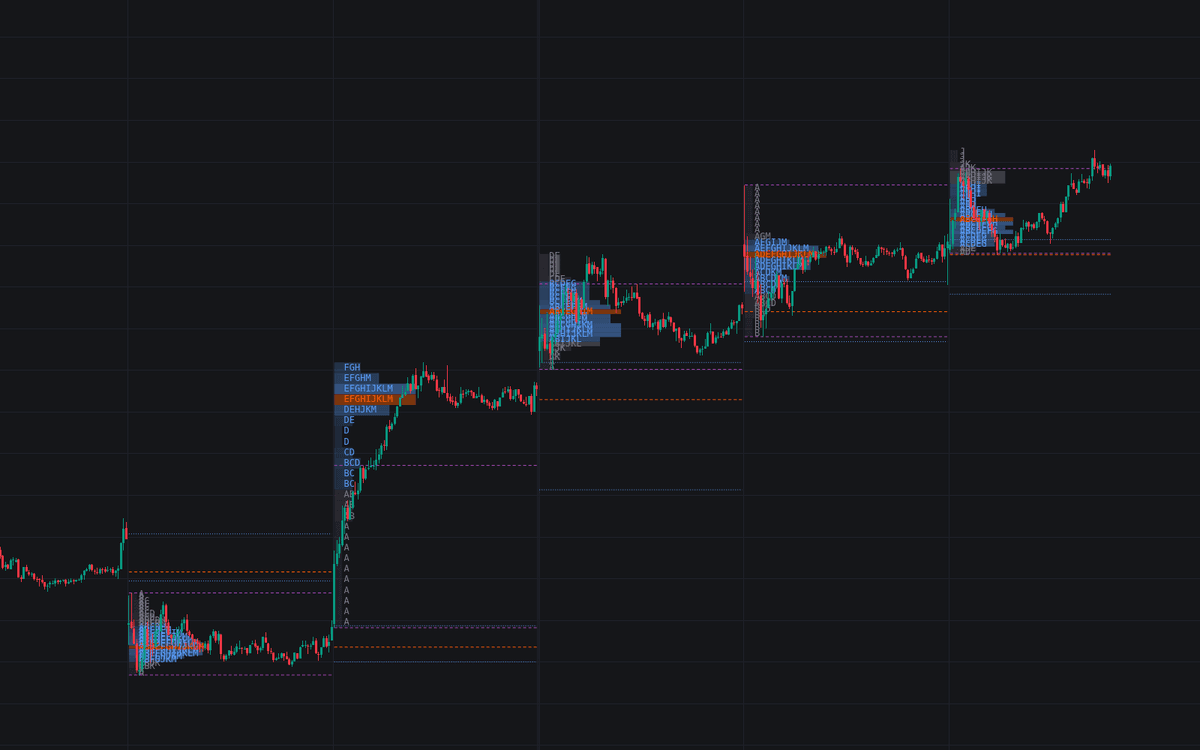

TPO Profile builds the letter-stacked distributions of a TPO profile on the chart: each anchor period splits into TPO periods, each period takes a letter, and every price row its range touched prints that letter once. The longest row is the TPO point of control, the band holding the configured share of letters the value area, and the opening periods set an initial balance drawn across the session. Prior-session POC and value area edges optionally carry forward as the working level map.
How to Trade the TPO Profile?
- Range extension: the first push beyond the completed initial balance shows participation past the opening auction; both sides fire alerts.
- Prior POC and value area tests: carried-forward levels where responsive or initiative trade tends to appear; crossing alerts cover all three.
- Profile shape: a symmetric distribution reads as a session balancing around accepted value, while elongated or lopsided shapes show one side still pressing the auction.
The developing session redraws live; completed profiles freeze in place up to the configured count.
TPO Profile Settings
- Profile Anchor (default D): span each profile covers; weekly or monthly anchors merge sessions into a composite.
- TPO Period (default 30): duration of one letter; must not be below the chart timeframe.
- Price Rows (default 25): rows the profile range divides into.
- Value Area % (default 70): share of all TPOs held, expanded outward from the POC.
- Initial Balance (default enabled) with its opening period count (default 2).
- Extend Prior POC & Value Area (default enabled): projects the prior session's references forward.
- Profiles Shown (default 5): profiles kept on the chart, including the developing one.
- Style options cover the display mode (default Blocks + Letters), letter size, profile width, count gradient and colors.
Frequently Asked Questions

Original indicatorBuilt in-house by LuxAlgo
The Library is free. Quant makes it yours.
Pull any concept or indicator into Quant: rebuild it, retune it, or turn it into a backtested strategy of your own.