Vela Now Has a $100,000 Paper Account
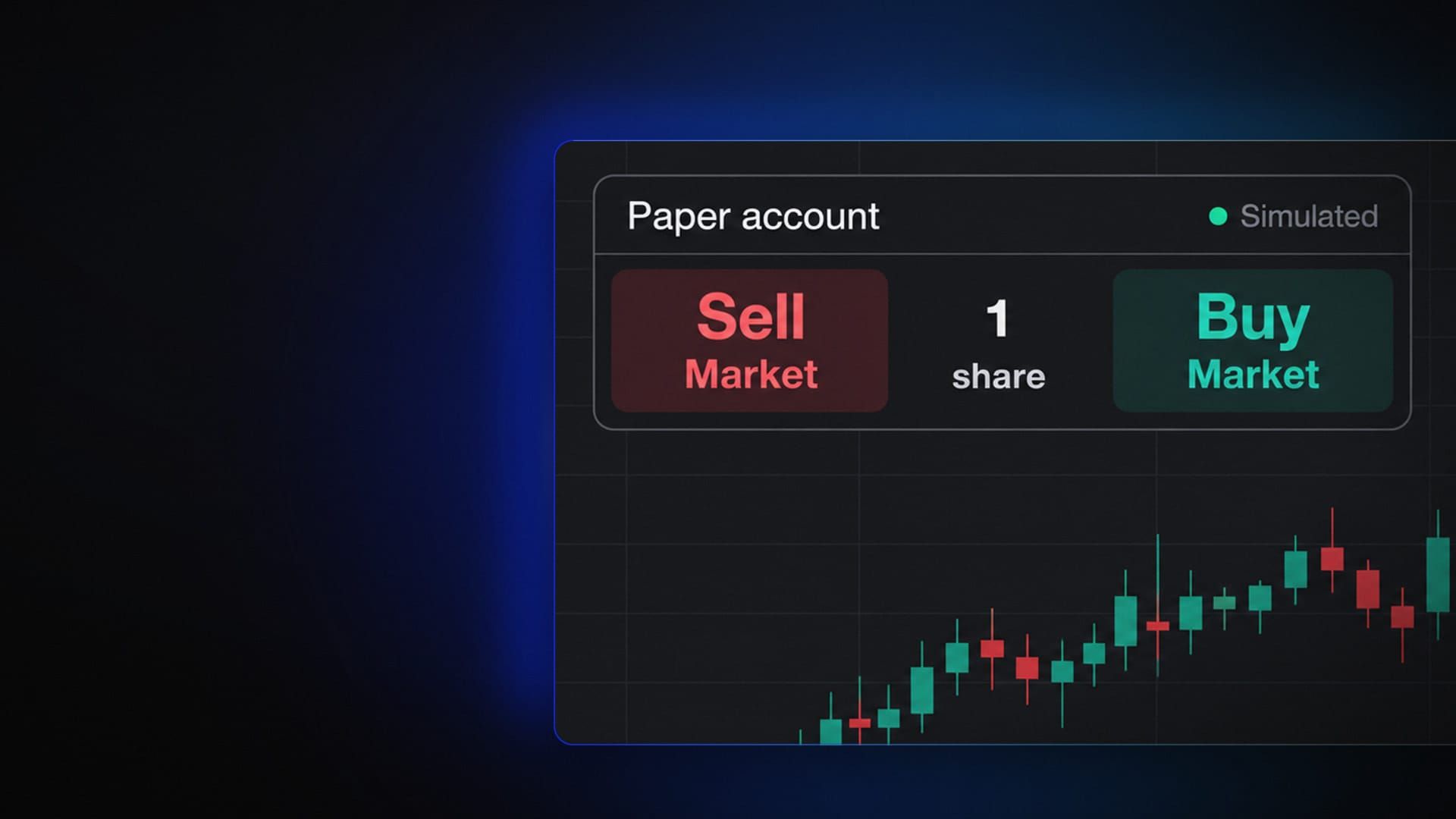
Today we're launching Paper Trading on Vela, our next-generation charting platform. Every trader gets a paper account with $100,000 to start, and it trades the way a real account does: orders, positions, lines on the chart, a trade log, and the Trade Journal. There is no broker to connect and nothing to set up.
Practicing a trade has usually meant leaving your charts. You open a broker's demo, learn a second order ticket, and try to remember which line on which screen was your stop. We built paper trading into the chart itself, so the place you read the market is the place you act on it. Nothing is ever sent to a broker or an exchange. Every order is simulated against live prices.
It is built for three kinds of traders. New traders can learn entries, exits, and sizing without risking money. Experienced traders can put a strategy, or an idea built with Quant, our coding agent, against live prices before committing capital. Prop-firm candidates can practice at their challenge's exact account size.
Trade Straight From the Chart
Buy and Sell sit right on the chart, under the symbol, with the order size between them. You can drag them anywhere on the chart, or hide them with a right-click if you want a clean view. When you need more than a quick entry, the order panel is the full ticket: side, order type, size, exits, how long the order stands, and presets. Under the chart, the trading panel lists your open positions, working orders, and history.
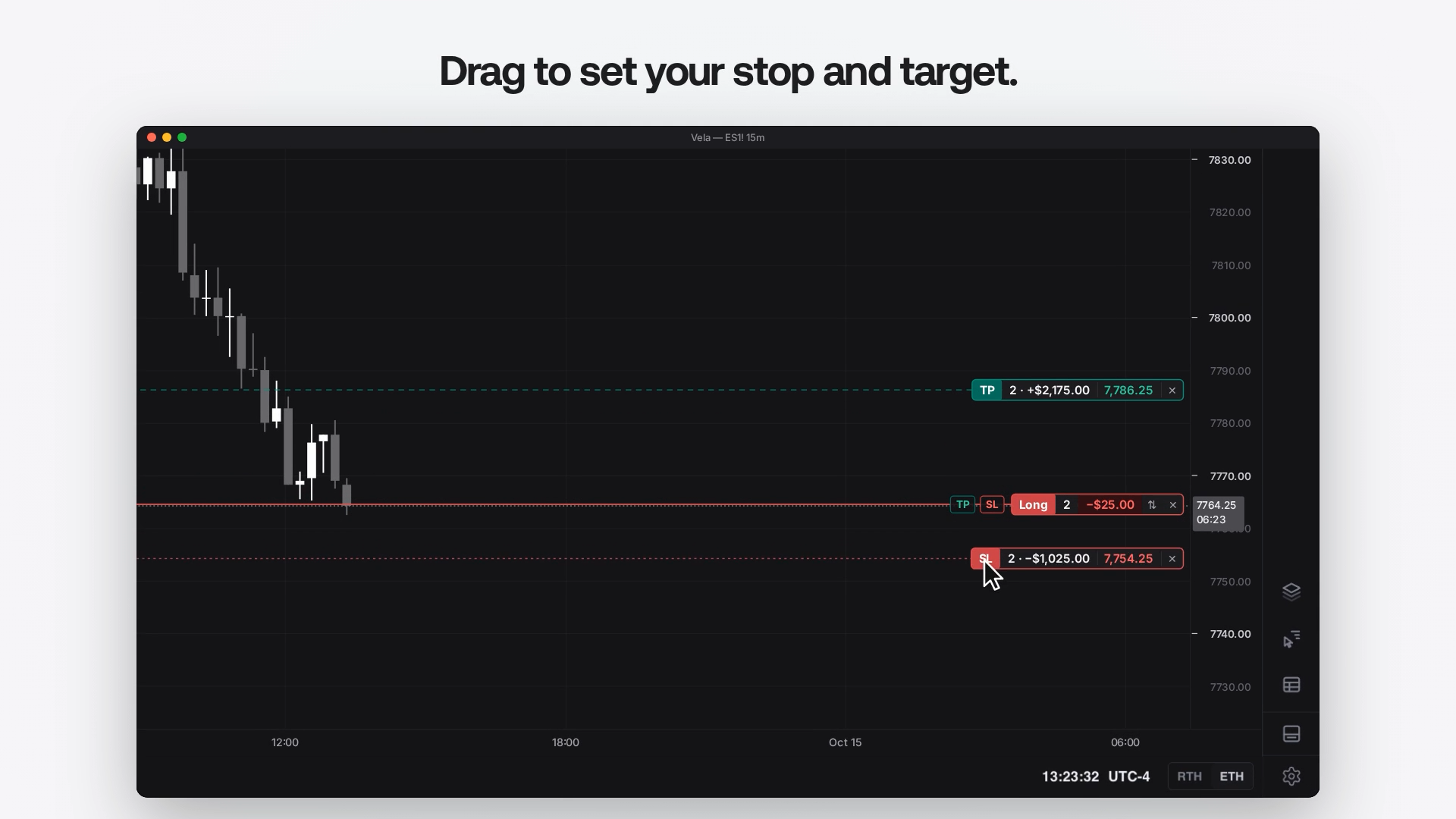
Placing a resting order works from the chart too. Right-click at a price and choose a limit or stop order there. Once an order or position exists, it shows as a line on the chart. Drag a line to move an order, drag a stop loss or take profit out of an open position, and click a line's × to close or cancel it. You can close part of a position straight from the chart, at 25%, 50%, 75%, or all of it, or reverse it entirely.
In practice this means managing a trade without ever opening a form. You go long, price moves in your favor, and you drag the stop line up to where you want it. You scale out a quarter at your first level from the position line, then let the rest run toward the target line you already set.
Orders, Exits, and Speed
Paper accounts support market, limit, and stop orders. You can attach a stop loss and take profit to any entry. They are placed when the entry fills and cancel each other, so closing one side removes the other. Trailing stops follow the best price reached. You also choose how long an order stands:
- Until cancelled
- For the day, with the ticket telling you which close it ends at
- Filled at once or cancelled
- Until a date you pick
Exits can be set in whichever unit fits the way you plan: a price, a percentage, ticks (pips on forex), multiples of ATR, or dollars. If you want a starting point, one-click suggestions put a stop 1% away and a target 2% away, which you can then drag or edit. An optional confirmation shows the order exactly as it will be placed before it goes in.
For traders who want fewer clicks, there are three tools. Order presets save a size, exits, and order duration under a name, up to 9 of them, and apply them with one pick. Shift+B and Shift+S open the buy and sell ticket. Configure Shift+1 through Shift+9 for your trading shortcuts. One-click trading, if you turn it on, makes a click on the chart's Buy or Sell place the order immediately. Optional sounds confirm fills, refusals, moves, and cancels so you can keep your eyes on price.
Sizing the Way Each Market Trades
A forex trader thinks in lots and pips. A stock trader thinks in shares. We built sizing to match, and your choice is remembered everywhere: on the chart, in the order panel, and in bar replay.
- Forex: lots, units, dollars per pip, dollars, or % of equity
- Stocks: shares, dollars, or % of equity
- Crypto: dollars, the coin, or % of equity
- Gold and silver: ounces
- Futures: contracts or % of equity
The mode most traders will reach for is size by risk. Enter the dollars you're willing to lose to your stop loss, and the size is worked out for you. Place the suggested stop 1% away, type the amount you'll accept losing if it's hit, and the position comes out sized to that risk, whether the instrument is a forex pair, a stock, or a micro futures contract. A dollar size also stays as you typed it while the price moves, so the number you set is the number you trade.
Fills and Margin That Behave Like a Broker's
Market orders include a simulated spread cost. Resting limit orders fill at their limit when price reaches it. Stops account for gaps and spread, although simulated fills can differ from live execution.
Margin works like a broker's as well:
- Stocks and crypto are paid in full
- Forex at 50:1
- Gold and silver at 20:1
- Futures at about the exchange's margin, with micro and mini contracts counted at their real value
Paper Trading supports US stocks and ETFs, dollar-quoted crypto, forex pairs quoted in USD, spot gold and silver, and supported US futures, including minis and micros. That lets you practice the same idea across very different instruments, a dollar-quoted crypto pair in the morning and a micro futures contract in the afternoon, with each one sized and margined the way that market actually trades.
Multiple Accounts, the Trade Journal, and Trading the Past
You can run up to 5 paper accounts side by side, each with its own name and starting balance. A prop-firm candidate might keep a $25K account to rehearse a challenge at its real size, next to the default $100,000 account for broader practice. Reset any account to start over. Balance, equity, open P&L, and today's P&L are always on show, so you always know where an account stands.
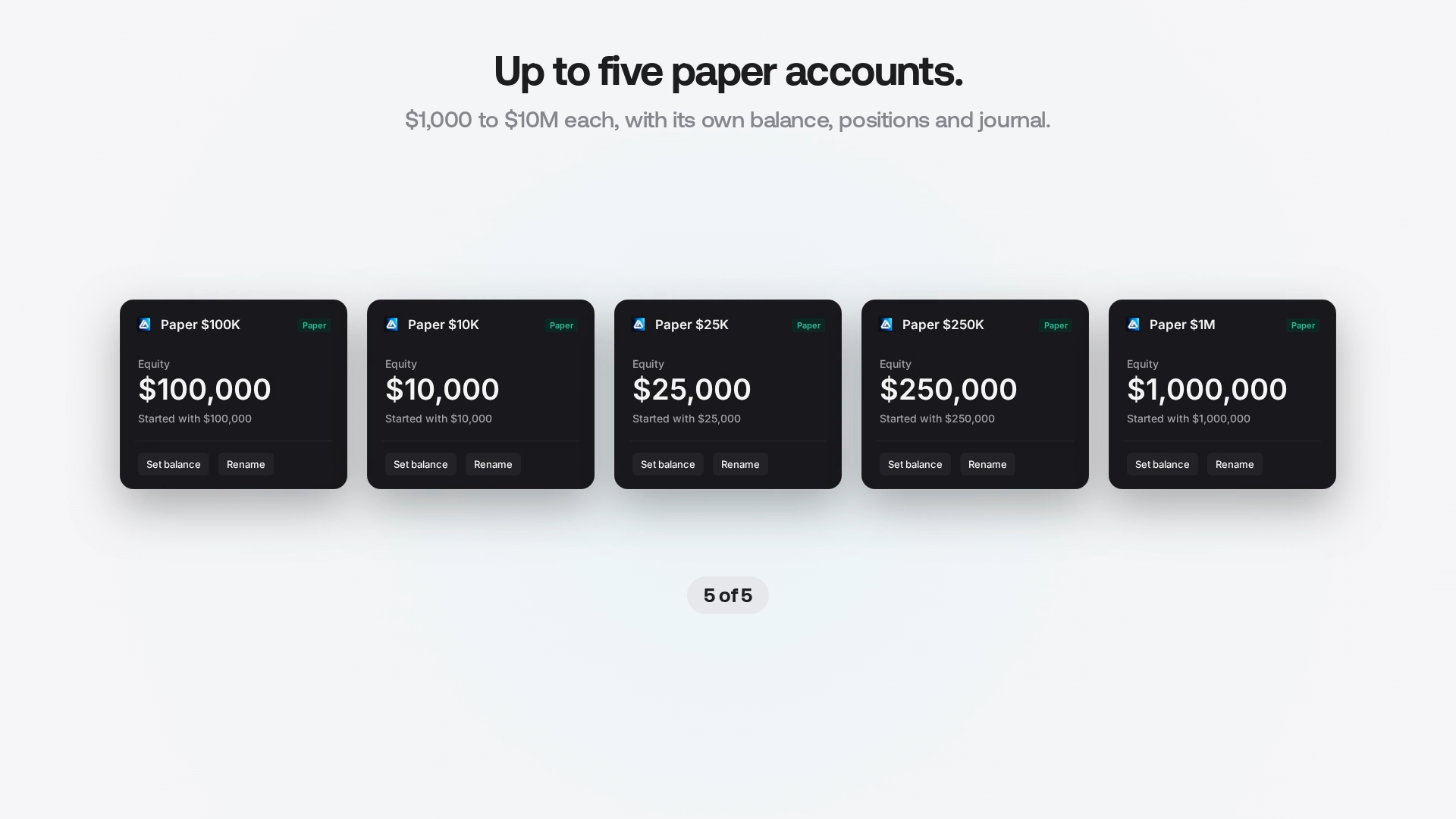
Each paper account gets its own journal in the Trade Journal. Practice trades are logged and can be reviewed like real ones: what you entered, where you placed exits, and how each trade ended. Keeping accounts separate keeps the review honest, because a session of strategy testing never blends into your prop-challenge rehearsal.
Paper Trading also works with bar replay. Buy and sell from the replay bar with the same sizing and exits you use live, and see your trades on the chart as history plays forward. Replays start at 5x speed. At the end of a session you get a results card with win rate, profit factor, expectancy, R multiples, drawdown, and an Edge Score. Treat it the way you treat any backtest: it is research, not prophecy, and it tells you with data whether your idea held up over the bars you traded.
Start Practicing
Paper Trading is live on Vela now. Open a chart, find Buy and Sell under the symbol, and place your first simulated trade against live prices. Your $100,000 paper account is already waiting.
Read next