How Time of Day Affects Trade Success

Time of day can change trading conditions, but it does not determine whether a strategy is profitable. Liquidity, spreads, news releases and auction activity can vary across a session. Your task is to find out how those conditions affect a defined setup after costs—not to assume that the busiest hour is the best hour.
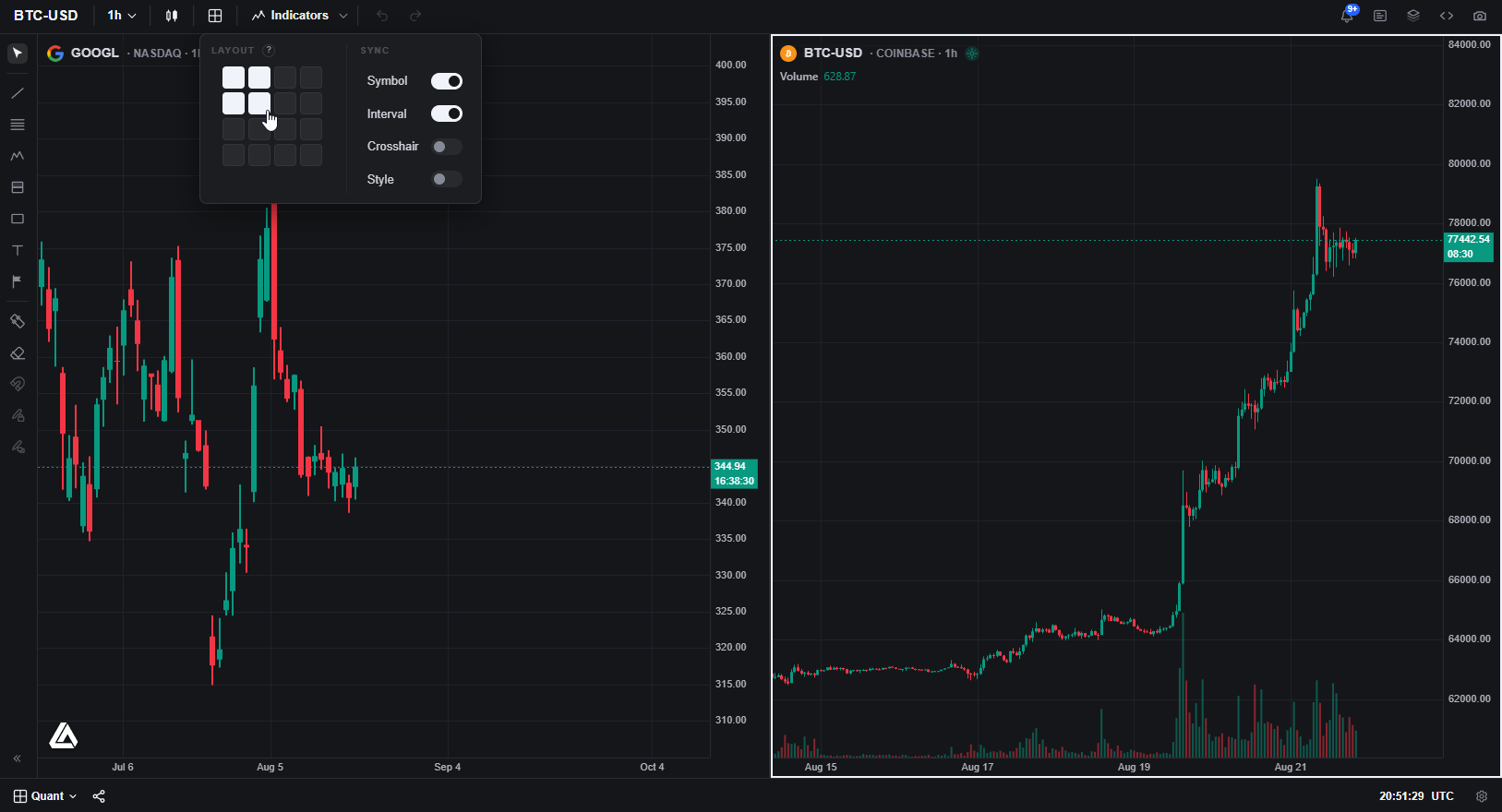
Use LuxAlgo’s native charts to inspect the market, Quant, our coding agent, to help test explicit timing rules, and a journal to review actual execution. Begin by identifying the instrument, trading venue, timezone and session you mean.
Start with the Correct Market Schedule
For NYSE equities, the regular core session runs from 9:30 a.m. to 4:00 p.m. Eastern Time on a full trading day, with opening and closing auctions. Holidays and early closes change that schedule. Check the official NYSE calendar rather than applying a normal-day template to every date.
That schedule is not a universal “U.S. session” for every asset. Futures have contract-specific trading hours and breaks. Forex session labels describe regional activity rather than one centralized exchange opening bell. Crypto markets may trade through weekends, while a particular venue can still have maintenance or interruptions.
Record a named timezone such as America/New_York instead of assuming that Eastern Time always equals UTC−5. Daylight-saving changes can shift the relationship between financial centers because countries do not necessarily change clocks on the same dates. Verify the date-specific overlap when comparing London and New York; a fixed four-hour window is not an all-year rule.
Compare the Open, Midday and Close as Research Windows
The following windows organize a study of a normal U.S. equity trading day. They are not recommendations to trade or avoid particular hours. Measure the behavior of your actual instruments and strategy within each window.
| Window in Eastern Time | What to investigate | What not to assume |
|---|---|---|
| 9:30–10:30 a.m. | Overnight information, opening auction effects, spreads and early-session price movement | More movement means easier profits. |
| 11:30 a.m.–2:00 p.m. | Instrument-specific volume, news events and the strategy’s available setups | Every market is quiet or every midday trade should be skipped. |
| 3:00–4:00 p.m. | Late-session orders, closing auction effects and your exit requirements | All institutions close their positions or the trend must continue. |
These are selected comparison windows, not a complete partition of the session. Include the intervening hours when evaluating the entire day so their trades do not disappear from your baseline.
The Opening Hour
The open is a useful place to examine how overnight information meets available liquidity. Separate auction prints from continuous trading when your data permits. A large opening print is not equivalent to volume distributed across many ordinary intraday bars, and a bar-based simulation may not reproduce auction access or fills.
Check whether the strategy relies on a completed opening range. If that range ends at 9:45, its final high and low cannot justify a trade at 9:35. Distinguish the time a setup becomes known from the time an order can actually fill.
Midday
Do not classify midday as automatically untradable. A news release, company event or market-specific development can change conditions. A strategy designed around lower movement may also behave differently from one requiring a breakout. Compare its costs and outcomes rather than prescribing trend-following or a blanket pause from the clock alone.
The Closing Hour
The phrase “power hour” describes a commonly discussed late-session window; it is not a signal. Closing auction activity, benchmark-related orders and position adjustments can affect the market, but volume alone does not reveal each participant’s motive. On an early-close day, a 3:00–4:00 p.m. rule may fall outside the core session entirely.
Specify whether your strategy holds overnight, exits before the close or uses an eligible closing-auction order. Those choices have different timing, fill and risk assumptions. Stopping new entries does not automatically close existing exposure.
Understand Regional Sessions Without Treating Them as Signals
Regional labels such as Tokyo, London, New York and Sydney can help organize forex analysis. Their relevance depends on the currency pair, available liquidity and scheduled releases. An overlap between active centers is a condition to measure; it does not establish a universal share of daily volume or a guaranteed breakout opportunity.
Define the opening and closing times used in your study and convert them for each historical date. Keep the definition consistent across backtests, chart annotations and trade records. Avoid applying a stock-exchange schedule to a forex or crypto chart simply because a session indicator displays the same city names.
Use LuxAlgo to Define and Test a Time Filter
Ask Quant to implement a complete strategy with a named timezone, eligible weekdays and an entry window. Include the underlying signal, exit logic and risk rules. Review the code before Run, then inspect trades near the session boundaries. Inputs expose parameters; Properties control simulation assumptions including sizing, commission and slippage.
For example, “enter between 10:00 and 11:00” is incomplete. Does it mean the signal bar opens in that interval, the signal is confirmed in it, or the fill occurs in it? On a five-minute chart, a signal confirmed at 10:55 may create a next-bar order around 11:00. Decide in advance whether that order is allowed. Verify the implementation against timestamps rather than relying on a shaded chart region.
Define holidays, early closes and open-position handling separately. A recurring weekday session string may not encode the exchange holiday calendar. A time filter also does not create a standalone edge if the underlying strategy has none.
Keep the Sessions Indicator in Its Proper Role
The Sessions [LuxAlgo] indicator on TradingView visualizes up to four user-defined sessions and offers ranges, trendlines, mean, VWAP and dashboard information. Its documentation notes decreasing accuracy on chart intervals above one hour. Check its session and timezone configuration before interpreting the display.
This is a chart-analysis tool, not evidence of a profitable time filter or a promise that a saved native Quant strategy has an alert. Likewise, do not assume that every VWAP resets at the stock-market open: verify the reset convention of the specific tool you use.
Measure Trade Outcomes by Time Without Biasing the Result
Start with one strategy version and a fixed dataset. Choose your time buckets before examining which one wins. Record whether trades are assigned by entry time, exit time or another rule. A trade entered in the morning and closed in the afternoon cannot be attributed consistently if you switch definitions after seeing the result.
- Count trades and distinct days: Several trades during one unusual session provide less variety than the same count spread across different conditions.
- Include costs: Compare net outcomes using realistic fills, commissions and spread/slippage assumptions for the instrument.
- Review more than win rate: Examine average gains and losses, drawdown, holding time and exposure. A winning bucket may depend on one exceptional trade.
- Preserve comparable rules: Change the timing filter while keeping other assumptions fixed, or clearly label a broader strategy change.
- Reserve later data: Evaluate the selected window on data that did not choose it. Repeatedly adjusting the window against that period removes its independence.
As an arithmetic illustration, ten morning trades averaging $12 net produce $120, while forty afternoon trades averaging $5 net produce $200. The morning has the higher per-trade average; the afternoon has the larger total in this sample. Neither number alone establishes the better strategy, especially without exposure, loss distribution and evidence across more days.
Review Execution and Build a Schedule You Can Follow
The LuxAlgo Journal supports recorded trades, notes and tags, with manual accounts, supported imports and available broker connections. It belongs to your account rather than an individual workspace. Use consistent session tags or notes when organizing your review, and verify the timezone of the timestamps you analyze.
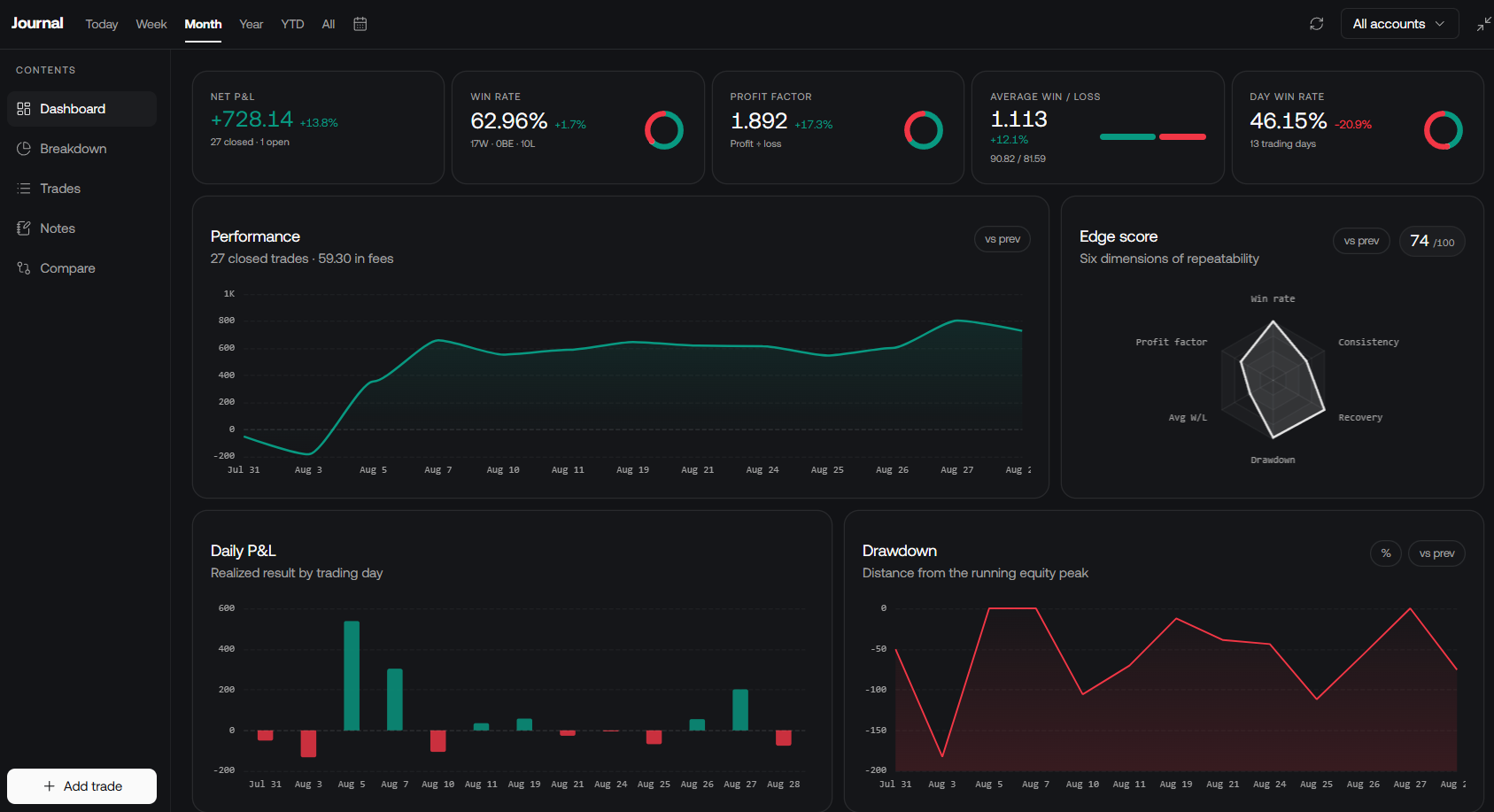
Record missed setups and execution deviations separately from filled trades. If a window appears weak because you are repeatedly distracted or cannot place the intended orders, that is useful operational evidence. It is different from proving that the market itself offers no opportunity at that time.
Choose hours you can monitor consistently, retain explicit rules for existing positions when you step away, and review the schedule at planned intervals. Use LuxAlgo charts and Quant to investigate your hypothesis; let tested results and practical execution determine whether a timing restriction is worth keeping.
FAQs
What time of day is best to trade?
There is no universal best time. The answer depends on the instrument, strategy, costs and your ability to execute the plan. Compare defined trading windows on consistent data and evaluate the selected window on a separate period before relying on it.
What are the best hours to day trade?
For U.S. equities, the opening and closing hours are useful research windows within a normal 9:30 a.m.–4:00 p.m. Eastern core session. They are not automatically more profitable than midday. Check the exchange calendar, news events and the strategy’s results after costs.
Read next