Algorithmic Trading vs. Traditional Trading: Key Differences
Algorithmic trading leverages automated, high-speed systems for data-driven trades, while traditional trading relies on human intuition and adaptability, each with unique strengths and challenges suited to different skills and goals.
Algorithmic trading hands the decision to a rule that a computer executes; traditional trading keeps the decision with a person who reads the chart and places the order. That single difference drives everything else that separates the two approaches: how fast they act, how consistently they follow their own plan, how they can be tested, what they cost to run, and how they fail. Most comparisons stop at "machines are fast and humans are flexible," which is true and not very useful. This guide compares the two on the dimensions that decide outcomes for a real trader, uses two documented incidents to show what algorithmic failure looks like, and argues that the question is rarely either-or. It closes with how Quant Charts sits between the two: a discretionary trader describes a rule, Quant, our coding agent, writes it in Pine Script, and the Backtest Summary shows whether the rule was ever worth following.
Key points:
- The core difference is who decides, not how fast. Speed matters for a narrow class of institutional strategies; consistency and testability matter for everyone.
- Rules can be tested; judgment can only be journaled. A written rule has a backtest, an out-of-sample result and a cost sensitivity. A feel for the market has a track record at best.
- Each approach fails differently. Algorithms fail fast and at scale, as the 2010 flash crash and the 2012 Knight Capital incident showed; humans fail slowly through inconsistency.
- The productive answer is usually hybrid: systematic rules with human oversight, and discretionary ideas turned into rules so they can be tested.
What Each Approach Actually Is
Algorithmic trading means a defined set of rules, expressed as code, that reads market data and produces orders without a human deciding each trade. The rules can be simple, a moving average crossover with a stop, or elaborate, a statistical model over hundreds of instruments; what makes it algorithmic is that the decision is specified in advance and executed mechanically. Traditional, or discretionary, trading means a person analyses the market, decides, and acts. The analysis may use the same indicators an algorithm would, but the final call, including when to break the plan, belongs to the trader.
Between the two sits systematic discretionary trading, which is where most serious retail traders actually live: written rules for entries, exits and sizing, executed by hand, with the trader deciding only whether to take a signal the rules produced. It is worth naming because it has most of the testability of algorithmic trading without the engineering, and because it is the bridge from one approach to the other.
| Dimension | Algorithmic | Traditional (discretionary) |
|---|---|---|
| Who decides | A rule written in advance | The trader, in the moment |
| Speed of action | Milliseconds to seconds; microseconds for co-located firms | Seconds to minutes from decision to order |
| Consistency | Identical response to identical conditions | Varies with attention, fatigue and emotion |
| Scale | Many instruments and markets at once | A handful of instruments a person can watch |
| Adaptability | Only to conditions the rules anticipated | Can recognise a regime change or a news event and stand aside |
| Testability | Backtest, out-of-sample and cost sensitivity before risking capital | Journal and review after the fact; simulated replay at best |
| Typical failure | Fast and repeated: a bug or a bad assumption acts on every signal | Slow and inconsistent: rules bent under pressure, revenge trades, overtrading |
| Cost profile | Development and infrastructure up front; low marginal effort per trade | Low set-up; the ongoing cost is the trader's time and attention |
Speed: Important, but Not Where Most Traders Think
Algorithms are faster than people, and at the top of the market that speed is the product: co-located firms compete in microseconds to capture spreads and arbitrage that exist for less time than a human can perceive. For everyone else the speed comparison is mostly irrelevant. A retail system that decides on the close of a five-minute bar and routes through a broker spends its time waiting for the broker, not thinking, and a discretionary trader acting on the same bar loses little by taking twenty seconds to click. What the algorithm gains at retail scale is not speed but attention: it watches fifty instruments through the whole session without a lapse, and it acts the same way at 3 p.m. as at 9:31. Our latency standards guide explains where microseconds genuinely matter and where they are marketing.
How Algorithms Fail: Two Documented Cases
On 6 May 2010, US equity markets suffered the event now called the flash crash: major indices fell sharply within minutes, with the Dow Jones Industrial Average losing roughly nine percent intraday before recovering most of the drop, and some individual stocks traded briefly at absurd prices before trades were cancelled. Regulators' analysis pointed to a large automated sell programme interacting with high-frequency liquidity providers that withdrew as volatility spiked. The lesson is about interaction, not speed alone: many correct algorithms, each following its own rules, produced a collective outcome none of them intended.
On 1 August 2012, Knight Capital Group, then one of the largest US equity market makers, deployed software that sent a flood of erroneous orders in the first minutes of trading. The firm lost roughly 440 million dollars within about 45 minutes and had to be rescued by outside investors. That failure was purely operational: a deployment error, no effective kill switch engaged in time, and a system fast enough to do an enormous amount of damage before anyone could stop it. European rules written afterwards, in the technical standards for algorithmic trading under MiFID II, require exactly the controls that were missing, pre-trade price and size limits and the ability to cancel all orders immediately.
Both cases describe the characteristic algorithmic failure: fast, at scale, and repeated on every signal until stopped. Discretionary failure looks nothing like it. It is a trader moving a stop, adding to a loser, or skipping the signal after three losses, one decision at a time, over months. Neither failure mode is better; they call for different defences, controls and kill switches for the machine, rules and review for the person.
Discipline and Psychology
The strongest argument for algorithmic trading is not intelligence but obedience. A rule that says exit at a two-ATR stop exits at a two-ATR stop, on the hundredth losing trade as on the first. A person following the same rule does so most of the time, and the exceptions cluster exactly where they cost the most: after a run of losses, during a fast move, at the end of a long day. Every experienced discretionary trader knows this, which is why the tools of the trade are a written plan, a journal, position limits set in advance and a review routine; they are attempts to make a person behave like a rule.
The strongest argument for the human is judgment about the unusual. A rule cannot know that a central bank has just spoken, that liquidity has vanished for a reason that will pass in an hour, or that the pattern it is trading has stopped working. A trader can, and can stand aside. Algorithms handle that risk by being switched off, which is a human decision, and by being designed with the conditions under which they should not trade, which is a human decision made earlier. In either approach the judgment is there; the difference is when it is exercised. Our guide to trade management beyond psychology covers the discretionary side, and risk management for algorithmic trading the systematic one.
Testing: The Real Dividing Line
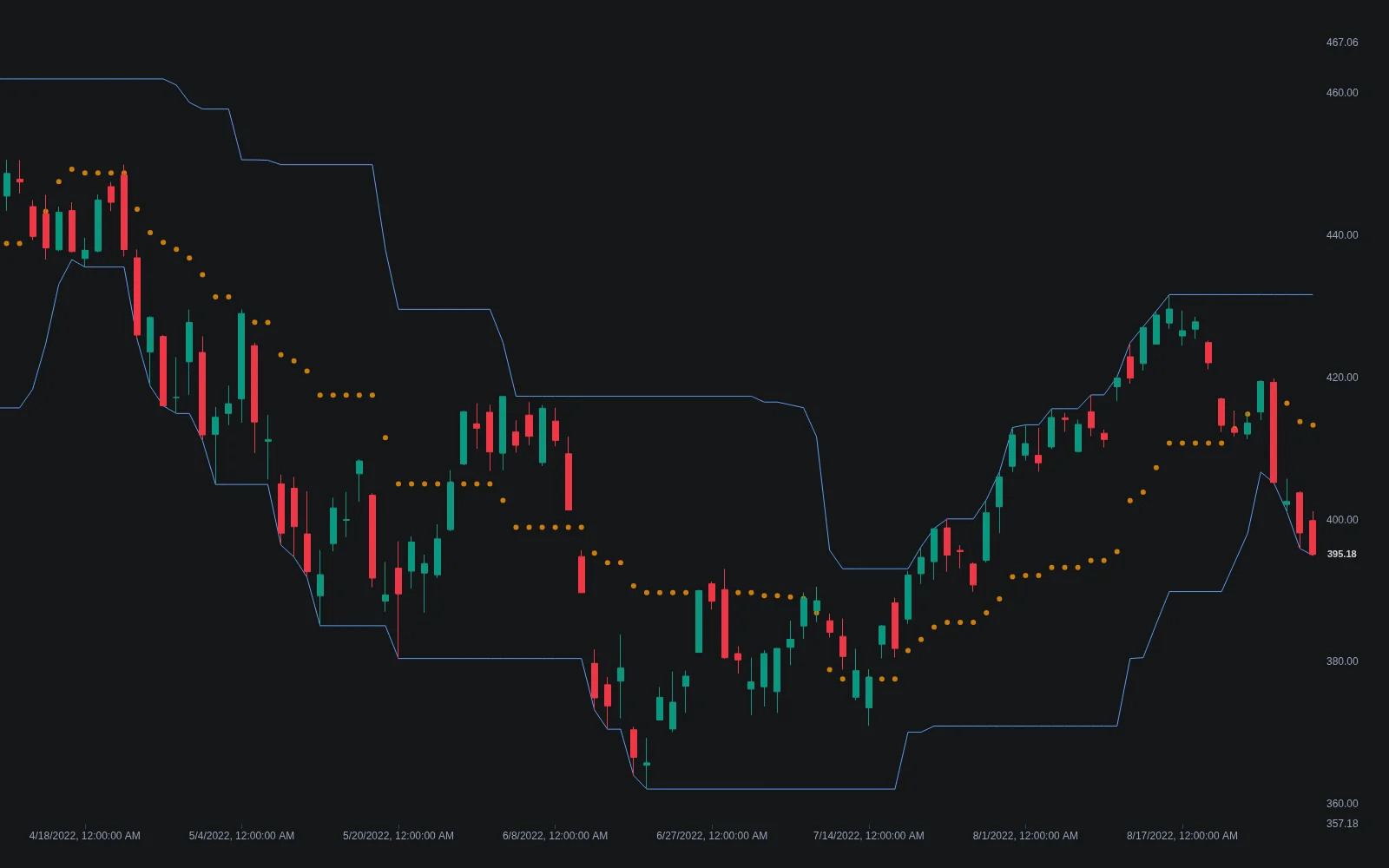
If a trading approach can be written down exactly, it can be tested: run over years of history, evaluated out of sample, stressed for costs, and rejected before a cent is risked. That is the algorithmic trader's decisive advantage, and it has nothing to do with execution. A discretionary approach cannot be tested in the same sense, because the decision rule is not fully specified; the best a discretionary trader can do is keep a rigorous journal, review it honestly, and practise on replayed data. Both are valuable, and neither is a backtest.
The advantage comes with an obligation. A backtest is only as honest as its assumptions, and the ways to fool oneself are well catalogued: fills at prices that were not available, no commission or slippage, parameters tuned on the whole history, a universe that excludes the instruments that failed. The concepts of an in-sample and out-of-sample split, walk-forward analysis and execution cost modelling exist to close those gaps, and backtesting versus forward testing covers how they fit together.
What Each Approach Costs
The cost comparison is usually overstated in both directions. A retail algorithmic set-up is a broker with an API, a data source, a small server and the time to write and test the rules; the expensive items in institutional algorithmic trading, co-location, direct feeds and engineering teams, are for a kind of trading most readers will never do. A discretionary set-up is a broker, a charting platform and a screen. The real cost of discretionary trading is the trader's time, every session, indefinitely, and the real cost of algorithmic trading is the development and monitoring effort, front-loaded and then recurring at a lower level. Neither is free, and the cheaper one depends on how much of your own time you count.
| Component | Algorithmic (retail) | Traditional |
|---|---|---|
| Execution | Broker with an API; paper account for testing | Broker with a trading front end |
| Data | Historical data for backtests plus a live feed | The charting platform's feed |
| Analysis | Backtesting engine or a charting platform's strategy tester | Charting platform, indicators, a journal |
| Infrastructure | A server or virtual machine that runs during market hours | A laptop |
| Controls | Kill switch, order limits, monitoring, alerts | Written plan, position limits, review routine |
| Recurring effort | Monitoring, maintenance, re-validation as markets change | Screen time every session |
The Hybrid Path Most Traders End Up On
In practice the two approaches converge. Systematic firms keep humans in charge of when systems run and when they are switched off. Discretionary traders write their rules down, test them, and let the rules make the routine decisions while they reserve judgment for the exceptions. The trader who benefits most from the comparison is the discretionary one who realises that a favourite setup, a Donchian breakout with a volatility filter, say, can be stated precisely, and that once stated it can be tested. If the test fails, the setup was costing money; if it passes, the trader has a rule worth following mechanically and can spend attention where judgment actually adds value.
Where Quant Charts Fits
Quant Charts is built for exactly that crossing. Describe a setup to Quant in plain language, the breakout, the filter, the stop, and Quant writes it in Pine Script and plots it on the active chart. Open Code to read what it wrote, click Run, and the Backtest Summary reports net profit, trade count, win rate, maximum drawdown and profit factor with commission and slippage set in the strategy properties. A discretionary trader gets, in minutes, the thing the comparison says they lack: a test of their own rule. For trades taken by hand, the Journal logs fills from a connected broker or manually and paints them on the chart, which is the discretionary trader's version of a backtest, assembled one trade at a time. The Making Strategies with Quant guide shows the workflow, and Library indicators such as Donchian Channels load in a click.
One boundary. The LuxAlgo platform does not place orders for you, so Quant Charts is not an algorithmic execution platform; it is where rules are written and tested, and execution remains with your broker or your own code, for example through our open-source Trade Relay and Broker SDK. For readers who want to go further in either direction, building strategies without coding and choosing a programming language mark the two roads.
A Decision Framework
| If you… | Lean towards | Because |
|---|---|---|
| Can state your setups as exact rules | Algorithmic or systematic discretionary | Rules can be tested and executed consistently |
| Rely on reading context that resists rules | Traditional, with a written plan and journal | Judgment is the edge; the plan protects it from emotion |
| Cannot watch the screen during sessions | Algorithmic | Attention is the constraint, and machines do not lapse |
| Trade a handful of instruments in one session | Traditional or hybrid | Scale is not the problem; discipline is |
| Want to know whether an idea works before risking money | Test it as a rule first | Only a specified rule has a backtest |
| Are new to markets | Systematic discretionary with paper trading | Learn the market and the discipline before adding engineering |
Conclusion
Algorithmic and traditional trading differ in who decides and therefore in everything that follows: algorithms are consistent, scalable and testable, and fail fast and at scale; people are adaptable and contextual, and fail slowly through inconsistency. Speed, the difference everyone names first, matters for a small class of institutional strategies and hardly at all for a retail trader acting on closed bars. The useful conclusion is not to choose a side but to move discretionary ideas towards rules whenever they can be stated, test the rules honestly, and keep human judgment for the situations rules cannot anticipate. Quant Charts makes the first step short: describe the rule, read the Pine Script Quant writes, run it, and let the Backtest Summary settle the argument.
Key Takeaways
- Who decides is the difference. Rules in advance versus judgment in the moment; speed follows from that, not the other way round.
- Testability is the algorithmic edge. A specified rule has a backtest, an out-of-sample result and a cost sensitivity.
- Failure modes differ. Fast and at scale for machines, as in 2010 and 2012; slow and inconsistent for people. Defend against each accordingly.
- Costs are mostly time. Retail algorithmic set-ups are modest; the institutional expense is for a kind of trading most readers will not do.
- Go hybrid. State setups as rules, test them on Quant Charts where Quant writes the Pine Script, and keep judgment for the exceptions.
FAQs
What is the main difference between algorithmic and traditional trading?
Who makes the decision. In algorithmic trading a rule written in advance and executed by software decides each trade; in traditional or discretionary trading a person analyses the market and decides in the moment. Speed, consistency, scalability and testability all follow from that difference rather than defining it.
Is algorithmic trading more profitable than manual trading?
Neither approach is profitable by itself. Algorithmic trading is more consistent and can be tested before capital is risked, which removes a common source of losses; discretionary trading can adapt to conditions a rule never anticipated. Profitability depends on whether the underlying rule or judgment has an edge after costs, which a backtest can check for a rule and only a track record can check for judgment.
Does speed matter for retail algorithmic traders?
Rarely. A retail system that decides on closed bars and routes through a broker spends most of its latency in the broker's path, and a discretionary trader acting on the same bar loses little by taking a few seconds. Microsecond speed matters for co-located institutional strategies. What retail algorithms gain is attention and consistency, not speed.
What are the biggest risks of algorithmic trading?
Fast, repeated failure. A bug, a bad deployment or an unanticipated market condition acts on every signal until the system is stopped, as the 2010 flash crash and the 2012 Knight Capital incident showed at market scale. The defences are pre-trade limits on price and size, a kill switch that cancels everything, monitoring, and honest testing that includes costs and out-of-sample data.
Can a discretionary trader benefit from algorithmic tools?
Yes, and this is the most productive use of the comparison. Any setup that can be stated exactly can be tested as a rule; if it fails the test it was costing money, and if it passes it can be followed mechanically while the trader reserves judgment for exceptions. On Quant Charts, describing the setup to Quant produces the Pine Script and a Backtest Summary in minutes.
How does Quant Charts fit between the two approaches?
It is where discretionary ideas become testable rules. Describe the rule to Quant and it writes the strategy in Pine Script, which you can read in Code and run with Run; the Backtest Summary reports the result with commission and slippage. The Journal records trades taken by hand for review. The LuxAlgo platform does not place orders for you, so execution stays with your broker or your own code, for example through our open-source Trade Relay and Broker SDK.
References
LuxAlgo Resources
- Quant Charts
- LuxAlgo Quant
- Making Strategies with Quant
- Journal Documentation
- Donchian Channels Indicator
- In-Sample and Out-of-Sample Split Concept
- Walk-Forward Analysis Concept
- Execution Cost Modeling Concept
- Latency Standards in Trading Systems
- Risk Management Strategies for Algo Trading
- The Truth About Trade Management: Beyond Psychology and Into Strategy
- Backtesting vs Forward Testing: Validating Your Strategy
- How to Build Trading Strategies Without Coding
- Best Programming Languages for Algorithmic Trading
- Evolution of Algo Trading: From Scripts to AI
- Strategy Backtesting with Quant
External Resources
Read next