SPACs Uncovered: In-Depth Analysis
A special purpose acquisition company, or SPAC, is a shell company that raises cash in an initial public offering with one stated goal: to combine with a private operating business and take it public. Investors who buy at the IPO, or on the open market afterwards, are buying a management team, a trust account and a deadline rather than a business. This guide explains how the structure works, what units, shares and warrants are, what happens at the merger stage, how the SEC's 2024 rules changed the disclosure regime, and how to chart a SPAC and its post-merger successor in Quant Charts.
What a SPAC Is
The SEC classifies a SPAC as a type of blank check company: a development-stage company with no operating business whose plan is to merge with or acquire a company it has not yet identified. At the time of its IPO a SPAC typically holds nothing but cash, cash equivalents and nominal other investments, including the offering proceeds. Its prospectus may name a target industry, but the SPAC is not obligated to pursue a deal in that industry.
The IPO proceeds, less amounts used for certain taxes, are held in a trust or escrow account until one of two things happens: the SPAC completes its business combination, known as the de-SPAC transaction, or it liquidates because no deal was completed in time. A SPAC typically gives itself two years to complete a transaction, and some allow up to three. Extensions may require a shareholder vote. An exchange-listed SPAC is generally required to complete its de-SPAC within three years of its IPO or face delisting.
SPAC vs Traditional IPO
A traditional IPO is the end of a company's private life: it has an operating history, audited financial statements and a price set by demand for the business. A SPAC IPO is the start of a search. The table summarises what the SEC's investor bulletin says differs between the two routes.
| Feature | SPAC IPO | Traditional IPO |
|---|---|---|
| What goes public | A shell company holding cash | An operating business |
| Offering price | Typically $10 per unit | Set by demand and valuation of the business |
| What you rely on | The sponsor team's ability to find and close a deal | The company's disclosed operations and financials |
| Securities sold | Units of common stock plus warrants | Common stock |
| Exit if you dislike the outcome | Redeem for a pro rata share of the trust at the de-SPAC | Sell in the market |
| Time limit | Typically two years, up to three, to complete a deal | None |
Because the SPAC has no operating history to evaluate, the SEC directs investors to the business background of management and sponsors, and to the prospectus and periodic reports filed in the EDGAR database.
Units, Shares and Warrants
A SPAC IPO usually sells units. Each unit bundles a share of common stock with a warrant, or a fraction of one. A warrant is a contract giving the holder the right to buy additional shares from the company in the future at a set price, often above the stock price at issuance. The unit trades as a single security for a period after the IPO; later, the common stock and the warrants may begin trading separately under their own tickers, with the SPAC typically announcing the split in a Form 8-K and a press release.
| Security | What it is | What to check |
|---|---|---|
| Unit | Common stock plus a warrant or fraction of a warrant | When separate trading begins; the unit's ticker suffix |
| Common stock | The share that can be redeemed for a pro rata part of the trust | Trust value per share versus the market price |
| Warrant | The right to buy shares later at a set price | Exercise price, expiry, and the conditions under which the SPAC may redeem it |
Warrant terms vary widely between SPACs. The SEC's bulletin gives the common example of a redemption trigger when the stock trades above $18 for a specified period. If the SPAC calls its warrants and a holder misses the notice and fails to exercise within the window, the warrants can become essentially worthless. Holders may not receive direct notice, so the SEC recommends monitoring the SPAC's filings on EDGAR.
The Trust Account and Redemption Rights
The trust account is what backs the common stock. At the de-SPAC, shareholders typically may redeem their shares for their pro rata share of the funds on deposit instead of becoming shareholders of the combined company. If the SPAC liquidates, shareholders receive the same pro rata amount.
The redemption value is tied to the trust, not to what you paid. The SEC's illustration: a SPAC prices its IPO at $10 per share and you later buy 100 shares in the market at $12. Your shares are associated with roughly $10 per share in the trust, so a redemption returns about $1,000, not the $1,200 you paid. Unit and share prices can move for reasons unrelated to whether the SPAC will succeed, so the gap between market price and trust value is the first thing to check before buying in the open market.
SPACs generally invest trust proceeds in relatively safe, interest-bearing instruments, but no rule requires that. The prospectus states how the trust is invested, when cash can be released, and how redemption works.
The De-SPAC Transaction
Once management identifies a target, it negotiates a business combination, often structured as a reverse merger in which the target merges into the SPAC or a subsidiary. If a shareholder vote is required, the SPAC provides a combined proxy statement and prospectus; if the sponsor and affiliates hold enough votes to approve the deal without public shareholders, an information statement and prospectus; and where neither is required, a tender offer statement covering redemption rights. These documents disclose, among other things:
- The background of the transaction, including contacts and negotiations.
- The material terms, including any related financing and any payments from the sponsor to investors.
- The reasons for the deal and for its structure and timing.
- Material differences in the rights of SPAC and target security holders versus holders of the combined company.
- Material interests of the sponsor and of the officers and directors of both companies.
- Whether shareholders have redemption or appraisal rights, and any board determination that the deal is advisable.
Sponsor incentives deserve particular attention. Sponsors generally acquire their equity on more favourable terms than IPO or open-market investors, sometimes for nominal consideration, so they benefit more from closing any deal and may accept terms less favourable to public holders. De-SPAC transactions also often need additional financing, frequently involving the sponsor, which can dilute public shareholders or carry rights that differ from theirs.
The SEC's 2024 SPAC Rules
On January 24, 2024 the SEC adopted rules intended to align SPAC IPOs and de-SPAC transactions more closely with traditional IPOs. The rules require enhanced disclosure of conflicts of interest, sponsor compensation and dilution, and additional information about the target company so that shareholders can vote and invest on a fuller record. In certain situations the target must sign the registration statement as a co-registrant, taking responsibility for its disclosures. The safe harbor for forward-looking statements under the Private Securities Litigation Reform Act is unavailable to blank check companies, including SPACs, and projections used in de-SPAC filings must disclose their material bases and assumptions. The rules became effective 125 days after publication in the Federal Register.
Risks Investors Should Weigh
- You are buying a search, not a business. Until the de-SPAC there is no operating company to analyse; the decision rests on the sponsor's record and the terms in the prospectus.
- Conflicts and dilution. Sponsor economics, founder shares, warrants and deal-related financing can all reduce the public shareholder's stake in the combined company.
- Deal scarcity and deadlines. When many SPACs are hunting at once, attractive targets can become scarcer, and an approaching deadline can pressure a sponsor to close a weaker deal.
- Price versus trust value. Open-market prices can detach from the roughly $10 per share in trust; redemption returns the trust value, not the purchase price.
- Warrant mechanics. Redemption calls, exercise windows and expiries can wipe out a warrant position if they are missed.
- Promotion. The SEC's investor alert warns against investing in a SPAC because a celebrity or well-known investor sponsors or endorses it, and recommends checking backgrounds on Investor.gov, reading the prospectus on EDGAR, and weighing the investment against your own goals and risk tolerance.
Where Quant Charts Fits
LuxAlgo does not evaluate SPAC filings, hold shares or place orders. What Quant Charts adds is the market-data side of the analysis: charting an exchange-listed SPAC's stock and, after the de-SPAC, the combined company, with volume-based reference levels and a tested plan rather than headlines.
Chart the listed securities. Quant Charts sources US equities, including ETFs, from Cboe EDGX on every plan. Use Symbol Search to look up the SPAC's common stock ticker; a combined company that keeps trading on the exchange under a new symbol is charted the same way. Whether a particular unit or warrant ticker is available depends on the symbol feed, so check Symbol Search before building a plan around it.
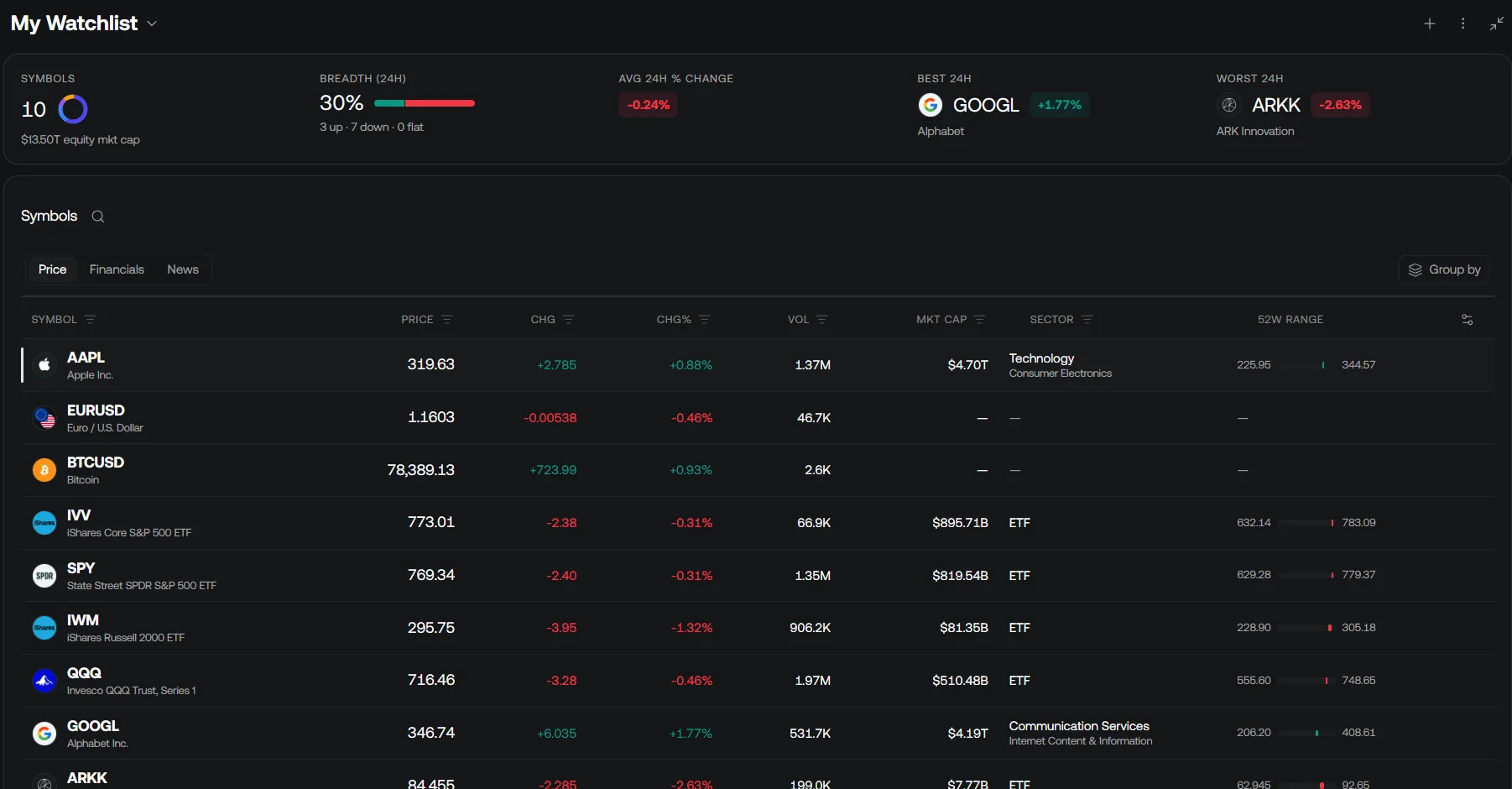
Track the lifecycle in a watchlist. The Watchlist Advanced view groups symbols into sections, so a SPAC list can separate pre-deal shells, announced deals and completed de-SPACs. Its Price, Financials and News tabs sit side by side: the News tab is a headline feed for the listed symbols, and the Financials tab populates once an operating company is in the ticker.
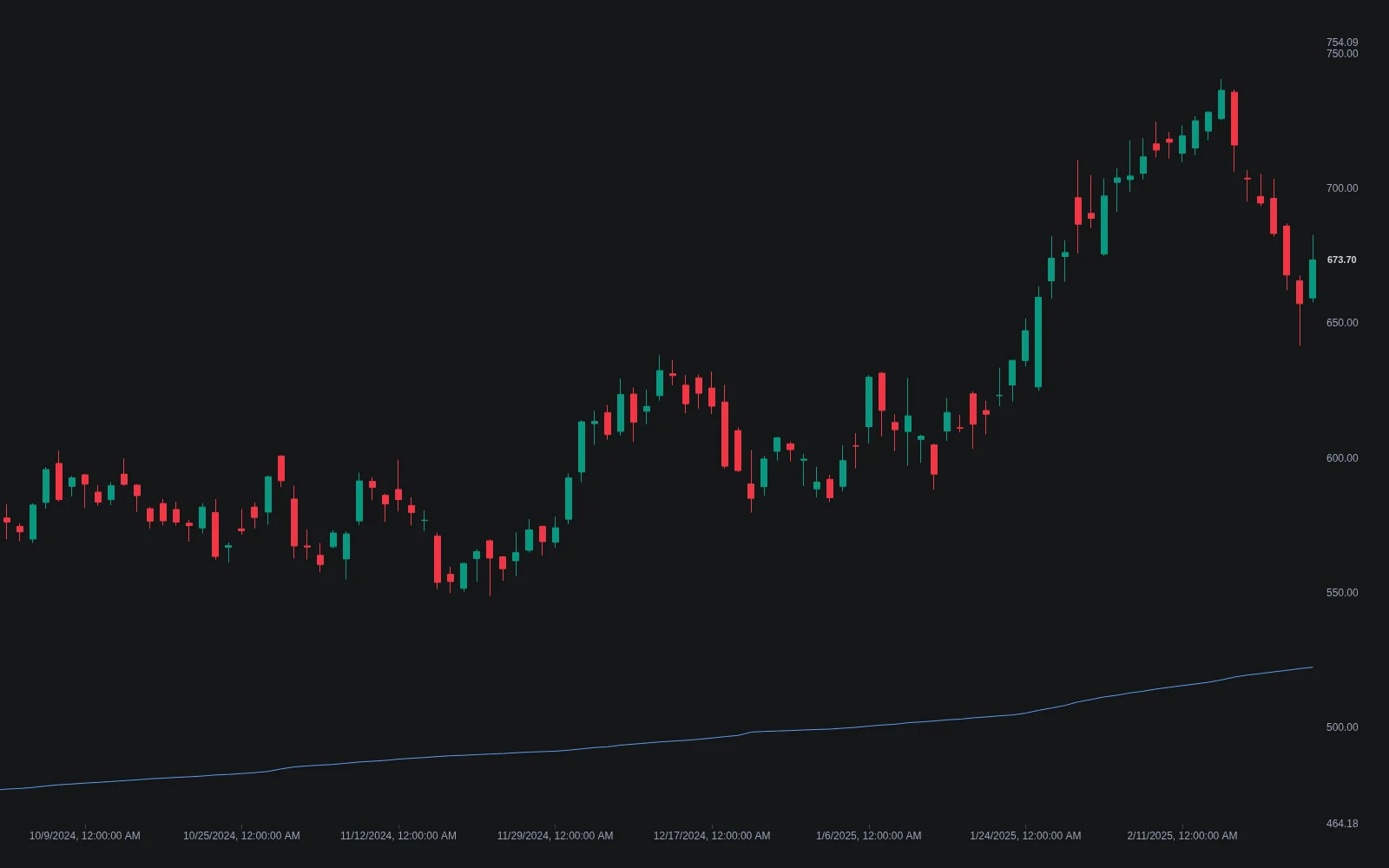
Anchor volume-weighted levels to SPAC events. The anchored VWAP starts its calculation from a bar you choose, such as the deal-announcement candle or the first session after the de-SPAC closes, and tracks the average price paid since that event. Price holding above a rising anchored VWAP from the announcement bar means the average buyer since the news is in profit; price below it means the average holder is underwater. The Anchored VWAP indicator plots the line with optional standard-deviation bands.
Read participation, not just price. Relative volume expresses today's volume as a multiple of the symbol's own baseline, which is how a redemption deadline, a warrant call or a merger vote shows up as unusual participation before it shows up in price direction. A volume profile over the post-merger range shows where most shares changed hands, and therefore where the largest inventory of holders sits relative to the trust value.
Test the plan with Quant. Describe a rule to Quant, our coding agent, in plain language, for example a long entry when price reclaims the volume-weighted average anchored to the de-SPAC date with a stop under the prior swing low. Quant writes the Pine Script; open Code to inspect it, then click Run. The Backtest Summary reports net profit, trade count, win rate, max drawdown and profit factor, and the strategy's Properties hold commission and slippage so the result reflects realistic costs. Because post-merger SPAC shares often have short histories, treat any summary built on a handful of trades as noise, and re-run the rule across several tickers in the backtest viewer before trusting it.
The video below shows how a watchlist is created in Quant Charts, the starting point for tracking a SPAC list.
Record fills in the Quant Charts Journal and tag them by lifecycle stage, so the review compares pre-deal, announced and post-merger trades separately.
Where Each Tool Stops
- SEC filings on EDGAR hold the prospectus, 8-K notices, proxy or information statements and tender offer documents. They are the only source for trust terms, sponsor economics, warrant terms and redemption deadlines.
- Quant Charts charts the listed securities, groups them in watchlists, anchors volume-weighted levels to events and backtests rules with Quant. It does not read filings, value the trust or place orders.
- The Library explains the anchored volume-weighted average price, relative volume, volume profile and drawdown statistics and provides indicators that implement them.
- The Journal stores your own trades and computes P&L, drawdown and an Edge Score from them.
Conclusion
A SPAC is a deadline-bound shell whose value rests on a trust account, a sponsor team and the deal it eventually strikes. Units split into shares and warrants with different economics, the trust pays redemption at roughly the IPO price regardless of what you paid, and the de-SPAC stage brings a redemption decision, a vote in many cases and a set of disclosures about the target and the sponsor's interests. The SEC's 2024 rules narrowed the disclosure gap with traditional IPOs but did not remove the conflicts built into the structure. For the market side, Quant Charts adds event-anchored levels, participation measures and tested rules on the listed securities; the filings remain the place where the investment case is made or broken.
Key Takeaways
- A SPAC is a blank check shell that raises cash at IPO, typically $10 per unit, and must complete a de-SPAC transaction within a deadline, typically two years and generally within three for exchange-listed SPACs.
- Units contain common stock and warrants; they later trade separately, and warrant redemption terms can make a position worthless if notices are missed.
- Redemption at the de-SPAC returns a pro rata share of the trust, not the market price paid.
- Sponsors acquire equity on better terms than public investors, so conflicts and dilution are structural.
- The SEC's January 2024 rules expanded conflict, compensation, dilution and projection disclosure and made the target a co-registrant in certain deals.
- Quant Charts charts the listed shares, anchors volume-weighted averages to deal events and backtests rules through Quant; it does not read filings or trade.
FAQs
What is a SPAC?
A special purpose acquisition company is a blank check shell that raises money in an IPO and holds it in a trust account while it searches for a private operating company to combine with. The combination, called the de-SPAC transaction, takes the target public.
How does a SPAC differ from a traditional IPO?
In a traditional IPO an operating company with a history and financial statements sells shares at a demand-based price. In a SPAC IPO a shell sells units, typically at $10, and investors rely on the sponsor to find a deal later. SPAC investors can redeem shares for their trust value at the de-SPAC.
What are SPAC units and warrants?
A unit bundles a share of common stock with a warrant or a fraction of one. A warrant gives the right to buy shares later at a set price. Units later split into separately traded stock and warrants, and warrants can be redeemed by the SPAC under conditions set out in the prospectus.
What do I get if I redeem my SPAC shares?
Your pro rata share of the trust account, tied to the IPO price rather than the price you paid. The SEC's example: shares bought at $12 in the market redeem for about $10 each if that is the trust value per share.
What did the SEC's 2024 SPAC rules change?
Adopted on January 24, 2024, they require enhanced disclosure of conflicts, sponsor compensation, dilution and target information, make the target a co-registrant in certain de-SPAC deals, remove the forward-looking statement safe harbor for blank check companies, and require projections to disclose their bases and assumptions.
Can I chart SPACs in Quant Charts?
Yes, for exchange-listed SPAC common stock and post-merger companies, which Quant Charts sources from Cboe EDGX. You can group them in a watchlist, anchor a volume-weighted average to deal events, measure relative volume and backtest rules through Quant. Quant Charts does not read SEC filings or place orders, and unit or warrant tickers depend on Symbol Search availability.
References
LuxAlgo Resources
- Anchored VWAP, Relative Volume and Volume Profile (LuxAlgo Library)
- Anchored VWAP and Drawdown Statistics indicators
- Quant Charts market data and Watchlist Advanced (LuxAlgo Docs)
- Making strategies with Quant and Reading a strategy backtest (LuxAlgo Docs)
- Quant Charts Journal (LuxAlgo Docs)
External Resources
- SEC Investor.gov: What You Need to Know About SPACs, Updated Investor Bulletin (August 2024)
- SEC Press Release 2024-8: Rules to Enhance Investor Protections Relating to SPACs, Shell Companies, and Projections
- SEC Investor Alert: Celebrity Involvement with SPACs
- SEC Investor.gov Glossary: Blank Check Company
- NYSE: Special Purpose Acquisition Companies
Read next