Gann HiLo Activator
 By LuxAlgoJun 23, 2026
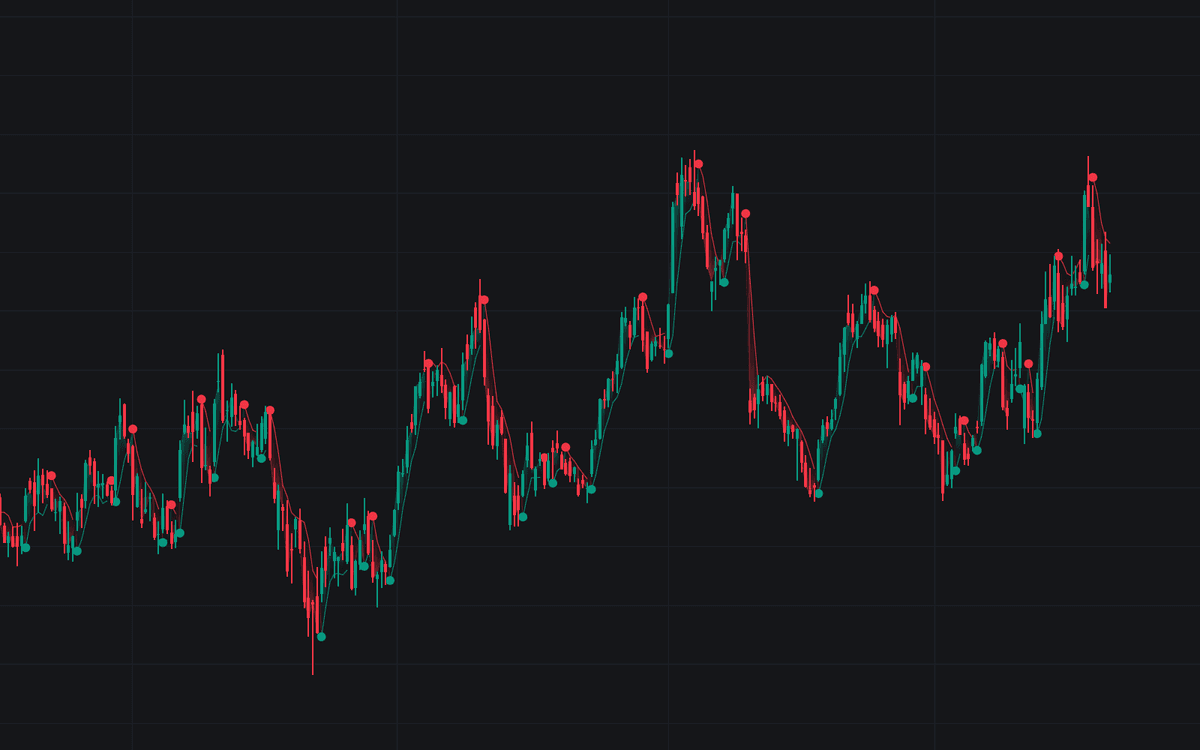

Gann HiLo Activator trails price with a stepped line that swaps sides only on a close through it: while the state is up the line is a short average of the lows under price; when a close breaks it, the state flips and the average of the highs takes over above. This is the definitive clean build of the Gann HiLo Activator: Krausz's construction, comparing each close against the previous bar's averages, with only visual and alert plumbing added. Because only closes flip the state, intrabar pokes leave it unchanged; this build turns those pokes into signals of their own.
How to Trade the Gann HiLo Activator?
- Bullish flip: a close above the high-side average. The line jumps beneath price and trend-followers treat it as the entry or re-entry cue; bearish flips mirror it.
- Trailing stop reference: the active line is a natural stop rail. Up-state positions exit on the close that flips the state rather than on a wick touch.
- Pullback tests that held: an intrabar poke through the line that closes back on the trend side (alertable both ways) marks an absorbed test, often a lower-risk continuation entry than the flip itself.
Gann HiLo Activator Settings
- Length (default 3): lookback of both averages, the classic default from Krausz's construction. Longer flips less often and trails looser; shorter hugs price and whipsaws in ranges.
- Average Type (default SMA): the classic simple average, or the EMA / VWMA substitutions from later variants.
- Flip Markers (default enabled): a dot on the new side of price at each state flip.
- Gradient Trail Fill (default enabled): shades the span between price and the line, the room a close has left before the state would flip.
- Bullish/bearish colors and Line Width (default 1) are cosmetic.
Frequently Asked Questions

Original indicatorBuilt in-house by LuxAlgo
The Library is free. Quant makes it yours.
Pull any concept or indicator into Quant: rebuild it, retune it, or turn it into a backtested strategy of your own.