Inverse Head & Shoulders
 By LuxAlgoMay 6, 2026
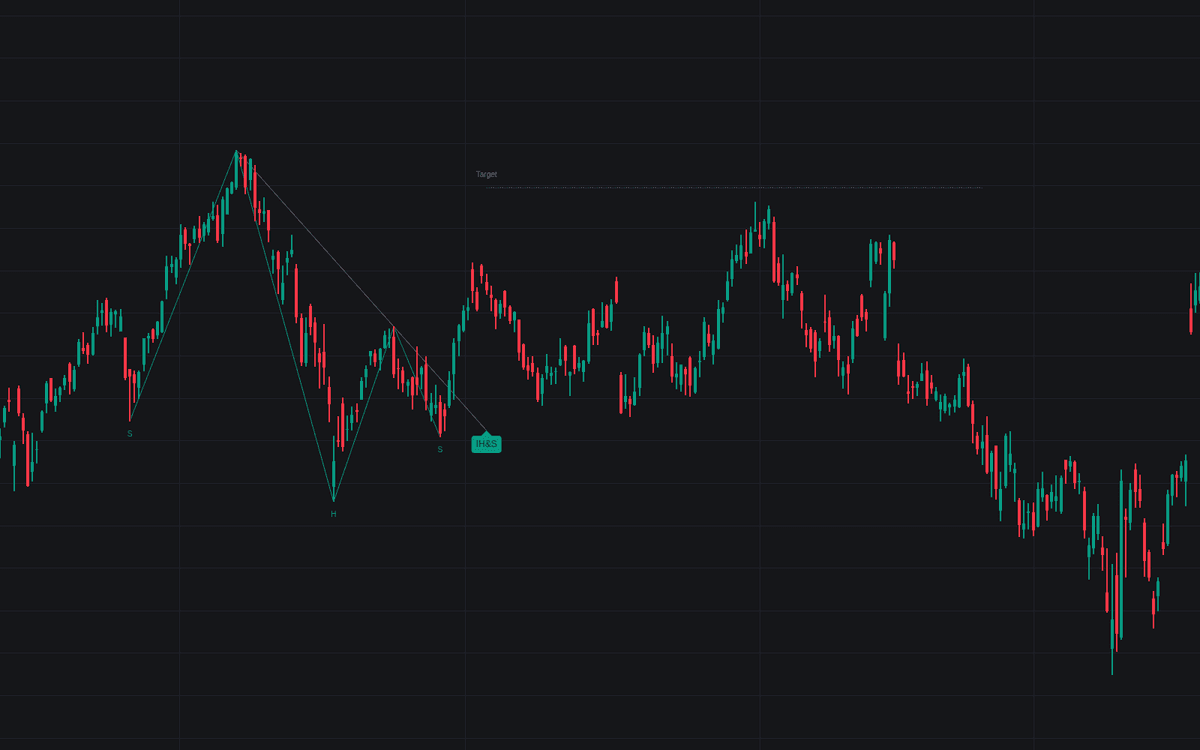

Inverse Head & Shoulders finds the classical three-trough bottom (head below both shoulders, neckline across the intervening rally highs) and manages it from formation through target, the inverse head and shoulders implemented in full for the library. Patterns build from swing pivots with S-H-S markers, and by default must terminate a genuine downtrend: the head has to print the lowest low of the lookback.
How to Trade the Inverse Head & Shoulders?
- Forming pattern: once the right shoulder is in place, the outline and dashed neckline appear, the anticipated entry some traders take, stop under the head.
- Neckline breakout: a firm close through the neckline (dashed while forming, solid once broken) confirms the reversal and prints the IH&S label; an optional filter demands breakout volume, or the full classical template.
- Retest: an R marks the first successful hold of the broken neckline from above, a common second entry.
- Measured target and stop: the head-to-neckline height projects upward from the break as a dotted level; a close below the right-shoulder low invalidates at any stage.
Inverse Head & Shoulders Settings
- Swing Length (default 10): pivot width for troughs and rally highs. Larger values build cleaner, rarer patterns.
- Preceding Downtrend (default enabled) with Downtrend Lookback (default 100): the head must undercut this many bars.
- Min Head Depth % (default 15): how clearly the head must bottom below both shoulders, as a share of pattern height.
- Max Shoulder Imbalance % (default 100): tighten below 100 to enforce shoulder symmetry.
- Breakout Window (default 2): pattern widths allowed before a forming setup goes stale.
- Volume Filter (default Off) with Volume Average Length (default 20) and Breakout Volume Multiplier (default 1).
- Show Forming Patterns, Measured Target and Neckline Retests (all default enabled).
Frequently Asked Questions

Original indicatorBuilt in-house by LuxAlgo
The Library is free. Quant makes it yours.
Pull any concept or indicator into Quant: rebuild it, retune it, or turn it into a backtested strategy of your own.