Wide-range Bar
 By LuxAlgoJun 15, 2026
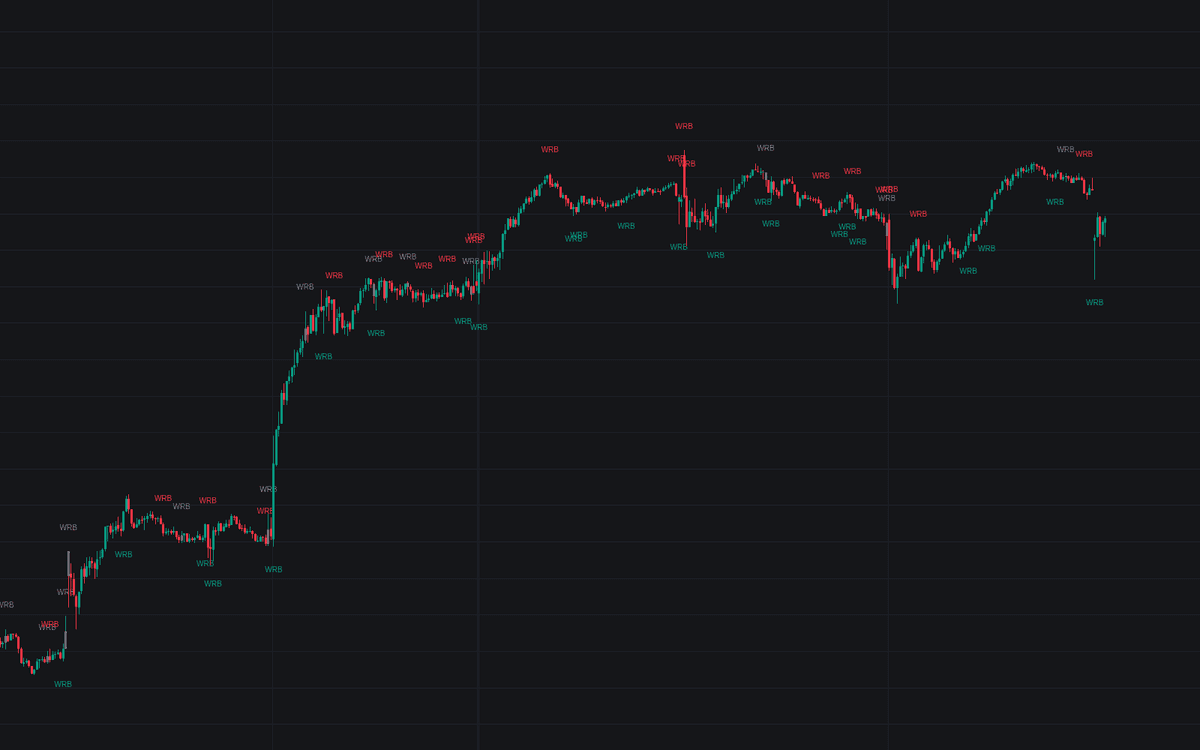

Wide-range Bar is the definitive clean build of wide-range bar detection: it flags bars that traveled far more than their recent context and reads conviction from where they closed. Two conventions ship as a switch: the widest span among its last N bars, or a bar exceeding a multiple of trailing average range or ATR, with the baseline taken one bar back so a bar never inflates its own threshold.
How to Trade the Wide-range Bar?
- Close near the high: one-sided initiative buying, a breakout validation candidate.
- Close near the low: the bearish mirror. Initiative selling, a breakdown validation candidate.
- Mid-range close: unusual intensity without a winner, a two-sided fight, not a directional statement.
Events are evaluated on confirmed bars only; each tag's tooltip reports the range against its baseline and the close's position. An optional dotted level at the latest bar's midpoint serves as a pullback reference, and four alerts cover all the reads.
Wide-range Bar Settings
- Detection Method (default Widest of Last N Bars): how a bar qualifies; the alternative is Multiple of Average Range / ATR.
- Widest of Last (N) Bars (default 7): window for the widest-of test.
- Range Multiple (default 1.5) and Baseline (default Average Range): threshold multiple and the trailing series it multiplies; the ATR option also counts gaps.
- Baseline Length (default 14): bars in the trailing baseline.
- Extreme Close Zone (%) (default 33): span portion from each extreme counting as a one-sided close.
- Require Volume Expansion (default off) with Volume Average Length (default 20): only flag bars whose volume beats its trailing average.
- Style toggles: Show WRB Labels and Color Wide-range Bars (on by default), Midpoint of Latest WRB (off by default).
Frequently Asked Questions

The Library is free. Quant makes it yours.
Pull any concept or indicator into Quant: rebuild it, retune it, or turn it into a backtested strategy of your own.