Marubozu
 By LuxAlgoMay 29, 2026
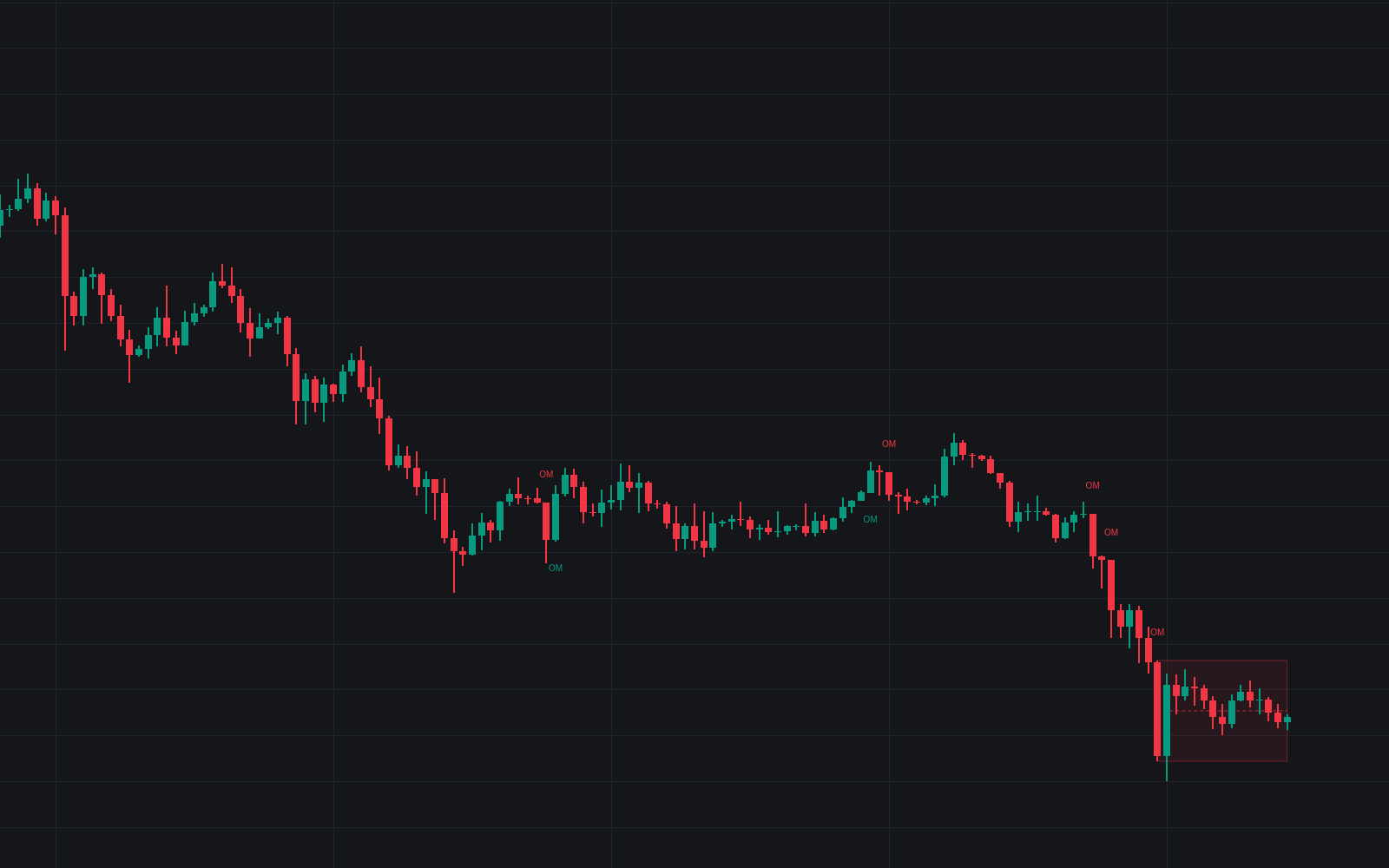

Marubozu detects the shaved candle in its three textbook forms (full, opening and closing marubozu) and keeps only the ones big enough to matter. A wick tolerance of 3% of the bar's range decides whether an end counts as shaved, the real body must beat the 20-bar typical range, and optional volume and trend filters gate detections further. Kept candles are recolored and tagged M, OM or CM, and the latest leaves a reference frame (extremes plus dashed midpoint) extended right.
How to Trade the Marubozu?
- M / OM / CM tag prints: one side held the bar from first trade to last; hover the tag for body, wick, range and volume statistics.
- Price holds beyond the midpoint: respect of the dashed mid keeps the drive credible.
- Midpoint lost: a close back through the mid against the candle reads as the original pressure being absorbed, its own alert.
- Fully retraced: a close beyond the far extreme swallows the bar and retires the frame.
Where a detection prints decides its meaning: Counter-Trend hunts initiative candles turning out of declines and bases, With Trend keeps continuation drives.
Marubozu Settings
- Maximum Wick (%) (default 3): largest wick allowed at a shaved end, as a share of the range.
- Detect Opening Marubozu / Detect Closing Marubozu (defaults on): include the partial forms.
- Typical Range Length (default 20): trailing window for the range and volume yardsticks.
- Minimum Body Multiple (default 1): body versus typical range; 0 keeps every size.
- Volume Filter (default off) with Multiple (default 1): demand above-average volume.
- Trend Context (default Any) with Trend SMA Length (default 50): the location filter.
- Candle Levels (default on) with Keep Last (default 1): reference frames, and how many persist.
- Style toggles: Color Marubozu Candles (on) and Show Labels (on).
Frequently Asked Questions

The Library is free. Quant makes it yours.
Pull any concept or indicator into Quant: rebuild it, retune it, or turn it into a backtested strategy of your own.