Fractal Nesting
 By LuxAlgoApr 24, 2026
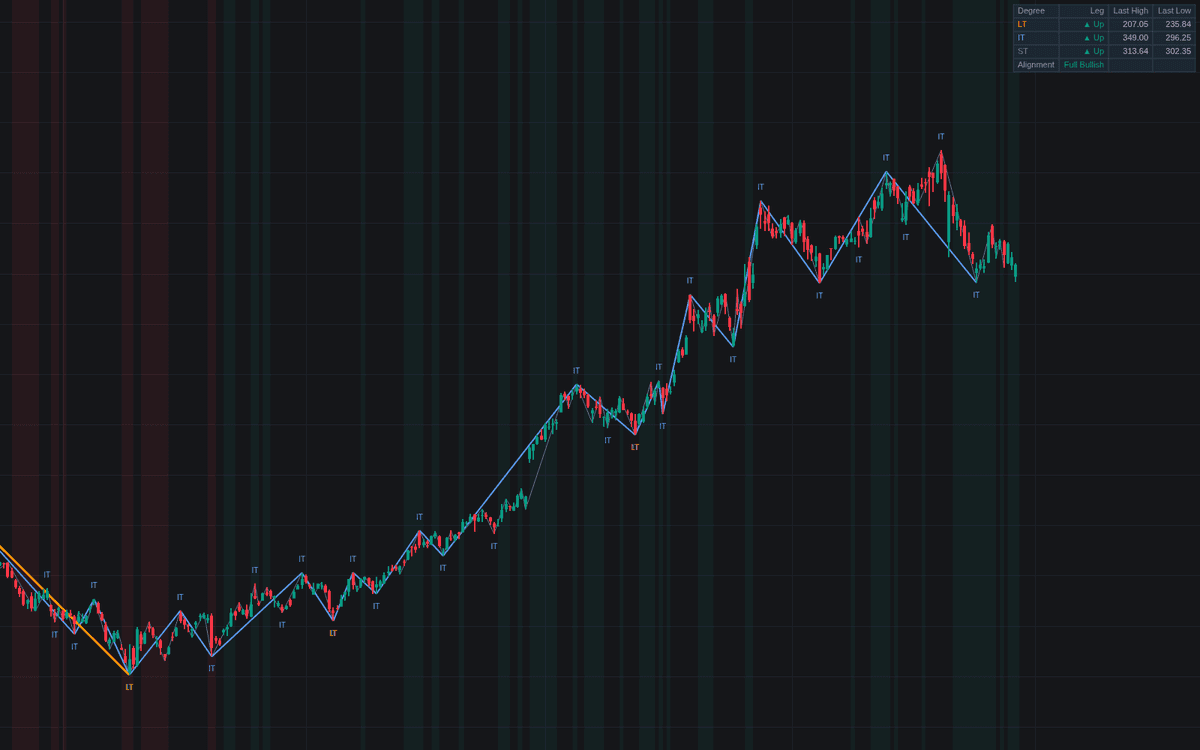

Fractal Nesting draws market structure at three degrees at once: a short-term zigzag built from raw swing pivots, an intermediate-term path assembled from short-term swings, and a long-term path assembled from intermediate ones. It is the definitive clean build of fractal nesting: one recursive rule applied degree over degree, with ST/IT/LT tags, an alignment tint and a per-degree dashboard. Each higher degree is assembled from confirmed pivots of the degree below, so the three paths nest by construction.
How to Trade the Fractal Nesting?
- Full bullish or bearish alignment: when all three degrees are in same-direction legs the background tints and an alert fires, the trend-following condition.
- Mixed alignment: a short-term leg turning against the higher degrees is where pullbacks end or reversals begin; the alignment-broken alert flags the moment agreement fails.
- New IT and LT pivots: each confirmation (alertable) updates the dashboard's Last High and Last Low, tiered invalidation for the entry idea and the wider thesis.
Fractal Nesting Settings
- Base Pivot Length (default 1): bars required on each side of a raw pivot. 1 reproduces the classic recursive definition; larger values pre-filter noise at the cost of later confirmation.
- Short-Term / Intermediate-Term / Long-Term (all enabled by default): draw each degree's zigzag; the inline Labels toggles tag confirmed pivots (off for short-term, on for the higher degrees).
- Highlight Full Alignment (default enabled): background tint while every degree points the same way.
- Show Dashboard (default enabled), Position (default Top Right), Size (default Small): leg direction and latest confirmed high/low per degree, plus the combined alignment state.
- Degree colors, line widths and Label Size (default Tiny) are cosmetic.
Frequently Asked Questions

Original indicatorBuilt in-house by LuxAlgo
The Library is free. Quant makes it yours.
Pull any concept or indicator into Quant: rebuild it, retune it, or turn it into a backtested strategy of your own.